


It’s the shortest day of the year as I write this, or rather the longest night. Outside darkness has fallen, pierced by colourful lights hung outside by people trying to give the sun a hint that it’s time to return. But while winter has arrived here, in the other hemisphere it’s a time of light and colour of a different sort, as one of our posts this week explores.
This is the last email of the papers and the news stories you’re sharing on Mastodon and Bluesky for this year. At the end of the year I wish you either a crisp bright winter that doesn’t linger, or else a gentle fruitful summer. And, if you need it, a fresh start. Until next year, take care.
Alun (webmaster@botany.one)
On Botany One
What Made Two Distant Palm Species Choose the Same Sexual Strategy?
Rare sex chromosomes discovered in distant palm relatives reveal remarkable evolutionary convergence, potentially revolutionising crop breeding for fruit-bearing species.
Natalia Pabón-Mora: “Plants are Endlessly Inventive”
Botany One interviews Dr Natalia Pabón-Mora, a Colombian botanist fascinated with plant evolution and developmental biology.
From Deep Time to Urban Nature: How the Natural History Museum Reimagined Its Gardens
A pioneering redesign shows how museum gardens can help visitors understand evolution, biodiversity and the actions we can take for a healthier planet.
When Tree-Friendly Ants Go Missing, Lions Change How They Hunt
An invasive ant disrupts a partnership between trees and insects, reshaping the way lions hunt zebras in Africa’s savanna.
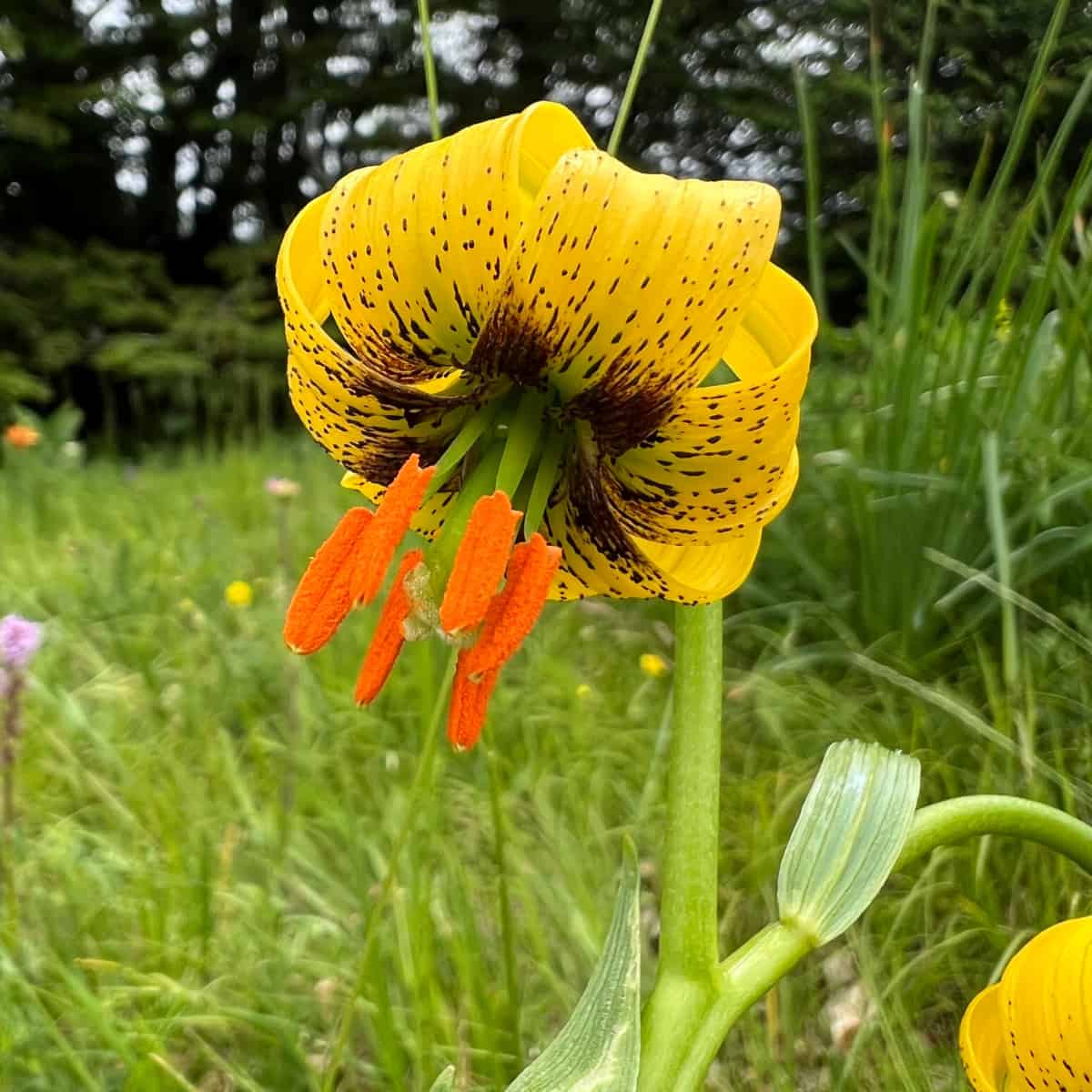
Glossy flowers allow for long distance romance
In the competitive world of plant-pollinator interaction, a little razzle-dazzle helps a flower be seen.
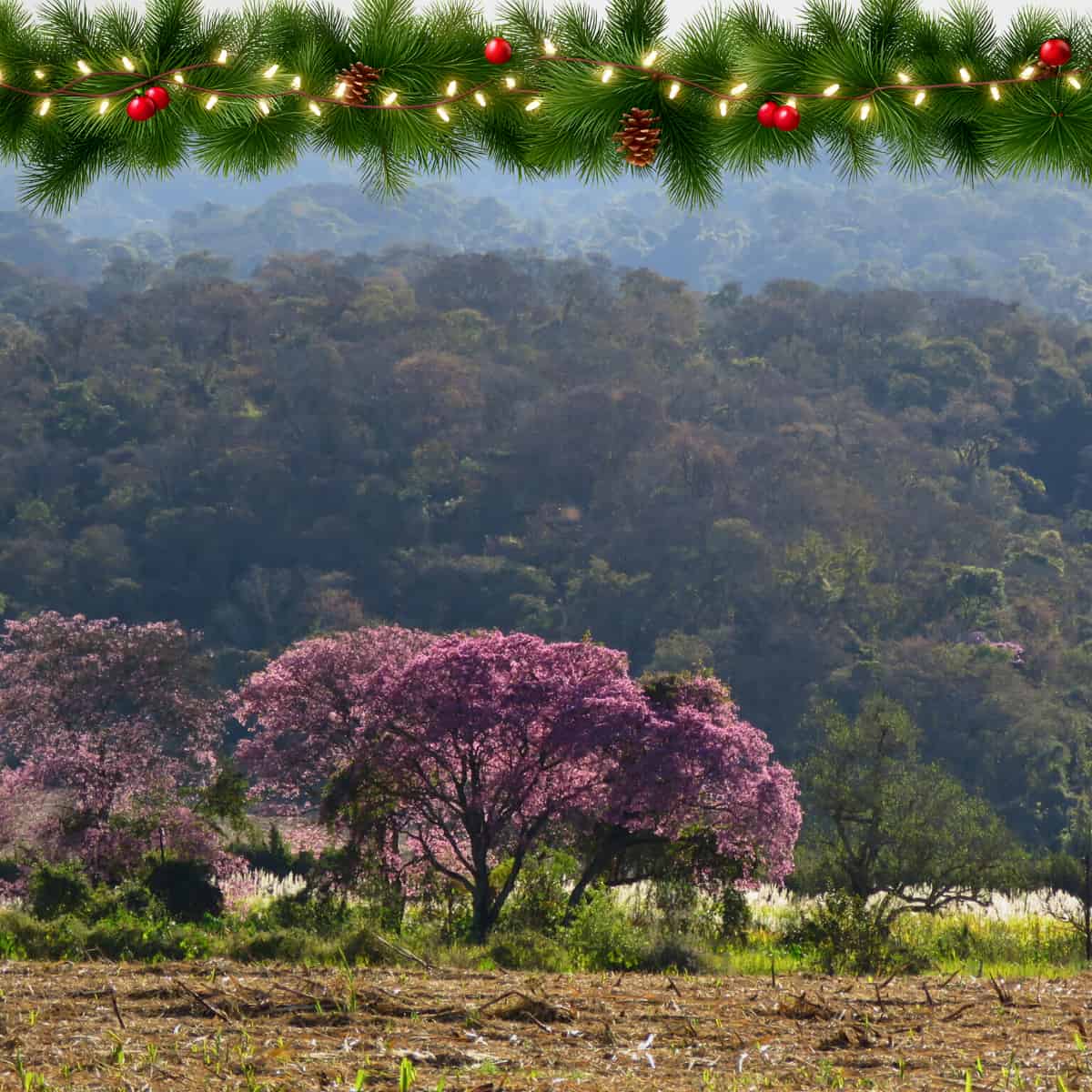
‘Tis the Season for Joyful Colours
Mother Nature has her trees in bloom to celebrate Spring in Argentina.
…and last’s week’s Week in Botany with surprising seedlings, how to make a duck a better gardener, aging blooms and more…
News & Views
NSF pares down grant-review process, reducing influence of outside scientists
Memo cites overburdened staff, but some say move also aims to elevate White House priorities.
International Society of Root Research – Mini Symposium
Join us online for the International Society of Root Research Mini Symposium to dig into the latest in root and rhizosphere science!
Before Flowers Existed, These Plants Lured Insects with Heat
New research on strange cycad plants offers a glimpse into the prehistoric origins of pollination.
Trump moves to dismantle major US climate research center in Colorado
Trump officials have circled the federally funded research institution, based in Boulder, Colorado, as a hub for “federal climate alarmism” after it was established decades earlier in 1960 for research in atmospheric chemistry and physical meteorology.
In memoriam: Robert Goldberg, 82, renowned plant biologist and revered UCLA educator
Robert B. “Bob” Goldberg, a pioneering UCLA genetic scientist whose research transformed plant molecular biology and agricultural biotechnology and whose award-winning teaching over five decades enriched the lives of generations of UCLA students, died Nov. 21. He was 82.
Trump Administration Plans to Break Up NCAR
Another story on the plan to break up the National Center for Atmospheric Research (NCAR) for being politically incorrect.
AI Is Inventing Academic Papers That Don’t Exist — And They’re Being Cited In Real Journals
The proliferation of references to fake articles threatens to undermine the legitimacy of institutional research across the board.
Smarter epidemic models for a food-secure future
When we think about protecting crops from disease, the spotlight usually falls on high-tech fixes – new pesticides, genetic engineering, advanced fungicides. But there’s a powerful, low-tech ally we often ignore: the landscape itself.
Chile moves to create national park at the edge of the world to protect wildlife
At the edge of the world map, where land turns into subantarctic forests, icy seas and glaciers, Chile is preparing to create a national park to protect endangered wildlife and unique ecosystems.
3rd Early Career Plant Researcher Network Meeting, Halle (Saale), Germany
The 3rd Early Career Plant Researcher Network Meeting is targeted towards experienced PhD students and postdoctoral researchers with a strong passion for plant research. The meeting provides a platform to present your work, connect with peers, and discuss key steps for building an independent research career.
Rare earths: Botany meets geopolitics
A fern may have a future phytomining.
This Week in Botany
5 Years Ago: Living on the edge of fragmented forests: distance, insects and fungi impact plant traits
10 Years Ago: It’s all about technique
15 Years Ago: A fascinating conservation problem and a failure of my imagination
Scientific Papers
Symbiosome functionality in Medicago truncatula nodules requires continuous clearing of pectins from the symbiosome space (FREE)
Gao et al describe a mechanism that functions to protect and maintain effective nitrogen fixation through the action of cell-wall-degrading enzymes that prevent accumulation of un-esterified pectin within symbiosomes. We identify two symbiotically-induced polygalacturonase (PG) genes in Medicago truncatula, SyPG1 and SyPG2, that are secreted into the symbiosome space.
Evo–devo: Ferns flourished due to developmental covariance between leaves and vasculature ($)
Vascular architecture is highly diverse in ferns. A new study demonstrates that this diversity results from co-variation between leaf and vascular development. This reaffirms the role of developmental covariation as a generator of diversity, not a constraint to it.
SPOROCYTELESS/NOZZLE cooperates with MADS-domain transcription factors to regulate an auxin-dependent network controlling Megaspore-Mother-Cell differentiation (FREE)
The formation of the female gamete is a complex developmental process that begins with the differentiation of the Megaspore Mother Cell (MMC) within the ovule. SPOROCYTELESS/NOZZLE (SPL/NZZ) is the principal regulator of the MMC formation, as mutations in the SPL/NZZ gene lead to the failure of the MMC differentiation. Nonetheless, the SPL/NZZ-dependent regulatory pathway governing the MMC development remains largely unknown. Using a multi-omics approach, Cavalleri et al identify direct SPL/NZZ targets and their downstream network.
Tips and tricks for writing constructive peer reviews (FREE)
Clements et al on how to give the helpful feedback you’d want to receive and not the kind of feedback you might have got yourself.
LLM use in scholarly writing poses a provenance problem
When researchers use large language models (LLMs) to draft manuscripts, the resulting text may echo ideas from sources that they have never encountered.
Read free via: https://rdcu.be/eVDiE
Engineering plant tandem kinase immune receptors expands effector recognition profiles (FREE)
Plant intracellular immune receptors are widely deployed in breeding to protect crops from disease. In addition to nucleotide-binding leucine-rich repeat receptors (NLRs), tandem kinase proteins (TKPs) have recently emerged as an important family of immune receptors within staple cereal food crops, but how TKPs recognize effectors and whether they are amenable to engineering is essentially unknown. Yu et al show that the barley and wheat TKPs Rmo2 and Rwt7 recognize different blast fungus effectors via their integrated HMA domains using different protein interfaces with nanomolar binding affinity.
Evolution of HMA-integrated tandem kinases accompanied by expansion of target pathogens (FREE)
Tandem kinase proteins (TKPs) are an emerging family of plant intracellular immune receptors that offer potential for developing novel disease resistance. Asuke et al cloned Rmo2 and Rwt7, genes for resistance to the blast fungus, from barley and wheat, respectively, and discovered that they are orthologs encoding TKPs with an integrated N-terminal heavy metal-associated (HMA) domain.
ARF3-mediated auxin signaling is essential for sex determination in cucumber ($)
Sex determination underpins genesis of male and female flowers with particularly important implications in plant breeding. Auxin and ethylene regulate femaleness in cucurbits. Han et al identified an auxin response factor 3 (CsARF3) that plays an essential role in carpel development in cucumber.
De-Coupled Water and Nitrogen Translocation From Subsoil to Canopy of Temperate Forest Trees (FREE)
Using simultaneous double tracer injections into the lower rooting zone, followed by canopy xylem sap and foliage sampling over 2 months, Mrak et al quantified the appearance of water and nitrate in xylem sap and foliage, supported by sap flow measurements to estimate transit times. Water reached the canopy faster than nitrogen, revealing a marked asynchrony in resource translocation for both species and sites—the first such field observation.
The pseudokinase CORYNE modulates Medicago truncatula inflorescence meristem branching and plays a conserved role in the regulation of arbuscular mycorrhizal symbiosis (FREE)
Orosz et al report a dual role for Medicago truncatula CRN in development and plant–microbe interactions. In shoots, MtCRN modulates inflorescence meristem branching. In roots, the MtCRNpromoter is active in vascular tissues and meristematic regions.
Stepwise and lineage-specific divergence of a major immune co-chaperone complex in leptosporangiate ferns (FREE)
Protein-protein interactions are essential for proper cellular function and are often under strong evolutionary pressures to maintain their stability and specificity. In plants, a broadly distributed chaperone complex comprised of the RAR1 (REQUIRED FOR MLA12 RESISTANCE 1) and SGT1 (SUPRESSOR OF THE G2 ALLELE OF SKP1) co-chaperones alongside the HSP90 (HEAT SHOCK PROTEIN90) core chaperone are important for immunity. Despite its importance in flowering plants, a deeper understanding of how this complex evolved remains limited. Jeong et al examine the molecular evolutionary history of the RAR1-SGT1 interaction across land plants.
In AoBC Publications
- Time since the last fire and climate seasonality reveal rhythmic and annual growth rates of Cerrado’s woody plants ($)
- Spatial heterogeneity of disease infection attributable to neighbor genotypic identity in barley cultivars (FREE)
- Genomic insights into the rapid diversification of Petunia in a biodiversity hotspot in the South American grasslands ($)
- Plant neighbours, not consumers, drive intraspecific phytochemical changes of two grassland species in a field experiment (FREE)
- Foliar Epichloë fungal endophytes affected the soil biochemistry via changes in the expression of root genes and exudates within their host plants ($)
Careers
Note: These are posts that have been advertised around the web. They are not posts that I personally offer, nor can I arrange the visa for you to work internationally.
Engineering plant immune responses (Plant BioDesign JIC project), Norwich
By engineering plant immune responses the student will not only develop important resources that contribute to efforts to ensure food production is resilient to pathogen threats, but also map out new understanding about how organisms regulate gene expression in multicellular tissues.
Postdoctoral Researcher (Carella Group), Norwich
Working as part of a team led by Phil Carella, you will perform key experiments aimed at identifying and understanding immune processes that evolved in divergent land plants like the liverwort Marchantia polymorpha. The role will provide you with a broad range of stimulating activities, including: Molecular dissection of lineage-specific immune receptors/modules; Synthetic biology approaches to engineer novel immune mechanisms in plants; Experience with a wide range of plant pathogenic microbes.
Call for Applications: Early Career Rescue Fellowship, Germany
Academic freedom is under pressure today. This requires rescue havens of free research. The Freiburg Institute for Advanced Studies (FRIAS), the Tübingen College of Fellows (CoF), and the Zukunftskolleg Konstanz (ZuKo) invite early career researchers, whose work is restricted due to political pressure in the USA, to apply for the Baden-Württemberg Early Career Rescue Fellowships 2026-2028 (Ref. No. 2025/229).
PhD position to study epigenomic diversity and altitude adaptation in Arabis alpina, Zurich
We are looking for a PhD candidate to work on the project “Functional epigenomics of high-altitude adaptation in Arabis alpina”, starting in August 2026. The student will be supervised by Dr. Thanvi Srikant and Prof. Alex Widmer. The position will be fully funded until the completion of the student’s PhD thesis. The PhD program at D-USYS (Department of Environmental Systems Science), ETH Zürich typically lasts three to four years on average. PhD students usually have to conduct research, study, and a limited amount of teaching duties.