


Thank you to you all for your patience if you’ve received more emails than you expected this week. The mail server still insists that the email address import went perfectly and you all only receive emails when posts are in The Week in Botany category. The system that counts the emails sent tells a very different story. I’m still working with WordPress.com to try to fix the problem, though at this stage it’s mainly them doing the work. It means this week we’ve posted much less than usual, because I don’t want to fill your inbox with emails you haven’t signed up for. For the same reason, this week might also be light too.
This will be the last email from Oxford. While most of the work is done from home offices around the world we have, or had, an office in Oxford’s Biology department. From the start of September, the office I’ll be mainly not going into will be at UCL instead. I hope the next email you receive from me will be after the move, with another collection of the news stories and scientific papers you’re sharing on social media. Until then, take care.
Alun (webmaster@botany.one)
On Botany One
A patchwork of green in the city
Wild plants in city gardens are defying expectations and keeping urban biodiversity alive and surprising.
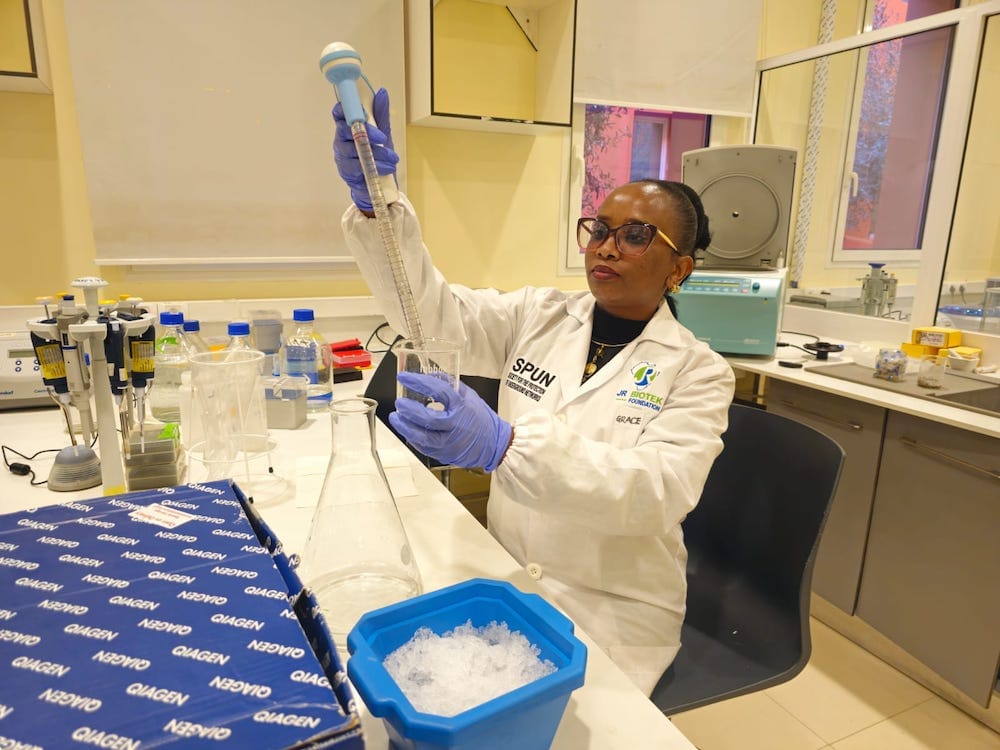
Grace Gachara: “Unravelling the Intricacies Within the Corridors of the Wood Wide Web”
Botany One interviews Dr Grace Gachara, a Kenyan microbial ecologist, looking to unveil the microbial communities associated with endemic trees.
…and last’s week’s Week in Botany with Liedson Carneiro on networking, how gunfire doesn’t stop Botany, and more.
News & Views
September 2025 AAB Webinar: Plant Gene Editing
Inaugural webinar in the new AAB monthly series. On September 23, Karam Mostafa will discuss CRISPR vs nematodes: A new era for potato crop protection.
MSU-DOE Plant Research Laboratory names Federica Brandizzi as next director
Michigan State University Research Foundation Professor Federica Brandizzi has been named the next director of the MSU-Department of Energy Plant Research Laboratory, or PRL. Brandizzi is a prolific researcher within the plant science community. Her lab has contributed many important pieces to the canon of plant research in organelle biology, biofuel research and space biology.
Plantae Presents: The Role of Open Science and Data Sharing in Advancing Plant Research
The accessibility of scientific data facilitates the reproducibility and further development of research. The rapid advancement of technologies enables the prevalence of multi-omic research, which involves a massive amount of data. The deposition, access, and integration of data will impact its usability. This webinar discusses open science and data sharing in the context of plant science from different perspectives, including research, teaching, data management, and entrepreneurship.
New maps help decision-makers factor albedo into tree-planting strategies
Albedo can cause large reductions to the climate benefit of tree planting – but new science helps identify locations with greatest cooling potential.
“Twitter sucks now and all the cool kids are moving to Bluesky:” Our new survey shows that scientists no longer find Twitter professionally useful or pleasant
My colleague Dr. Julia Wester and I have a new paper out in the journal Integrative and Comparative Biology reporting on the results of a survey distributed to over 800 scientists, science educators, and science communicators. I presented these results at the 2025 Joint Meeting of Ichthyologists and Herpetologists. Our study confirms a trend that’s been reported on by science and education journalists for a year or more: while Twitter was once the gold standard for online science communicators, it’s no longer fit for purpose and is being abandoned by scientists in droves.
Victoria’s mountain ash forests could lose a quarter of giant trees as temperatures rise
Eucalyptus regnans – which regularly reach 60 to 80m tall – lose about 9% of their trees for every degree of warming, research finds.
How amino acids are transported in plants
Plants produce all amino acids essential for human life. This commonly occurs in specialised cell organelles, so-called plastids. A research team headed by Heinrich Heine University Düsseldorf (HHU) has now decoded the mechanism by which the plants distribute these amino acids within their organisms.
Scientists Are Caught in a Political Trap
Fighting back against the Trump administration means they start to look more like activists.
What plant(s) should we study?
Arabidopsis, a small flowering plant, has been a valuable model for plant biology research for over 150 years, leading to significant discoveries and applications. However, its limitations, such as ecological relevance and complexity, necessitate the exploration of additional model plants. Researchers are now investigating various plants, including liverworts, reeds, and parasitic plants, to better understand plant diversity and address specific challenges like salt tolerance and parasitism.
This Week in Botany
5 Years Ago: Microanatomical leaf traits vary across climate gradients in a Great Plains grass
10 Years Ago: Sport and drugs…
15 Years Ago: The Genetics Behind Evolution
Scientific Papers
♻ Inconsistent detection of extinction debts using different methods (FREE)
The extinction debt, delayed species extinctions following landscape degradation, is a widely discussed concept. But a consensus about the prevalence of extinctions debts is hindered by a multiplicity of methods and a lack of comparisons among habitats. We applied three contrasting species–area relationship methods to test for plant community extinction debts in three habitats which had different degradation histories over the last century: calcareous grassland, heathland and woodland.
Evolutionary and methodological considerations when interpreting gene presence-absence variation in pangenomes (FREE)
While graph-based pangenomes have become a standard and interoperable foundation for comparisons across multiple reference genomes, integrating protein-coding gene annotations across pangenomes in a single ‘pangene set’ remains challenging, both because of methodological inconsistency and biological presence-absence variation (PAV). Brůna et al review and experimentally evaluate the root of genome annotation and pangene set inconsistency using two polyploid plant pangenomes: cotton and soybean, which were chosen because of their existing diverse high-quality genomic resources and the known importance of gene presence-absence variation in their respective breeding programs.
CRISPR vs. nematodes: A new era of genetic solutions for potato crop protection (FREE)
Potato (Solanum tuberosum L.), a cornerstone of global food security, is valued for its nutritional value and diverse uses but faces significant production problems caused by plant-parasitic nematodes, particularly potato cyst nematodes (Globodera rostochiensisand G. pallida) and root-knot nematodes (Meloidogyne spp.). These pests cause significant yield and economic losses worldwide, worsened by the persistence of nematode cysts in the soil and the limited use of chemical nematicides due to environmental concerns. This review focuses on nematode biology, their impact on potato production, and various control strategies.
A single-cell, spatial transcriptomic atlas of the Arabidopsis life cycle (FREE)
Arabidopsis has been pivotal in uncovering fundamental principles of plant biology, yet a comprehensive, high-resolution understanding of its cellular identities throughout the entire life cycle remains incomplete. Here we present a single-nucleus and spatial transcriptomic atlas spanning ten developmental stages, encompassing over 400,000 nuclei from all organ systems and tissues—from seeds to developing siliques. Leveraging paired single-nucleus and spatial transcriptomic datasets, Lee et al annotate 75% of identified cell clusters, revealing striking molecular diversity in cell types and states across development.
Cryptic CAM photosynthesis in Joshua tree (Yucca brevifolia, Y. jaegeriana) (FREE)
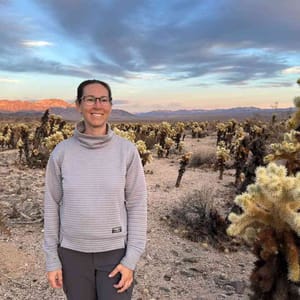
A combination of physiology and transcriptomic data showed low levels of CAM that varied across populations but were unrelated to home environmental conditions. Gene expression confirmed CAM activity and further suggested differences in carbon and nitrogen metabolism between Y. brevifolia and Y. jaegeriana.
Scientists no Longer Find Twitter Professionally Useful, and have Switched to Bluesky ($)
Shiffman & Wester report on the results of a survey distributed to scientists on Twitter and Bluesky (n = 813). Results overwhelmingly confirm that changes to Twitter have made the social media platform no longer professionally useful or pleasant, and that many scientists have abandoned it in favor of Bluesky. Results show that for every reported professional benefit that scientists once gained from Twitter, scientists can now gain that benefit more effectively on Bluesky than on Twitter.
Intensifying Fire Season Aridity Portends Ongoing Expansion of Severe Wildfire in Western US Forests (FREE)
Area burned by wildfire has increased in western US forests and elsewhere over recent decades coincident with warmer and drier fire seasons. However, high–severity fire—fire that kills all or most trees—is arguably a more important metric of fire activity given its destabilizing influence on forest ecosystems and direct and indirect impacts to human communities. Parks et al quantified area burned and area burned severely in western US forests from 1985 to 2022 and evaluated trends through time.
Cooperation between a root fungal endophyte and host-derived coumarin scopoletin mediates Arabidopsis iron nutrition (FREE)
Fungal–coumarin interactions were assessed by profiling metabolites and measuring iron mobilisation in F80 cultures supplemented with specific coumarins, alongside quantifying growth performance and iron content in Arabidopsis coumarin-biosynthesis mutants inoculated with F80.
The onset of phenological plant response to climate warming (FREE)
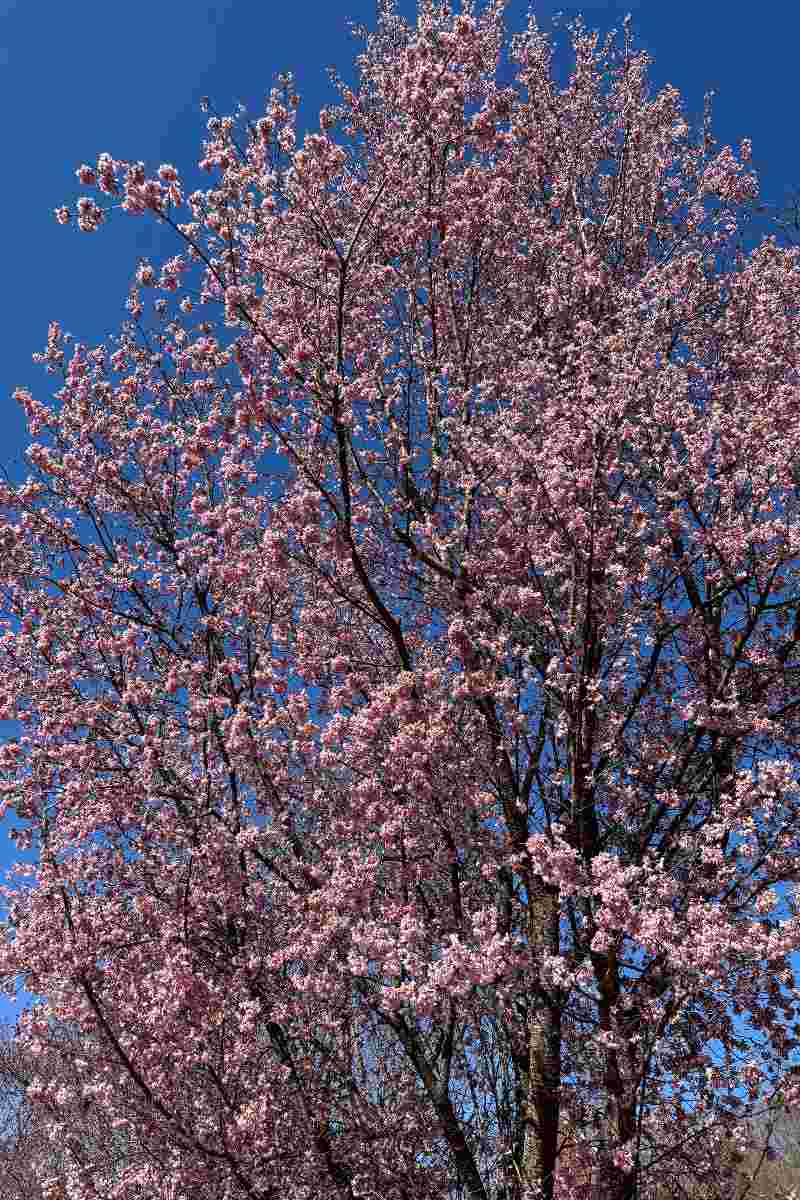
The study uses long-term phenological data for the Japanese mountain cherry tree in Kyoto to identify the onset of sustained phenological changes due to climate warming. The full-flowering date of the cherry tree, recorded since the 9th century, allows for distinguishing anthropogenic climate change from natural variability.
The recruitment of the A-type cyclin TAM to stress granules is crucial for meiotic fidelity under heat (FREE)
Stress granules (SG) are biomolecular condensates that represent an adaptive response of cells to various stresses, including heat. However, the cell type–specific function and relevance of SG formation, especially during reproductive development, are largely not understood. De Jaeger-Braet et al show that the meiotic A-type cyclin TARDY ASYNCHRONOUS MEIOSIS (TAM) is recruited to SGs in male meiocytes of Arabidopsis after exposure to heat.
In AoBC Publications
- Drought modifies the impacts of soil nutrient heterogeneity on native and alien plant growth in the absence of competition (FREE)
- Characterising Wheat and Barley Growth and Phenology Using Multispectral Remote Sensing for Site-Specific Precision Agriculture (FREE)
- Better out than in: faecal matrix inhibits establishment success after waterfowl endozoochory (FREE)
- Widely Used Variants of the Farquhar-von-Caemmerer-Berry Model Can Cause Errors in Parameter Estimation (FREE)
- Stomatal regulation, leaf water relations, and leaf phenology are coordinated in tree species from the Sonoran Desert (FREE)
Careers
Note: These are posts that have been advertised around the web. They are not posts that I personally offer, nor can I arrange the visa for you to work internationally.
Biological Flora Associate Editor, Worldwide
The BES is seeking ecologists with expert, comparative knowledge of one or more aspects of diverse species of vascular plants, either concentrating on those found in Britain and Ireland (BFBI) or another regional flora in our global coverage (IBF), to join the team of Editors of Journal of Ecology.
The Plant Cell is accepting applications for Assistant Features Editors, Worldwide
Are you an early career researcher passionate about plants and science communication? The Plant Cell is accepting applications for new Assistant Features Editors (AFEs) to begin in 2026 and 2027. AFEs provide a valuable service to the journal, our authors, and the scientific community. In return, AFEs join our editorial board and receive training and experience in writing and communicating scientific findings to a wide audience, as well as networking opportunities and editor training through participating in activities of The Plant Cell editorial board. We are welcoming applications through Monday, September 15, 2025.
Senior Editor – Journal of Applied Ecology, Worldwide
We are seeking an Editor to strengthen and complement the editorial team and to continue raising the Journal’s profile worldwide. To complement our Editor team, we are looking for an active researcher broad interests in applied ecology. Expertise in conservation science, animal ecology and forest ecology is particularly welcomed but not required. Applications are welcome from leading scientists covering any areas of the Journal’s who could contribute to the Journal’s development in topical and developing fields.
Research Software Engineer, Norwich
The successful candidate will join this highly skilled and motivated team working at the interface between science and computing. The position provides an exciting opportunity to work with researchers at the cutting-edge of life sciences, exploring new technological approaches and applying them to challenging real-world problems. They will work to support the informatics platform to deliver software tools, web services, training and data management to the institute and the wider research community. This will include management of crucial services and maintenance of existing web applications, development of software and infrastructure solutions, data management, documentation and training.
Independent Fellowship in Plant-Associated Microbial Interactions, Norwich
The John Innes Centre (JIC) recognises the critical importance of this rapidly evolving field and invites applications from visionary scientists for an Independent Research Fellowship focused on microbial communities and their interactions. We welcome candidates with expertise and interests in any aspect of microbial or fungal communities and their interactions with host organisms, particularly where these interactions contribute to plant and soil health.
PLOS Biology Associate Editor- FTC, UK
PLOS Biology is looking for an enthusiastic life scientist to join our dedicated Editorial team as an Associate editor. The position is available immediately and applications will be reviewed upon receipt. This is an intellectually stimulating position that calls for a keen interest in the practice and communication of science. As an integral member of the editorial team on this leading open-access biology journal, you will be responsible for recruiting and assessing research manuscripts, partnering with the Editorial Board of Academic Editors, handling peer review and commissioning articles for our Magazine section. A key aspect of the job is interaction with the scientific community, including attending international conferences and visiting research institutes. The successful candidate must therefore be dynamic and outgoing, be prepared to travel and have excellent interpersonal skills.
Professorship (W2-level) in “Molecular Crop Improvement”, Münster
In addition to the professorship, the prospective appointee will also hold a leadership position at the Münster branch of the Fraunhofer Institute for Molecular Biology and Applied Ecology (IME). We seek an internationally recognised researcher with expertise in both fundamental and applied research on strategies to enhance crop traits.
Junior Professor W1 with Tenure-Track W2 (m/f/d) in Membrane Biology, Bochum
We are seeking early career applicants with a strong focus on answering biological questions using innovative state-of-the-art methods. In their research candidates should address key questions of lipid metabolism, membrane maintenance or dynamic modulation of the membrane in response to varying environmental conditions in model organisms, e.g. microbes, animals or plants. Focal points can be membrane biogenesis, identity and membrane contact sites, cellular physiology, membrane composition and fluidity and/or compartmentalization, for example.
Head of Service Unit Proteomics, Potsdam
The Max Planck Institute of Molecular Plant Physiology (MPI-MP) located in Potsdam is seeking an expert in mass spectrometry-based proteomics to support the institute as Head of Service Unit Proteomics
Postdoctoral Researcher in Forest Tree Reproductive Ecology under Climate Change, Poznań
We invite applications for a Postdoctoral Researcher to join our team. The successful candidate will lead an independent research project on tree reproduction under changing climatic conditions, collaborate with center scientists, and contribute to knowledge transfer and outreach activities. Scope for developing own research ideas within broad subject of forest ecology is included.
PhD student in Plant Ecophysiology (f/m/d), Lausanne
You will be working within “The FutureForests Doctoral Network“, an EU-funded Marie Skłodowska-Curie Actions (MSCA) initiative, which aims to train the next generation of scientists in assessing the impacts of global change on European forests utilizing a unique network of European flagship field forest facilities. Based at WSL in Lausanne, you will focus on assessing changes in tree carbon and water relations, including carbon allocation at the VPDrought experiment (Valais, Switzerland). The goal is to investigate how atmospheric and soil droughts affect leaf-to-whole-tree ecophysiological processes that drive growth, carbon sequestration, and tree mortality. Complementary measurements and analyses will be conducted at selected manipulation facilities in Estonia (University of Tartu) and Germany (Technical University of Munich) to compare the impacts of recurrent droughts and vapour pressure deficits on plant growth and carbon dynamics under global change.
Decoding the spectral signatures of Australia’s tree diversity and function, Sydney
A PhD scholarship is available as part of an ARC-DECRA project on the diversity and functioning of Australia’s trees and forests. Our research combines analyses of leaf-level spectral reflectance with plant functional traits, rich field-data platforms, and process-based modelling to investigate how trees vary in their function and what this variation means for the resilience and productivity of forests—both now and into the future.
PhD: The genomics of local adaptation in a spruce hybrid zone, Calgary
Yeaman Lab is seeking to recruit a PhD student to study the genomic basis of local adaptation in the hybrid zone of white and Engelmann spruce in Alberta’s Rocky Mountains (Banff, Kananaskis). Depending on a candidate’s experience and interest, this project can include field work in the Rocky Mountains or be focused only on bioinformatics/genomic analysis or the application of theoretical approaches to making spatially explicit predictions for the hybrid zone.
Killam Postdoctoral Research Fellowship, Vancouver
The UBC Killam Postdoctoral Research Fellowships are provided annually from the Izaak Walton Killam Memorial Fund for Advanced Studies and are available for most fields of research. It was Mrs. Killam’s desire that those selected to receive fellowships: “be likely to contribute to the advancement of learning or to win distinction in a profession. A Killam scholar should not be a one-sided person… Special distinction of intellect should be founded upon sound character.”