

Mesophyll conductance to CO2 (gm), which regulates the diffusion of CO2 from substomatal cavities to the sites of carboxylation, is now recognized as a significant and variable limitation to photosynthesis. It is a combination of gaseous diffusion through the intercellular airspaces and diffusion in the liquid phase through the mesophyll cell walls, plasma membrane, cytosol and chloroplast envelope to chloroplast stroma, the site of carboxylation. gm has been shown to vary between genotypes of a number of species and with growth environments, including nitrogen availability, but understanding of gm variability in legume species is limited.

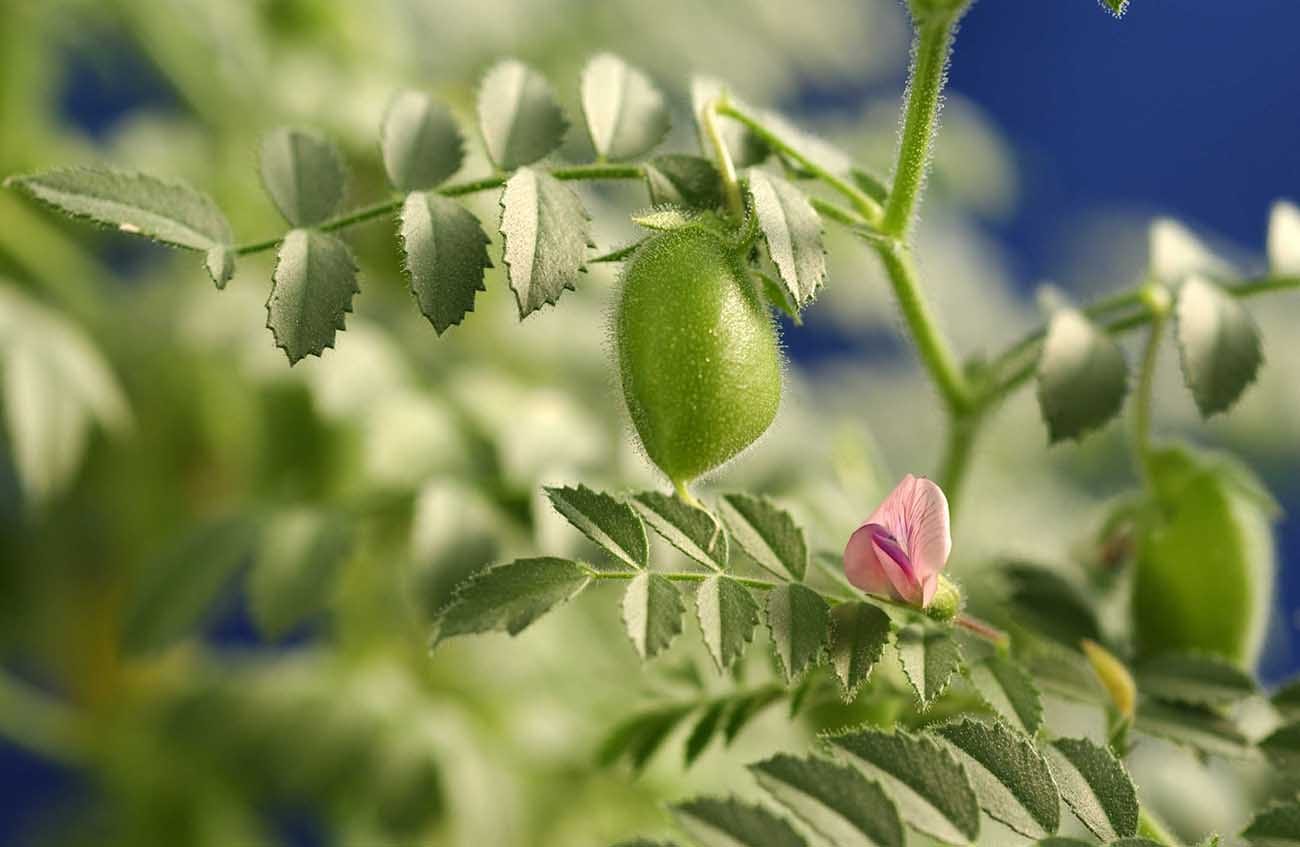
Given the growing interest in gm as a breeding selection target for increased photosynthesis, and a lack of understanding of gm regulation in legumes, a recent study by Shrestha et al. and published in AoBP investigated the effect of water availability and nitrogen source on gm across chickpea (Cicer arietinum) genotypes. The authors suspected gm of legumes might respond differently to limited nitrogen availability than other crop species, due to their ability to fix atmospheric N2. Chickpea genotypes were found to vary in their gm sensitivity to nitrogen source. Genotypes also differed in the effects of nitrogen source on the rapid response of gm to light intensity. There was however no clear effect of reduced water availability on the gm response to light intensity or quality. The significant variability in response of gm to long- and short-term environmental conditions observed in these experiments indicates that inclusion of gm as a selection trait is not straightforward. Future work should look to examine gm responses of a wide range of legumes and environments, and explore the underlying mechanisms of gm in greater detail.
Researcher highlight

Arjina Shrestha received her BSc in Agriculture from Tribhuvan University, Nepal in 2005. After completing her undergraduate studies, she worked as a horticulture officer on an in situ biodiversity conservation project in Nepal for three years. She obtained an MSc in Horticulture from Oklahoma State University, USA in 2011, and a PhD in plant physiology from the University of Sydney, Australia in 2017, under the supervision of Professor Margaret M. Barbour. She currently holds a postdoctoral research associate position with Professor Barbour in the Legumes for Sustainable Agriculture Research Hub in the School of Life and Environmental Sciences at the University of Sydney.
Arjina is a plant physiologist with primary areas of interest in photosynthesis research (particularly the conductance to CO2 diffusion within leaves), plant water relations and abiotic stress phyiology. She has investigated leaf-level gas exchange processes under varying growth environments using stable carbon and oxygen isotopes.