


Gamhewa & colleagues have spent seven years researching the forests of Quebec, tracking spring herbs and tree canopies with automated cameras across elevation gradients. The plants react to spring, but how they react can be the difference between survival and death. It’s a matter of timing.
When spring comes, the trees of forests flush out their leaves, catching the sunlight and creating shade below. For the plants beneath the trees, the period between snowmelt and before shade falls is a critical time to gather carbon for the coming year. Timing is critical for success. Sprout too late, and the race is over, with your competitors having built their own carbon reserves, and the trees blocking sunlight from reaching the forest floor. But start too early, and you risk damaging vulnerable tissue to the cold. It’s a strategy called “phenological escape”.
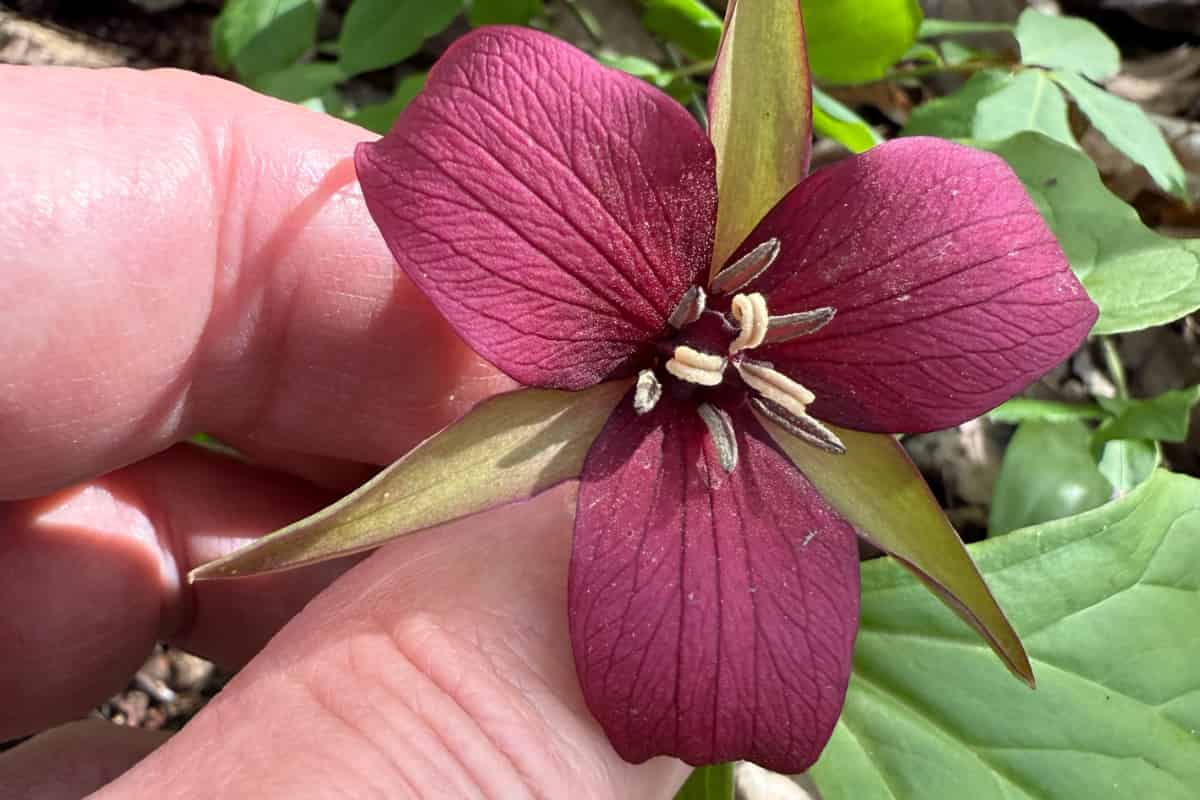
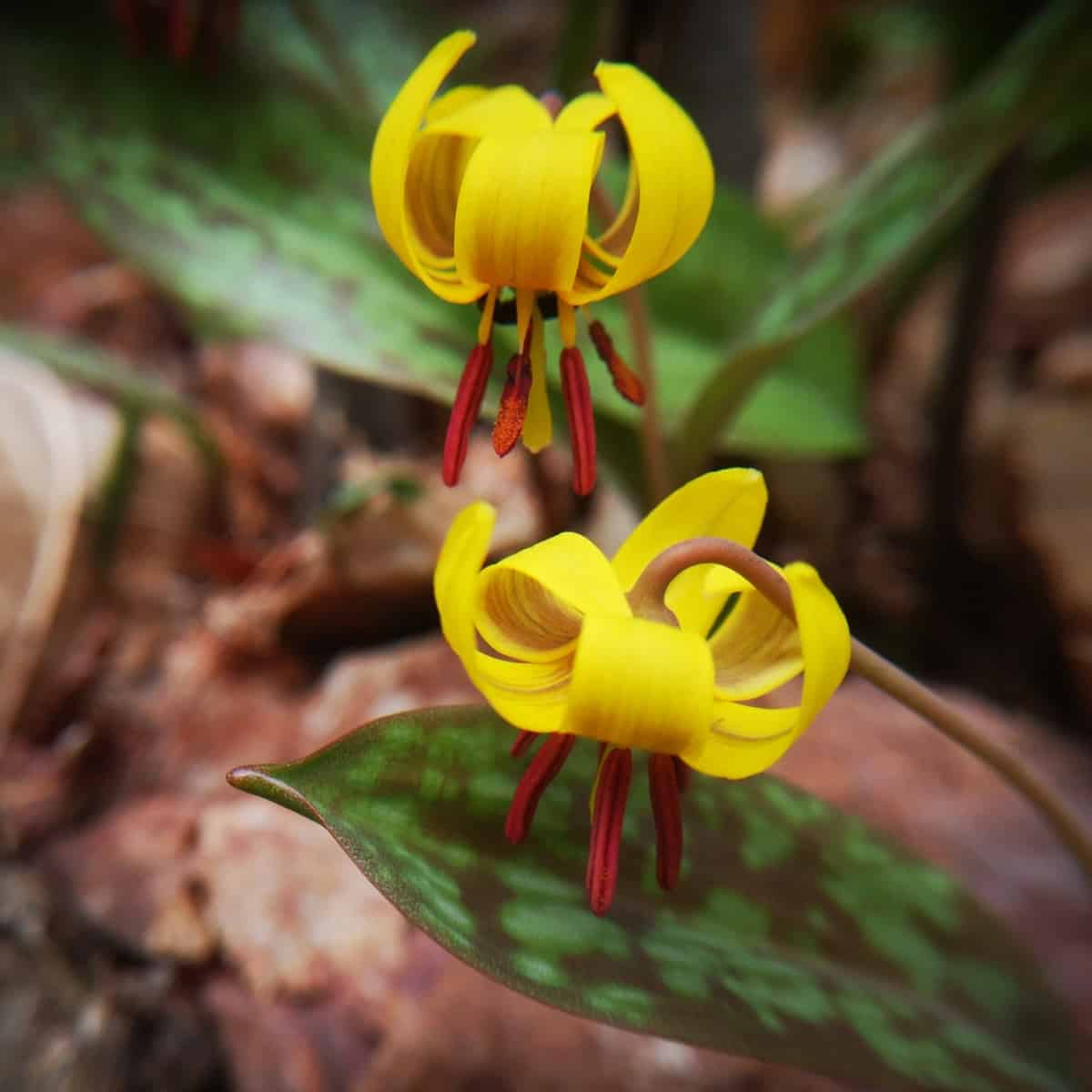
The team set up automated cameras in the forest in Mont Mégantic National Park. Daily photos allowed them to watch the sprouting of two common spring understorey plants, Trillium erectum (Red Trillium) and Erythronium americanum (Trout Lily) and watch for leaf-out from the trees above.
The botanists found that temperature had a stronger effect on the herbs compared to the trees. This difference means that in warmer years, the herbs start growing sooner, and so get more time in the sun to build their carbon reserves. This extra gap in the canopy could benefit plants. The authors write: “We would expect lengthened periods of high light of even a few days to significantly increase their capacity for carbon assimilation and growth” “All else equal, we would expect this to have a neutral to positive influence on understorey plant performance.”
“All else equal” might be doing some heavy lifting here, as there’s no discussion of insect responses, though the authors cite a paper and write “the evidence to date does not strongly support the hypothesis of negative fitness consequences due to altered phenology between species.” The findings do also agree with other recent research results showing that herbs advance more than trees. So the conclusion that some species need not suffer from mismatched phenology seems justified.
READ THE ARTICLE
Gamhewa, H., Crofts, A.L., Plourde-Rouleau, A., Glaus, V., Brown, C. and Vellend, M. (2025) ‘The duration of high spring light for understorey plants: Contrasting responses to spatial and temporal temperature variation’, Journal of Ecology, https://doi.org/pxnj (FREE)
Cross-posted to Bluesky & Mastodon.
Cover Image: Erythronium americanum (Trout Lily) in Quebec by Alexis Williams CC BY.