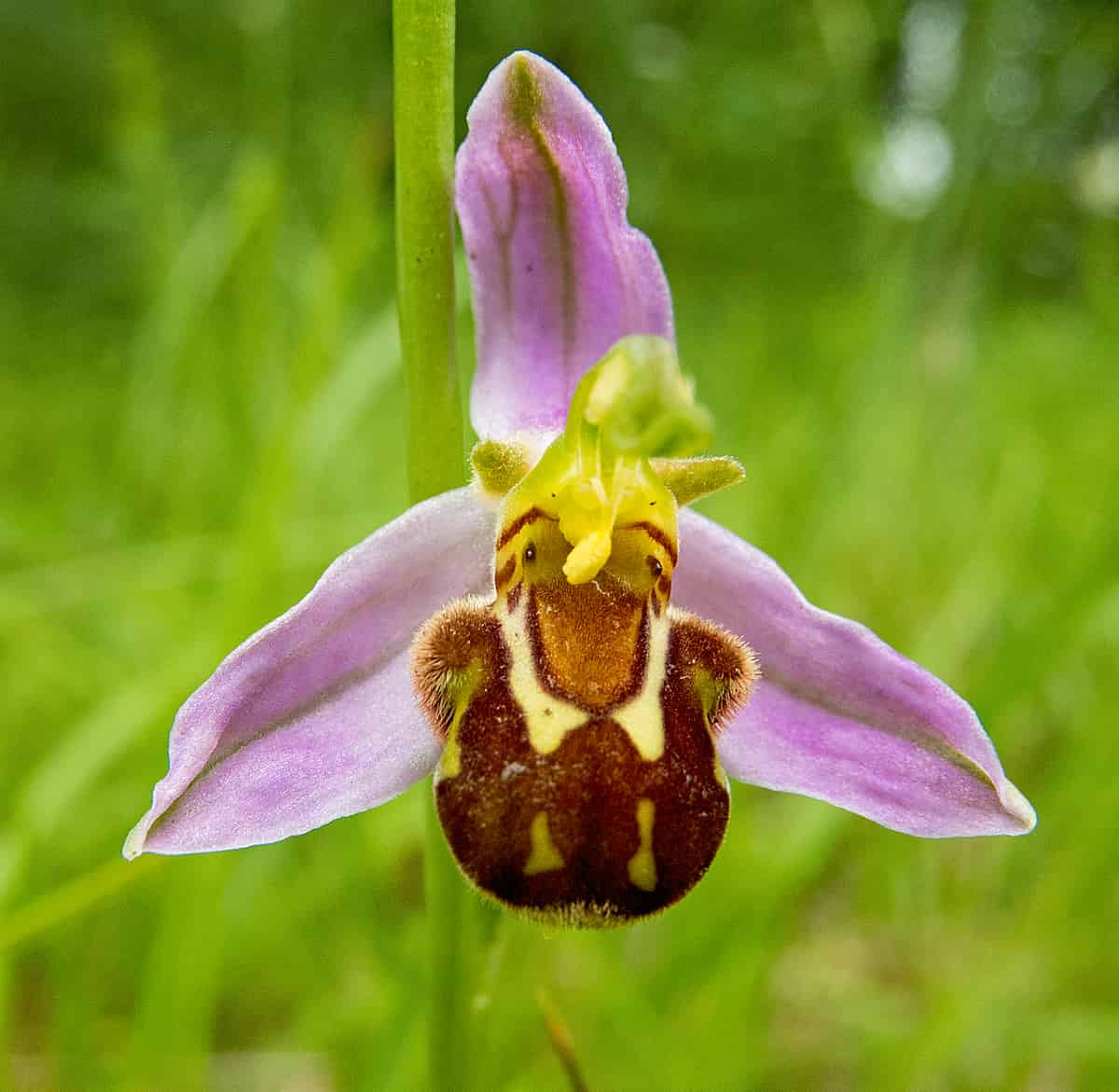


Joseph Arditti and colleagues have published an article in Lankesteriana about a prescient letter written by Darwin. On March 26, 1863, he wrote a letter to Joseph Dalton Hooker, describing his attempts to germinate orchid seeds. Orchid germination was a puzzle.
Orchid growers struggled with terrible germination rates. Darwin was experimenting with the tiny dust-sized seeds and casually mentioned they might be “parasites in early youth on cryptogams.” Darwin had been studying fungal disease in potatoes and had been interested in moulds for some years. It’s not certain he meant fungi by cryptogams. Arditti and colleagues say may have meant moss, but add: “However, it is clear that his thoughts and considerations were in the right direction. He questioned whether orchids required an external biological partner for germination.”
The authors say that the observation went unnoticed, so that when, in 1899, Noël Bernard found that mycorrhiza are needed for orchid germination, he did so independently of Darwin. Bernard’s discovery explained how seeds that are so tiny can produce plants.
The problem for orchid seeds is they’re so small, they have no food store. So they wait for fungi to arrive. When the fungi colonise the seed, the plant eats them, until it can photosynthesise for itself. Indeed, some orchids never bother photosynthesising, and just live off fungi. Discovering this partnership revolutionised orchid science. Today, we know it’s essential for conservation. You can’t save orchids without saving their fungal partners too. It’s a reminder that often it’s not enough to have a good idea. You also have to publicise it.
Research Source: LANKESTERIANA 25(2): 83–102. 2025, DOI: http://dx.doi.org/10.15517/v17i2w10
https://revistas.ucr.ac.cr/index.php/rlankesteriana/article/view/936