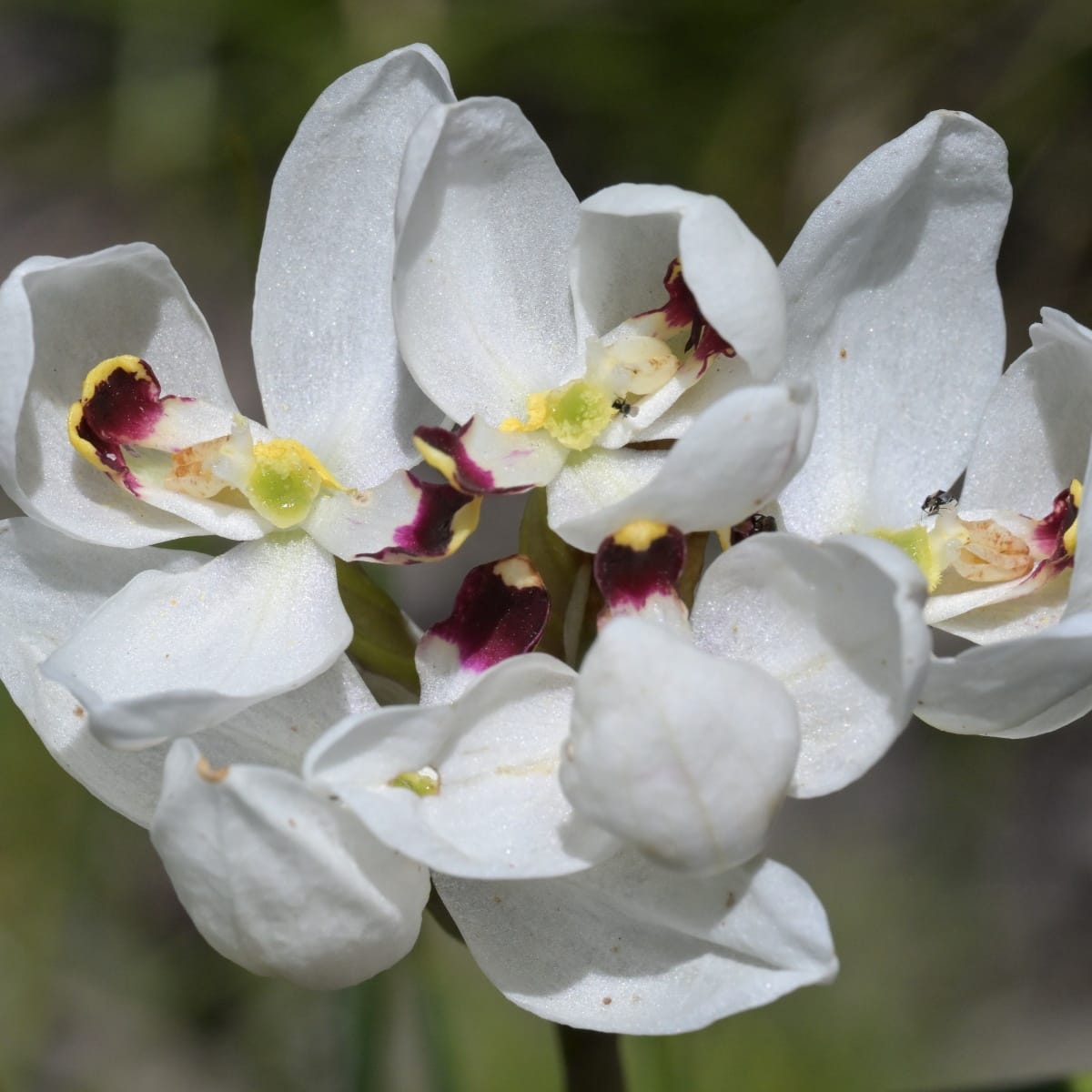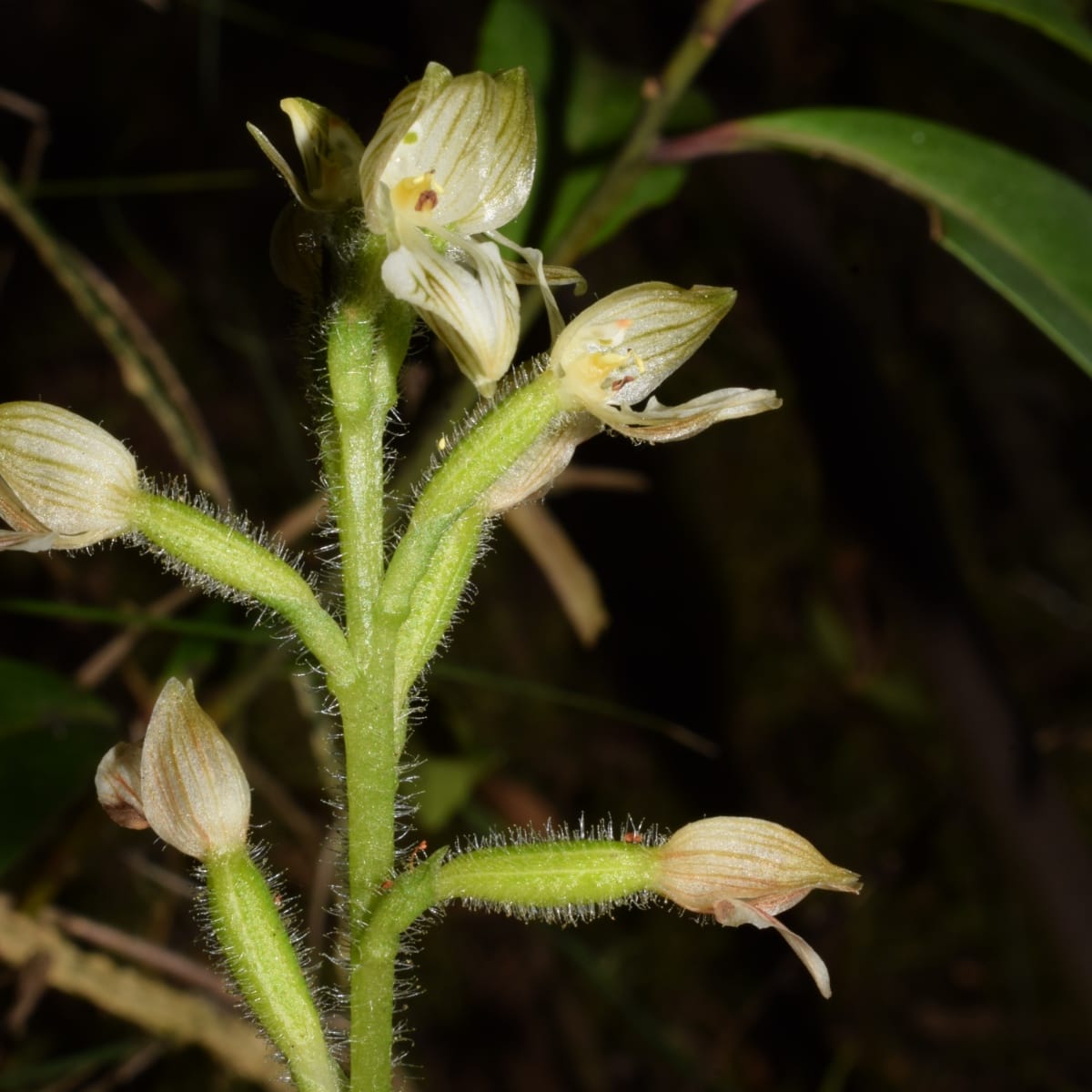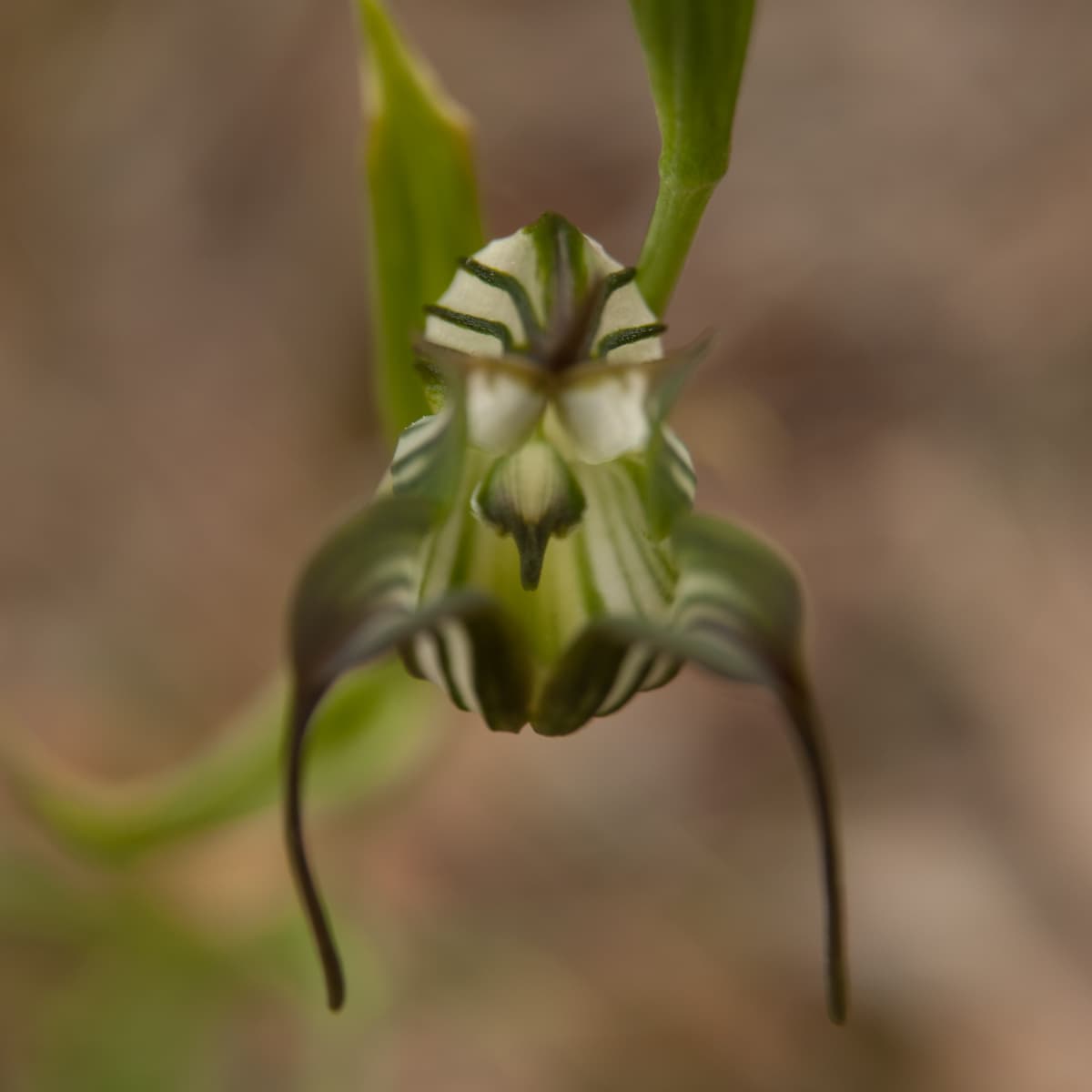



At school we’re taught that pollination is a partnership. Plants provide a reward, like nectar, and in return insects carry pollen to other plants. Producing a reward takes effort, wouldn’t it be easier to provide nothing? But how then would you attract pollinators? Australian Greenhood Orchids (Pterostylis) use their sexual wiles, by luring fungus gnats into thinking they’ve found a mate. Research by Hayashi and colleagues, published in the Botanical Journal of the Linnean Society, has found four new cases of pollination by sexual deception of male fungus gnats in Pterostylis.
The secret of attraction for Pterostylis is in the scent. Previous research on one species, Pterostylis orbiculata, showed it released a very specific cocktail of chemicals that, to an amorous male gnat, smells like a female gnat. The scientists found that each orchid species only attracted a single type of gnat. Specialisation makes sense. This way, when the disappointed gnat leaves to find an actual gnat, you can be sure your limited amount of pollen is going to the right species of orchid and not getting wasted being delivered to the wrong orchid. Although, there is a chance your pollen will be to a bewildered or exasperated female gnat who wonders why all these suitors insist on wearing orchid pollen.
The publication is the result of three seasons of study in southern Australia. The team used an experimental technique called “flower baiting” – carefully moving picked orchid flowers through different landscapes to observe which insects they attracted. The study produced over 288 hours of observations. The insects themselves were identified using microscopes and DNA analysis to confirm identifications.
This work back in the lab also confirmed a surprising observation in the field. Hayashi and colleagues had seen gnats appearing to feed at two orchids, Pterostylis crispula and Pterostylis furva, that had been sexually deceiving them. Were the orchids combining strategies? They watched where the gnats fed, and then tested these parts of the flower in the lab for sugar sampling. In both cases, the orchids appeared to be producing small amounts of sugar as reward, as well as deceiving the pollinators.
Sexual deception of pollinators in orchids is well known, so these results don’t turn everything upside-down. However, sexual deception has mainly focused on bees and wasps. No one has looked at gnats in this way. The research shows that while we may overlook gnats, plants certainly don’t. With twenty-eight species of Pterostylis threatened in Australia, getting a better view of this relationship is vital for conservation.
Hayashi, T., Reiter, N., Phillips, R.D., & Peakall, R. (2025). How widespread is pollination by sexual deception of fungus gnats in Pterostylis (Orchidaceae)? Botanical Journal of the Linnean Society. https://doi.org/10.1093/botlinnean/boae088
Cross-posted to Bluesky & Mastodon.
Image: Pterostylis recurva by Gnangarra / Wikimedia Commons, CC BY 2.5 AU https://creativecommons.org/licenses/by/2.5/au/deed.en,