
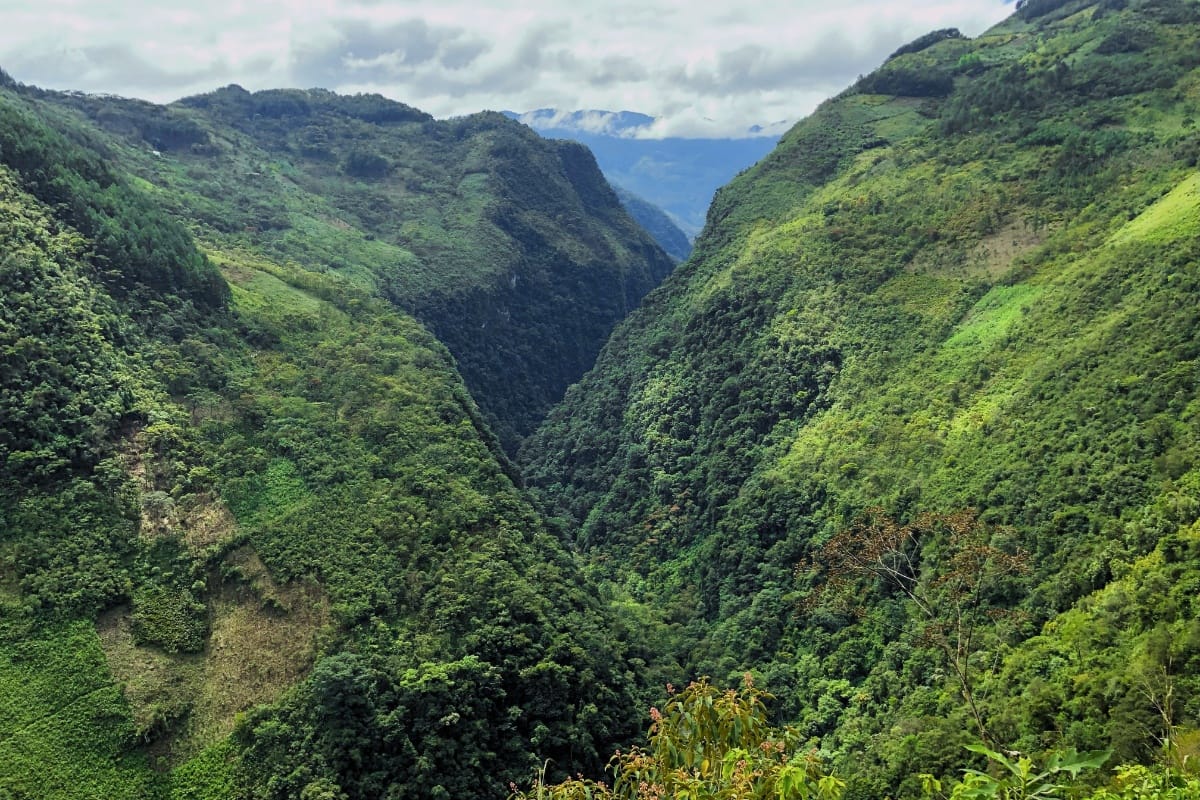
Back in 1889, during his extensive expeditions through Guatemala, the renowned US botanist John Donnell Smith found his way to the thick-forested Barranca Rubel Cruz in the department of Alta Verapaz, a remote steep canyon where he ventured to collect all sorts of fascinating plants not yet known to Western science. Still growing across the region, several species continue to commemorate him through their scientific names (like the striking Q’ojoj, Louteridium donnell-smithii). But there was one remarkable passionflower documented by Smith amid the canyon’s pristine woods, Passiflora clypeophylla, that could never be found again until 2024—more than a century after its initial discovery!
Four botanical quests were launched between 2008 and 2018 in an effort to relocate Passiflora clypeophylla in the wild, yet not a single one managed to find it. So passionflower experts finally deemed it extinct, forever lost from the face of the Earth. But all those expeditions shared the same crucial detail: none of them could actually make it to the very canyon where the species was originally found. They all focused on exploring the surroundings instead, which turned out to harbour a fairly different suite of wild plants. And there was a reason why.
Not only is the barranca with its almost vertical flanks very difficult to access. It also falls within the historical lands of the Q’eqchi’ Maya community of Rubel Cruz, whose village sits atop the canyon. The Q’eqchi’ are one of the largest Maya groups in Guatemala and make up most of the population in this part of the country, where several communities have been caught up in intense sociopolitical struggles over the expansion of large-scale energy projects.
Through the forest where the enigmatic passionflower once amazed J.D. Smith flows the Cahabón River. It is one of the major river arteries of Northern Guatemala, sacred to Indigenous cultures, and a vital source of water for many communities across the region. It is also traversed by RENACE, one of the largest hydroelectric complexes in Central America, which kept growing over more than two decades without the rightful consultation of Q’eqchi’ locals. It was these long-running disputes over land ownership that prompted the members of Rubel Cruz to restrict foreigners' access to their canyon.
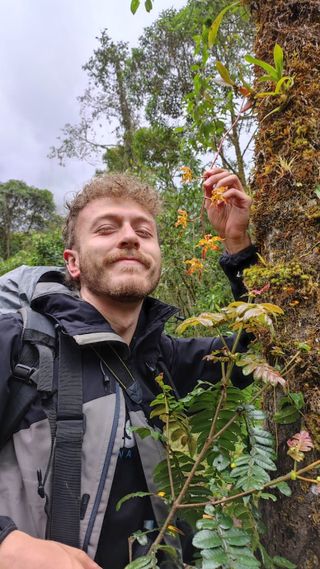
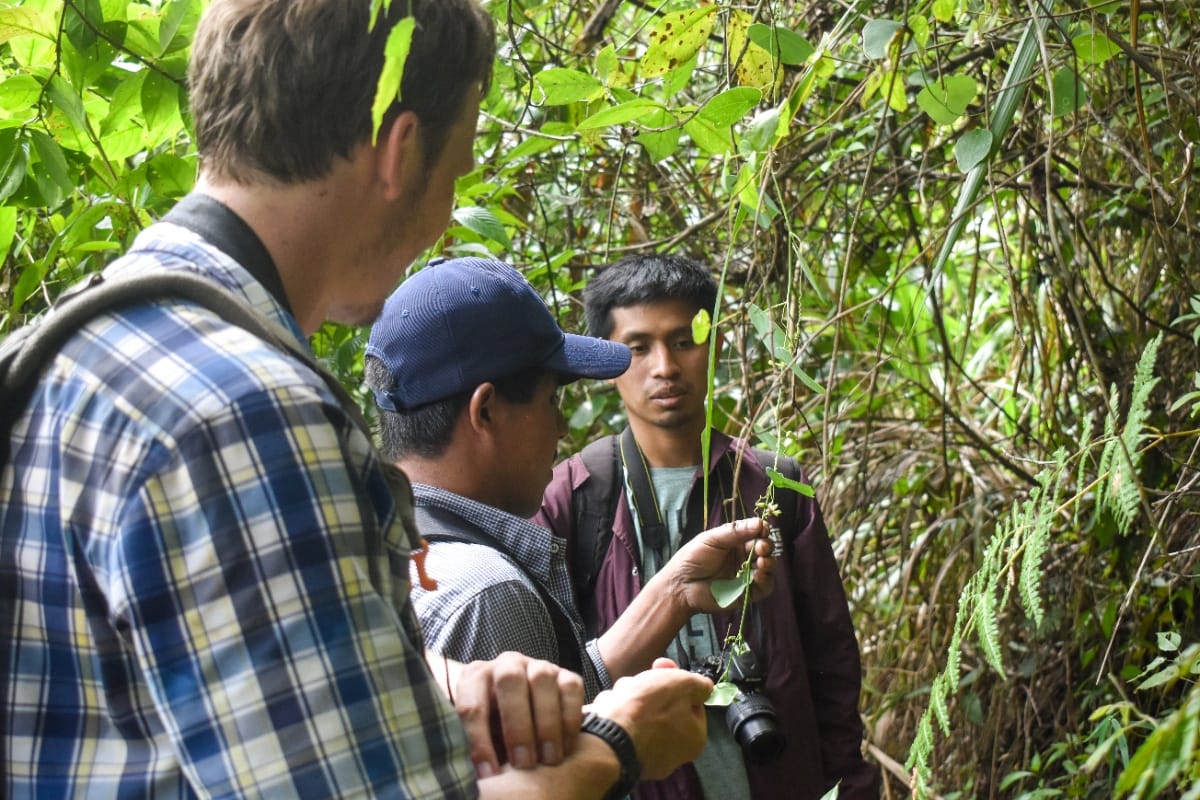
But this time, researchers did something different. In 2024, a new expedition to study the passionflowers of Guatemala was led by the British specialist Jay Kuethe from the University of Auckland in New Zealand. A couple of years earlier, he had met Dennis Medina Chub, a local agronomist with Maya roots, a deep passion for botany and a remarkable talent for tracking rare plants in the wild. Kuethe invited him to join the journey, and Medina eventually earned his place as second author of the article announcing the rediscovery of Passiflora clypeophylla.
“Everything I know about passionflowers I learnt from him [Kuethe]; he's my mentor in that regard,” said Medina in an interview with Botany One. But it was Medina who was finally able to bridge the longstanding gap between researchers and locals in a mixture of Spanish and Maya Q’eqchi’, the main language of the community of Rubel Cruz. He put it simply: “Neither Jay nor I would have found that particular species on our own.”
Birdwatching for the Missing Passionflower
Kuethe’s invitation to join the expedition was an easy yes for Medina. He was granted time off from his job as a forest ranger at Laguna Lachuá National Park and joined the research team in the cloud forests of Baja Verapaz, the next department south. There were three more foreigners and another Guatemalan researcher. “Much of the work involved looking for species along roadsides and field tracks,” he said, “as many passionflowers go for rather open, disturbed areas.” But not all passionflowers.
In the field one day, Kuethe approached Medina and told him he wanted to go searching for Passiflora clypeophylla once more in the karst forests to the north. He readily agreed, they changed the itinerary and set off on a trip that had not been originally intended. Before long, they found themselves in Rubel Cruz.
Once in the village, Medina asked for the head of the community council and went looking for him at his house. "We'd like to go down that ravine, where the river runs," Medina told the leader, pointing to the cliffs visible from his hilltop home. He said they were students and told the man about their search for the elusive passionflower. The whole rest of the day unfolded in conversations and negotiations, but in the end it was all worth it: they agreed to head down into the forest guided by a member of the community the following day.
The search began early in the morning. It would prove no small challenge, as there were neither reference pictures nor useful herbarium material of the species; the only known specimen had fallen apart, and all they had was an old hand-drawn sketch. But its name, clypeophylla, offered an important clue. The researchers knew that the leaves of the missing plant should resemble those of other abundant vines once grouped under the name Clypea. The descent was risky, and those look-alikes were common enough to keep misleading the team along the way.
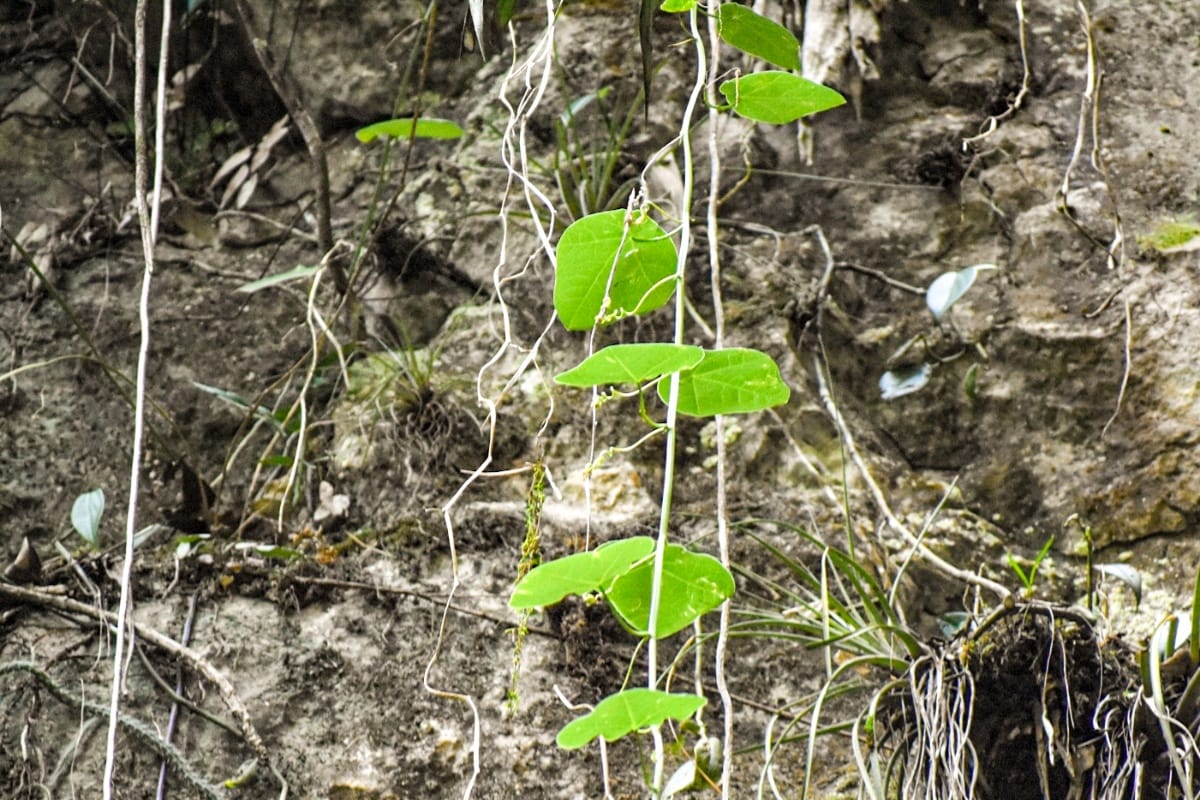
Plant scientists are not exactly known for bringing binoculars on their field trips; those are usually thought of as birdwatching gear. Yet luckily, Medina is not your typical botanist. Besides his passion for plants, he often joins the region’s birders and knows the value of long-range vision. So, at their first stop across the canyon, he naturally raised his field glasses and began inspecting the flora growing on an imposing limestone wall about 50m high. And that was when he spotted it: a plant unlike any they had seen before.
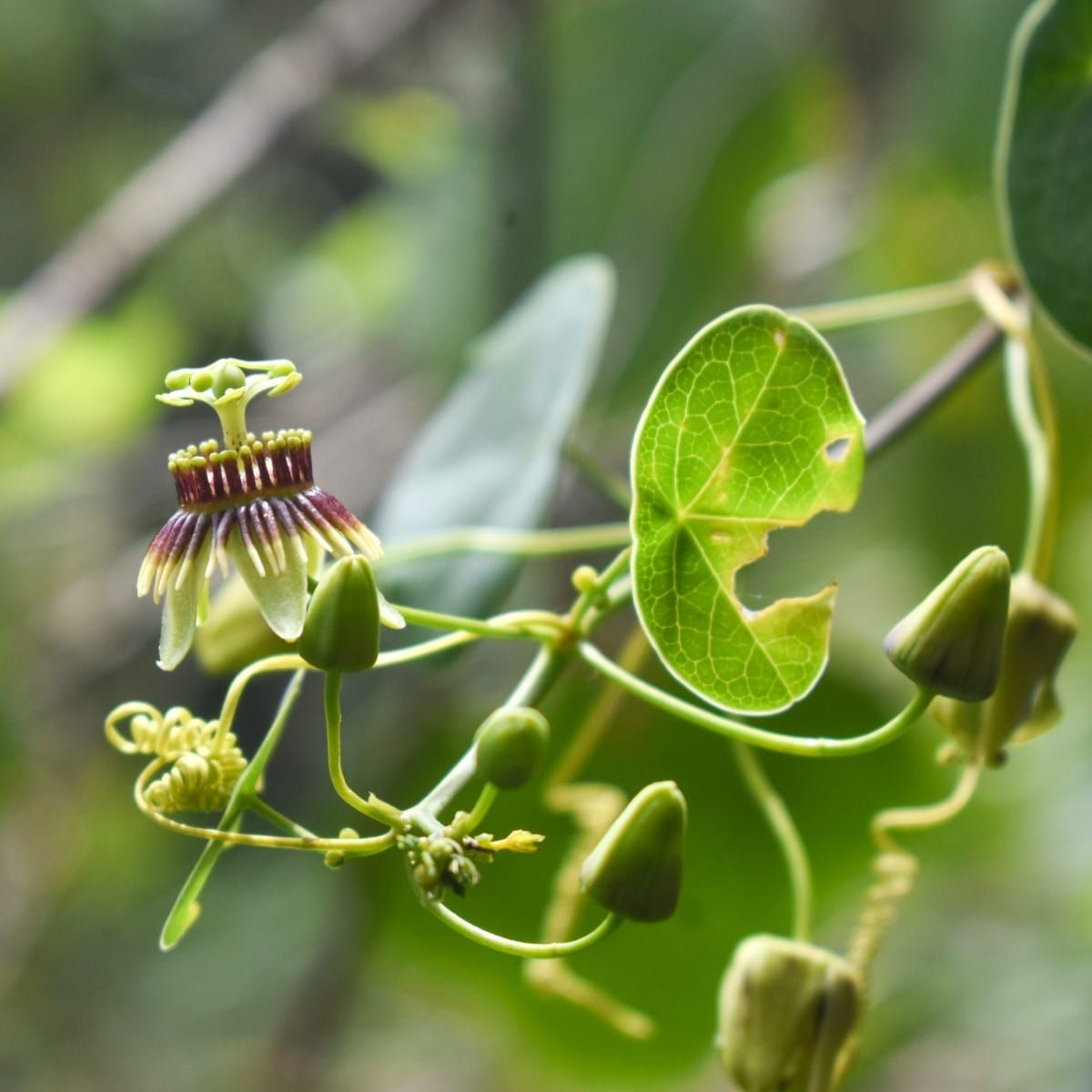
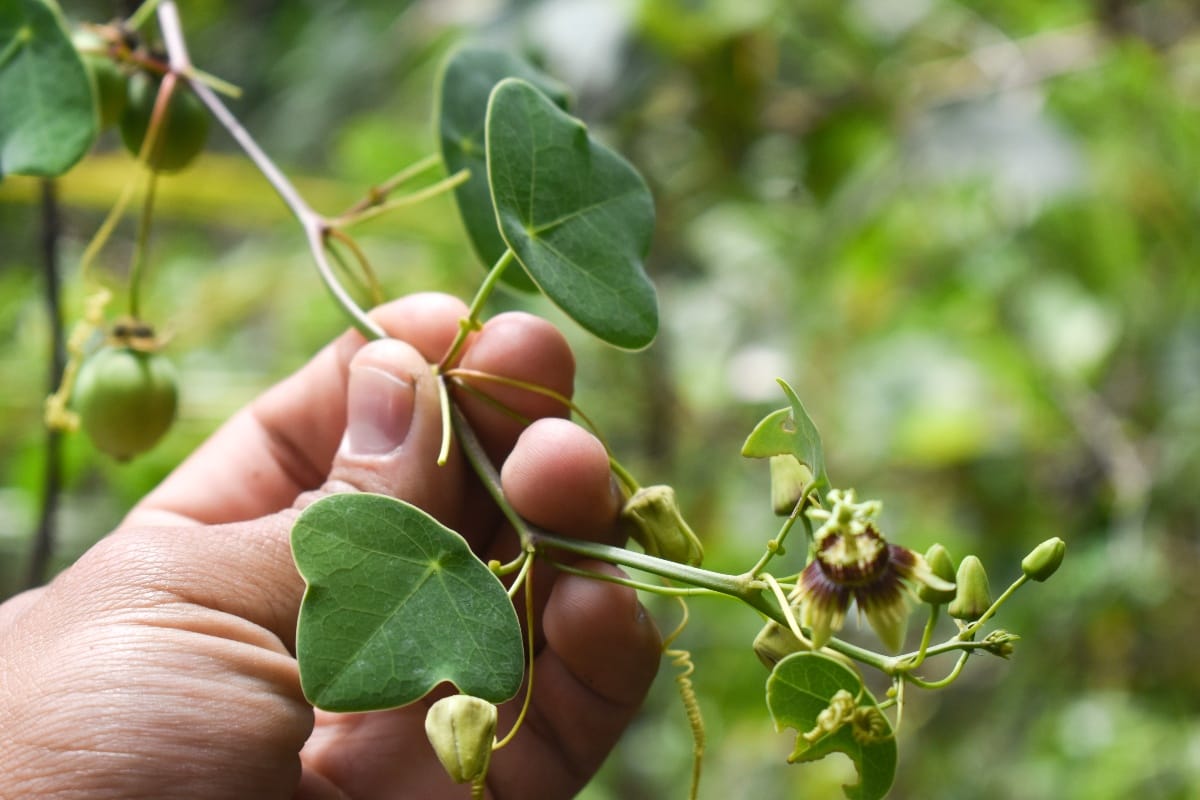
“The leaves three-lobed, shiny and coriaceous, with glands in the petioles and axillary tendrils,” thought Medina as his heart started racing. “It was nothing like the vines we knew.” He immediately called Kuethe and handed him the binoculars; the lead researcher carried a drone, but it had run out of battery. “The man went pale and jumped out of excitement. ‘This is it,’ he said.” For the young Guatemalan botanist, the excitement of that moment remains indescribable—not only because he spotted a plant that no one had seen for over a hundred years, but especially because he found it alive when it was thought to be extinct.
After a moment of pure joy, the team resumed their descent through the rugged landscape towards the river. They wanted to reach the original site of the discovery, hoping to find a more accessible specimen to collect new herbarium material. As they got closer to the most recent hydroelectric facility, they suddenly saw it hanging above their heads. Passiflora clypeophylla had been there all along.
A Boost for Botany and for Medina
Now, finding a supposedly extinct species was only part of the story. The expedition also revealed new insights into the plant's secret life. It was found to grow exclusively in limestone cracks, for example, a rare habit among passionflowers and one possible explanation for its restricted range within the canyon. Native stingless bees were further observed as likely pollinators, helping ensure the species’ survival in exchange for nectar. The researchers even noticed that most leaves were untouched, despite passionflowers being a favourite food of certain caterpillars, suggesting that the resemblance to Clypea vines might be an evolutionary strategy to deter herbivores.
With the community's authorisation, the team also collected fresh botanical samples and deposited them in the herbarium of the Universidad de San Carlos in Guatemala City. These enabled an improved morphological description of the species and will remain a valuable resource for future research and conservation efforts. They also sent living material to the Guatemala Botanical Garden, where it rooted successfully and is now growing under protected conditions to help ensure the species' long-term conservation.
As for Medina, the rediscovery gave a major boost to his botanical vocation. He has since expanded his work to orchids, cycads and aroids, collaborating with researchers from different countries such as Mexico and Colombia. “I love plants, I live among plants, and I do everything for plants,” he says, emphasising the influence of his grandparents and his Q’eqchi’ roots, “a culture deeply connected to nature”. He still dreams of contributing more to the knowledge and conservation of Guatemala’s passionflowers. For now, he says he returned to Rubel Cruz earlier this year and found Passiflora clypeophylla still flowering among the canyon’s towering cliffs.
READ THE ARTICLE:
Kuethe, J. R., Medina, D. I., Sequen, S., Quezada, M. L. (2026). Rediscovery of Passiflora clypeophylla (subgenus Decaloba): a highly threatened and narrow endemic species found within a karstic canyon in Guatemala. Nordic Journal of Botany, 2026(5): e05001. https://doi.org/10.1002/njb.05001
Spanish translation by Andrés Pereira-Guaquetá.
Cover picture: Passiflora clypeophylla flowering in the preserved forests of Rubel Cruz in Guatemala. Photo modified from Dennis Medina Chub.