


Imagine every plant as a tiny pharmacy, constantly mixing and releasing its own unique set of natural chemicals. These compounds are known as metabolites and help plants survive and succeed in their environments. Some allow them to hold on to water during droughts, while others protect them from hungry insects or act like perfumes to attract pollinators.
However, making these compounds takes energy. So, each plant must choose what to produce, based on its needs and surroundings. For example, a plant growing in a sunny and dry patch might invest more in compounds that reduce water loss, while another growing in a shady and insect-filled corner might focus on defensive compounds. These choices reflect trade-offs shaped by the genetics of the plants and the environment in which they are growing, resulting in a unique chemical fingerprint for each individual.
Despite this, scientists have expended most of their time trying to understand how plants grow and compete, focusing on traits we can easily see, like how tall a tree gets or how fast it grows. But in recent years, researchers have started to look deeper, turning their attention to the full collection of chemical compounds a plant produces.
Most studies so far have compared these chemical profiles between different species. But just like humans can have different genes, diets, and lifestyles, individual plants within the same species can vary too. This within-species variation might be significant for species differences—affecting how plants grow, defend themselves, and interact with others. Yet, due to the high cost and complexity of chemical analyses, this level of variation has remained overlooked.
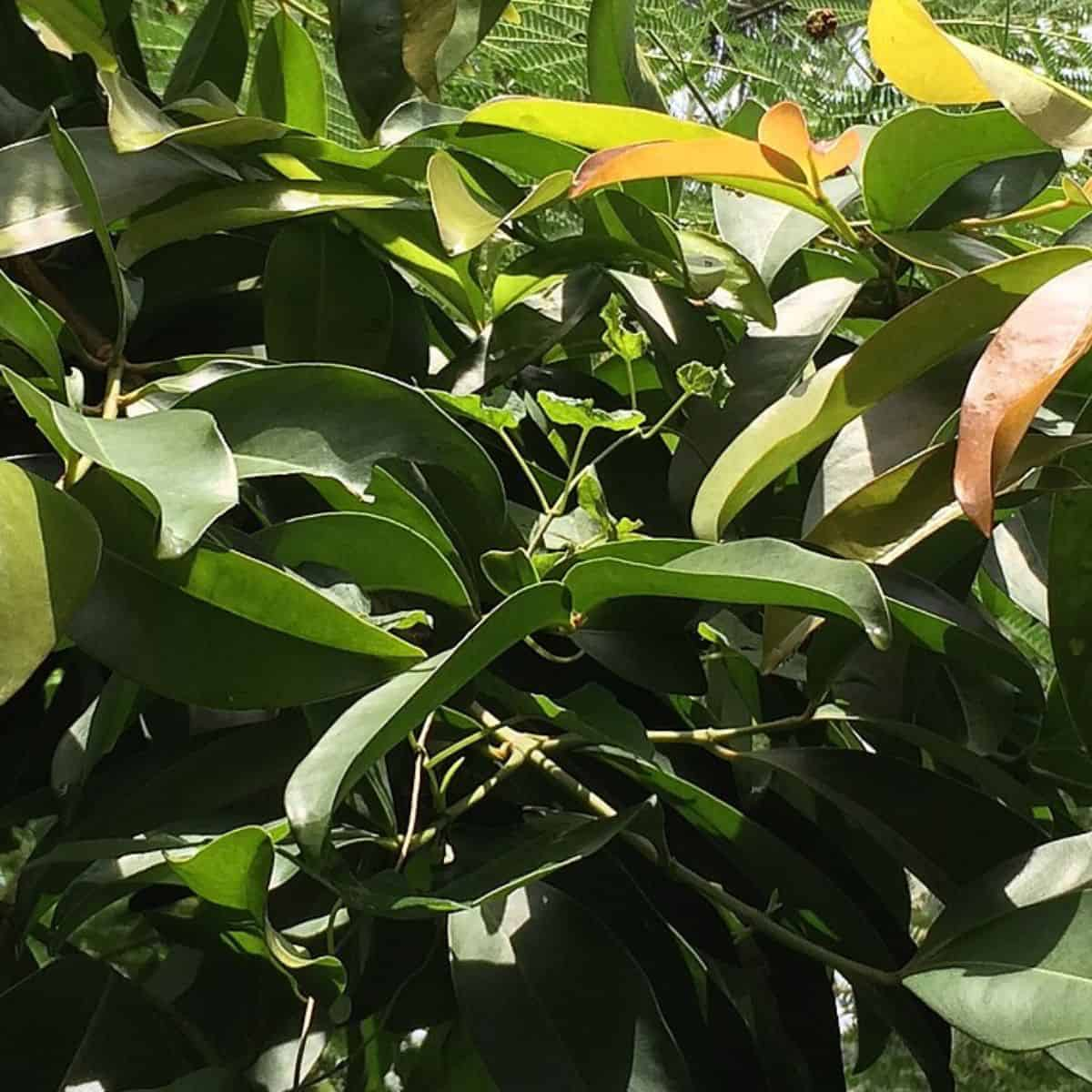
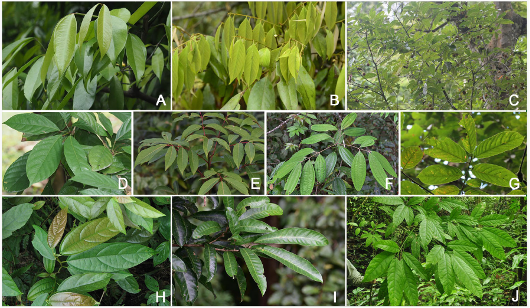
With this in mind, Yunyun He and her team conducted a study to identify what drives variation in plant metabolites, even among members of the same species. They measured genetic differences and environmental factors like soil, light, and herbivory in 300 trees across 10 species in a tropical rainforest in southern China.
The researchers found that individual trees, even within a single tree species, can differ enormously in the chemicals they produce. And these differences are not random. Each tree carries its own unique “chemical signature”, made up of substances like fatty acids, terpenoids, and alkaloids. This diversity is shaped by a combination of factors, such as the genes, the physical environment, and the living creatures they interact with in their surroundings.
Interestingly, some species showed much more variation between individuals than others. For example, Macropanax dispermus had a wide range of chemical profiles among its trees, while Baccaurea ramiflora was far more chemically consistent. This possibly happens due to the ecological, physiological and genetic strategies of each species, as well as their interaction with the environment.
The study also revealed that different types of compounds are influenced by different factors. Defensive chemicals, known as secondary metabolites, were most affected by biotic interactions, such as herbivory and competition with other plants. In contrast, primary metabolites like carbohydrates, essential for growth and energy, were more strongly influenced by abiotic factors such as light, soil, and nutrient availability.
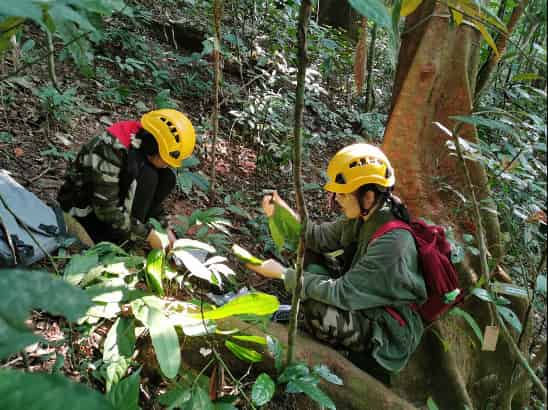
One of the most striking discoveries was that each species responds to its environment in its own way. In some species, genetic traits interacted closely with environmental conditions to shape chemical diversity. In others, environmental effects were more straightforward. This suggests that a plant’s chemistry is not simply the result of its DNA or its environment alone, but of a dynamic and species-specific interaction between the two.
By revealing these hidden layers of diversity, the study challenges traditional views of plant ecology and opens the door to more detailed, nuanced understandings of how forests function. Looking ahead, these findings raise exciting questions: How might chemical variation affect species coexistence, competition, or resilience? And as tropical forests face growing threats from climate change and habitat loss, could unlocking the chemical secrets of plants help us better protect biodiversity? There is still so much to learn, but we will be here, eager to see what discoveries come next.
READ THE ARTICLE:
He, Y., Junker, R. R., Xiao, J., Lasky, J. R., Cao, M., Asefa, M., … & Sedio, B. E. (2025). Genetic and environmental drivers of intraspecific variation in foliar metabolites in a tropical tree community. New Phytologist, 246(6), 2551-2564. https://doi.org/10.1111/nph.70146.

Victor H. D. Silva
Victor H. D. Silva is a biologist passionate about the processes that shape interactions between plants and pollinators. He is currently focused on understanding how urbanisation influences plant-pollinator interactions and how to make urban green areas more pollinator-friendly. For more information, follow him on ResearchGate as Victor H. D. Silva.
Portuguese translation by Victor H. D. Silva.
Cover picture by Renaudsechet (Wikimedia Commons).