

Developing taxonomic keys to identify a species is one of the rights of passage in grade school science. Does the species have flowers? Yes or no. Does the species develop a berry? Yes or no. Eventually, you follow the key down to the plant’s identification.
While in grade school you might have pictures for this exercise, but traditionally scientists have developed dichotomous identification keys using written descriptions of characters. This can be a difficult endeavour. Monograph descriptions tend not to be accessible to most people because of specialised terminology and because they are often locked behind paywalls. Consequently, identification keys are particularly underdeveloped for large plant families.
This has all changed with the digital revolution, which has led to the public release of expert-verified images of herbarium specimens and live plants. In a new paper published in Annals of Botany, Särkinen et al have applied the global digital archive to the creation of species-level identification keys in the large genus Solanum. Now, people the world over can use their smartphones to identify these plants.
“Identification tools enable taxonomy users to link plants to their correct names and thus to the corpus of previously published information on species,” write Särkinen et al. “Thanks to the digital revolution, however, plant identification has gone through major changes due largely to the availability and easy access of expert-verified digital images of herbarium specimens and live plants from both collections-based institutions and community scientists.”
Solanum L. is a particularly important genus from a human perspective because of the economic value of many of its species (e.g. potatoes, tomatoes and eggplant/aubergine). But it is scientifically interesting because with 1239 accepted species, it is one of the largest flowering genera. Särkinen et al used available information to identify a set of 63 morphological characters that can distinguish between these species.
“We selected 29 vegetative characters, 31 reproductive characters and three characters relating to geographical distribution and whether the plant is cultivated or wild,” write Särkinen et al. Two further characters were included to enable filtering by minor clades.
The types of characters included information on growth forms (e.g. herb? epiphyte?), rhizomes, prickles, trichomes, hairs, branching pattern, leaf morphology, leaf odour, inflorescence position and morphology, fruit morphology, sexual system and geographical distribution.
Two keys were developed using Xper3, which is freely available and can use a combination of text and images to construct and publish online keys: a global key to Solanum species and a global key to Solanum groups. Both keys are publicly available to use.
“The group-level key includes all 68 currently recognized groups (i.e. minor clades) in Solanum, while the species-level key includes 65 % of all Solanum species (805 spp.) excluding 434 spiny species from the Americas, Australia and Oceania. The remaining 434 spiny species will be added over the coming years to complete the key,” write Särkinen et al.
In the meantime, this intuitive system is available for public use by everyone to identify Solanum species, whether they are growing in your garden or stored in your herbarium collection.
READ THE ARTICLE
Särkinen, T., Hilgenhof, R., Gouvêa, Y.F., Giacomin, L.L., Stone, J., Aubriot, X., Tepe, E.J., Barboza, G., Chiarini, F., Stern, S., Tovar, J.D., Bohs, L., Martine, C.T., Orejuela, A., Orozco, C.I., Peralta, I.E., da Silva Sampaio, V., Rodríguez, A. and Knapp, S. (2025) “Taming the beasts: challenges of identification in big plant genera,” Annals of Botany, (mcaf164). Available at: https://doi.org/10.1093/aob/mcaf164
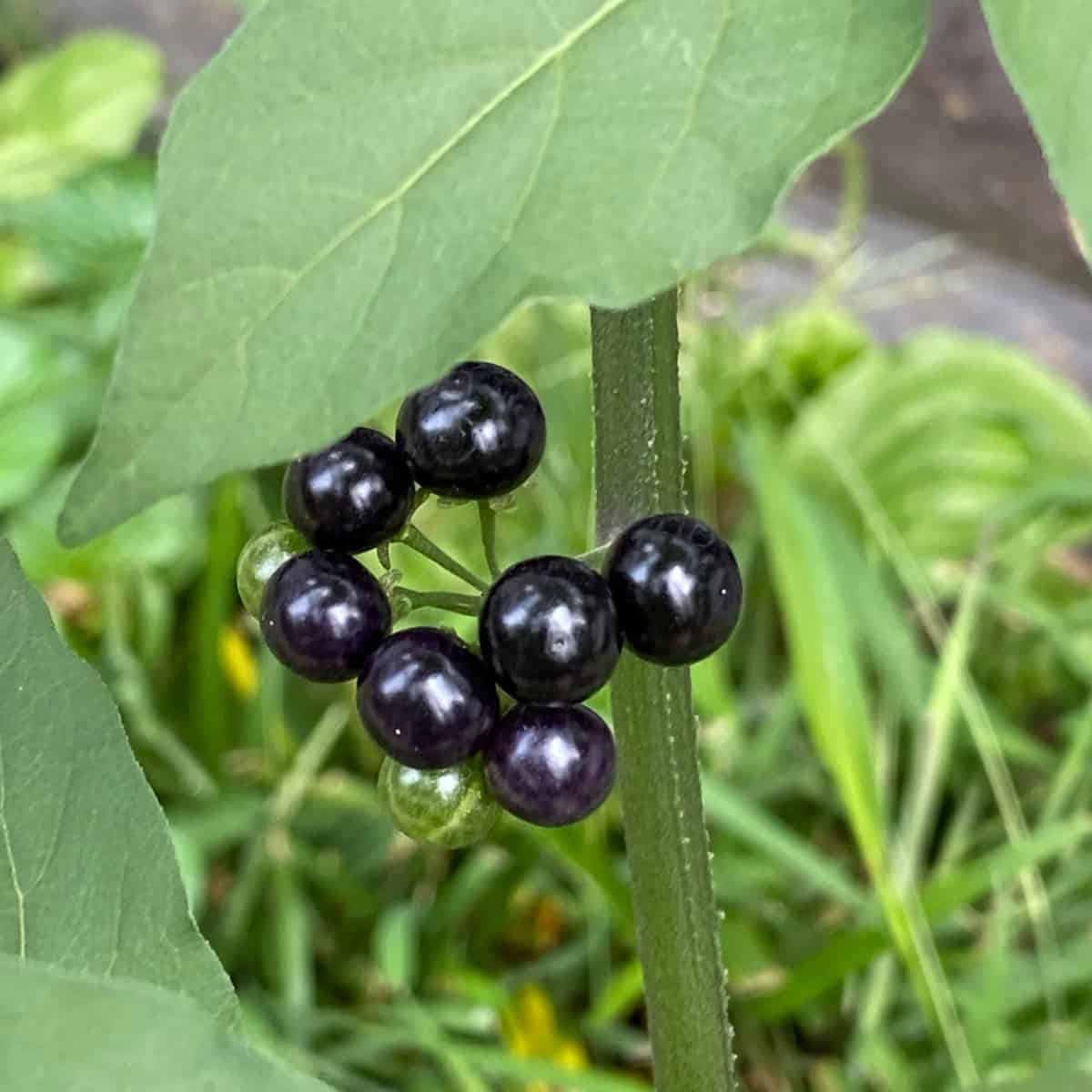
Cover image: Solanum americanum in the USA by Frederick Nunley / iNaturalist CC-BY