Reproductive interference can reduce fitness of either of the involved species, and its ecological and evolutionary consequences may depend on its underlying mechanisms.
Botanists find a clear trade-off between fruit size and phytochemical production, helping to explain why our modern varieties are highly susceptible to diseases and pests.
The consequences of delayed selfing by reproductive assurance for selection on flower size in mixed-mating species is relevant to understand the evolution of plant breeding systems.
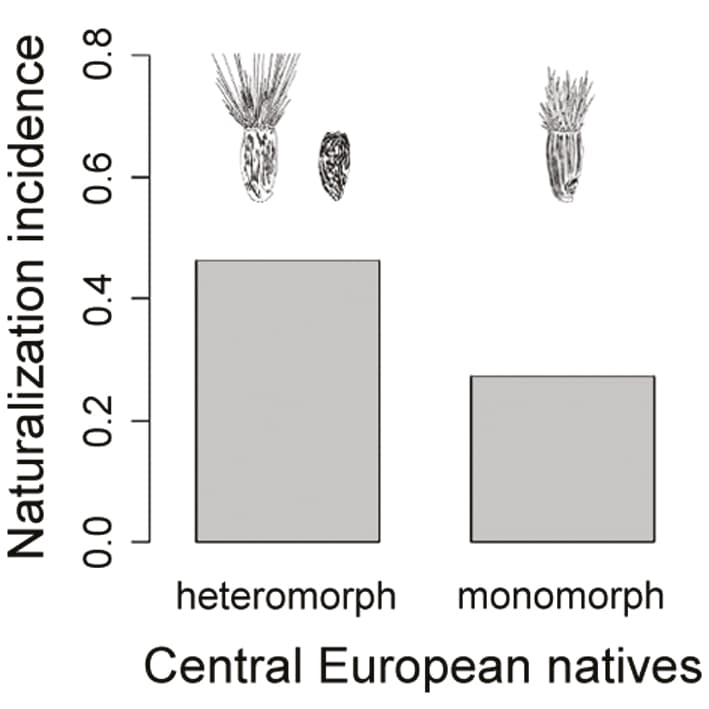
Finding the factors that explain invasion success of species is a major objective in ecology. The combination of extensive data on fruit heteromorphism in Asteraceae and the largest global plant-naturalization database offered the unprecedented possibility to add a missing piece to the naturalizatio
Floral chemistry is hypothesized to be the product of natural selection, but researchers have just begun to consider the micro-evolution of these traits.