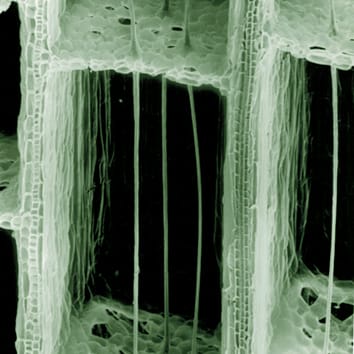
Witztum and Wayne dissect leaves of various species of Typha, and examine the fibre cables – composed of long, non-lignified cells – that traverse the air chambers (lacunae).
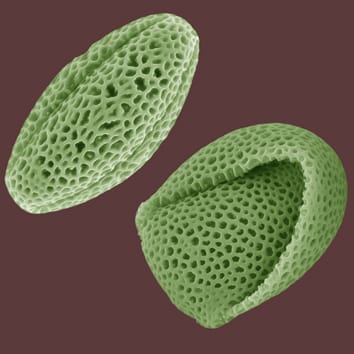
Lin et al. examine expression of Brassica campestris male fertility 8 (BcMF8) in pistils of Chinese cabbage (B. campestris ssp. chinensis), and find that it encodes a putative AGP that is located in the cell wall and is expressed in pollen grains and pollen tubes.
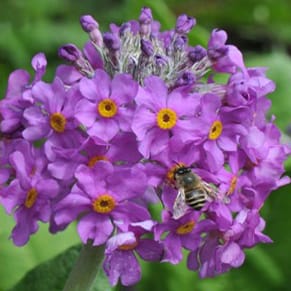
Ma et al. study a natural hybrid zone between two heterostylous primrose species, Primula beesiana and P. bulleyana, and find that all hybrid derivatives examined are backcrosses of first or later generations to P. bulleyana, and have the cpDNA of that species.
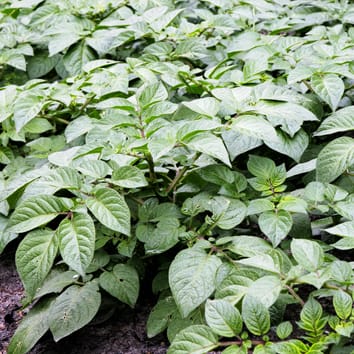
Kiełbowicz-Matuk et al. investigate variations in a Solanum DBB protein, SsBBX24, in S. tuberosum and S. sogarandinum and find evidence of trafficking from the nucleus to the cytosol during the light period.
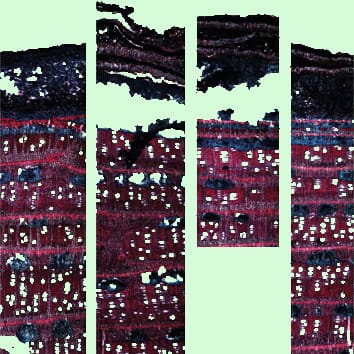
Robert et al. monitor stem variations in A. marina trees in a natural mangrove forest over the course of one year, and find that patchiness occurs in both the radial growth and the shrinkage and swelling patterns of the stems.
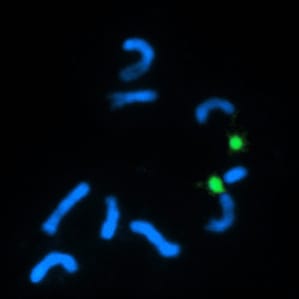
Sousa et al. combine cytogenetics, using fluorescent in situ hybridization (FISH), and modelling of changing chromosome numbers in a maximum-likelihood framework to study Typhonium, a genus of Araceae with 2n = 24 and 2n = 8, the lowest known count in the family.
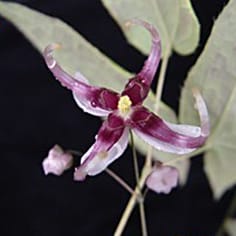
Sun et al. study structural and functional variation of FUL-like (AP1 subfamily), SEP-like and AGL6-like genes in the basal eudicot Epimedium sagittatum.
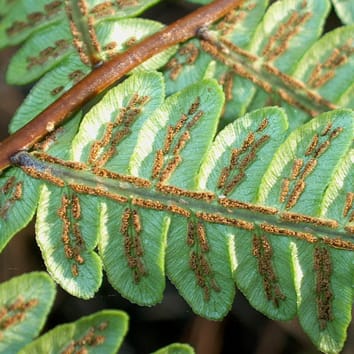
Christenhusz and Chase highlight which fern groups/genera have taxonomic issues that remain to be clarified, and propose the use of broader family concepts.
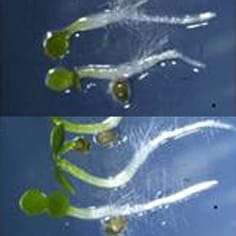
Dyson et al. study wild-type A. thaliana and a gpt2 T-DNA insertion knockout line, and find that plants lacking GPT2 expression are delayed in seedling establishment, specifically in the process of cotyledon greening (rather than germination).
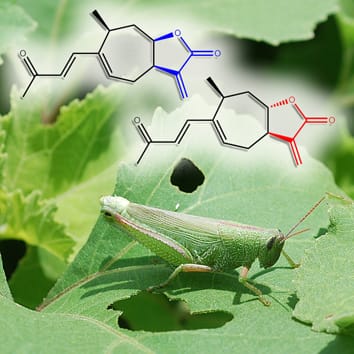
Ahern and Whitney use common garden experiments with common cocklebur, Xanthium strumarium (Asteraceae), to examine relationships between stereochemical variation in sesquiterpene lactones, herbivore damage and plant fitness.