

Deep in Mexico’s Sonoran Desert, plants and ants form remarkable partnerships. Nearly one-third of desert plants produce sweet nectar for insects, but the nectar isn’t always from inside their flowers. Instead it’s from extrafloral nectaries, specialised glands on flower buds, stem joints, and other plant parts attract protective ants throughout the year. Valdez‑Ojeda and colleagues found that relationships shift dramatically between seasons. One of the striking findings is that cacti, understudied for extrafloral nectaries, play a central role in this relationship.

The researchers discovered that while more ant species visit plants during the rainy season, the interactions are actually more frequent during the dry season when resources are scarce. One cactus species, Cylindropuntia fulgida, emerged as particularly important, maintaining strong ant partnerships year-round. During the challenging dry season, both plants and ants become more dependent on each other – the plants need protection when producing new flowers and fruits, while ants rely more heavily on the nectar for food and water. This shows how desert species adapt their partnerships to survive extreme seasonal changes.
To understand these desert partnerships, scientists spent six months studying plant-ant interactions at three sites in Mexico’s Sonoran Desert, capturing both dry and rainy seasons. They carefully identified which plants had extrafloral nectaries by looking for signs like nectar accumulation and ant activity. The team monitored tagged plants three times daily – morning, afternoon, and evening – watching for ants feeding on nectar. They used special traps containing sugar-rich bait to sample the ant community, and collected specimens to identify exactly which species were involved. By analyzing these observations as a network, they revealed how the web of relationships between plants and ants shifts with the seasons.
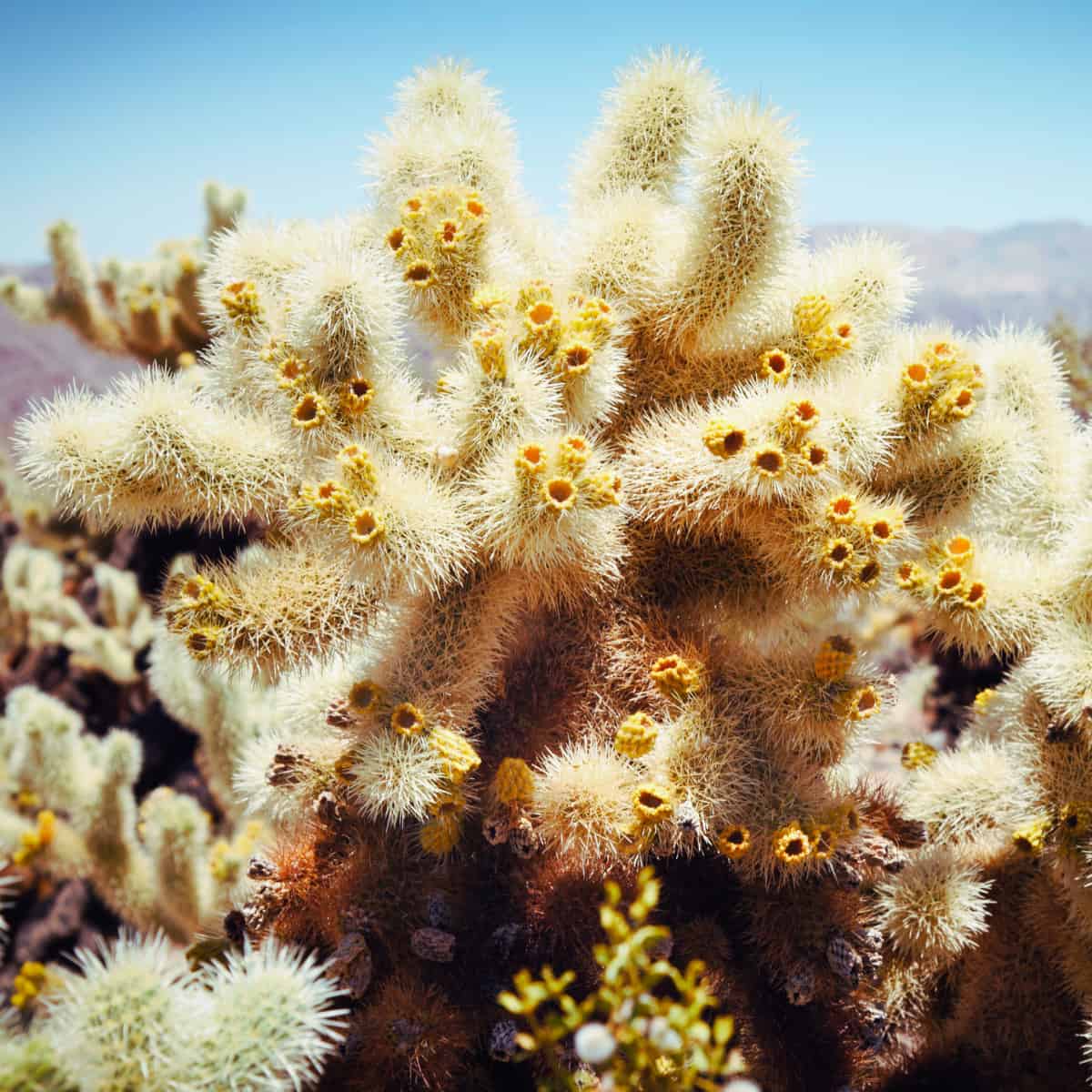
Of all the desert plants studied, cacti were the most engaged in these partnerships – seven different cactus species maintained relationships with ants. Despite their imposing spines and thick protective stems, these desert icons have evolved additional strategies for survival. Their extrafloral nectaries appear in creative locations: around the base of spines, on flower buds, and near developing fruits. The variety of locations suggests that cacti aren’t just using extrafloral nectaries to attract plant bodyguards, but also directing them to and from specific parts of the plant as needed.
While scientists have long known that some plants attract protective ants with nectar rewards, this research shows how these relationships help maintain desert biodiversity despite harsh conditions. The study also reveasl something how these relationships aren’t static, but dynamically shift with the seasons. This is particularly important as climate change affects desert environments. When rainfall patterns change, both the timing of plant growth and ant activity could be disrupted, potentially affecting these delicate partnerships that have evolved over time.
Valdez-Ojeda LF, Vásquez-Bolaños M & Molina-Freaner F. 2024. Seasonal variation in the ant-plant interaction network mediated by extrafloral nectaries in the southern Sonoran Desert. Arthropod-Plant Interactions. https://doi.org/nwrj
Read free through ReadCube: https://rdcu.be/d3lmC