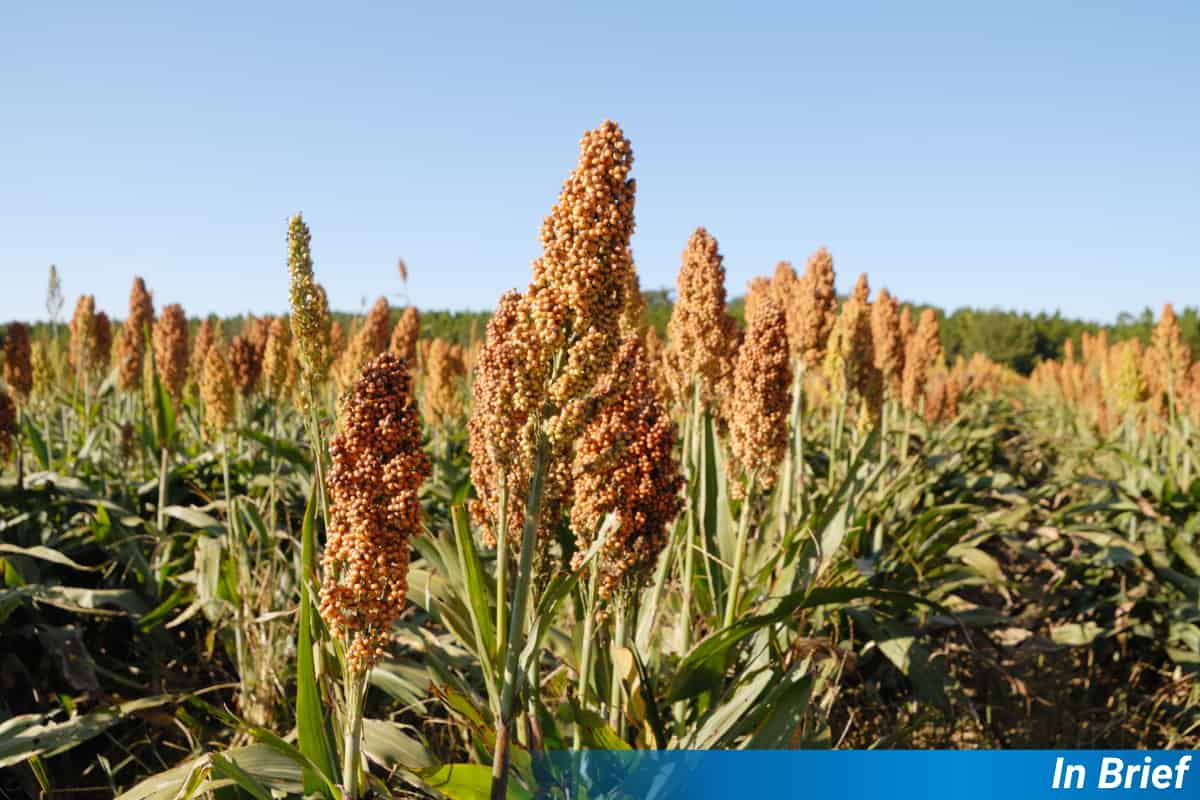



Scientists have discovered how sorghum roots adapt to low-phosphorus conditions, potentially paving the way for more resilient crops. Mikwa and colleagues studied nearly 300 sorghum varieties, finding that roots grow longer and thinner when phosphorus is scarce. This allows plants to explore more soil and scavenge limited nutrients efficiently. Understanding these adaptations could help breed crops that thrive with less fertiliser, addressing concerns about dwindling phosphorus supplies and future food security.
The study revealed significant adaptations in sorghum root architecture under phosphorus-deficient conditions. Roots grew longer and produced more tips, while becoming thinner to cover more area efficiently. These changes were observed as early as 21 days after germination, with variations among different sorghum varieties. The researchers identified four distinct root system types, suggesting genetic control over these adaptive responses.
Researchers grew sorghum seedlings in paper pouches with nutrient solutions under controlled greenhouse conditions. They used two treatments: optimal phosphorus and phosphorus-deficient. Root system images were captured at 21 and 42 days after germination using a high-resolution camera. Advanced software, RhizoVision Explorer, analysed these images to extract detailed root architecture traits. The team also conducted genetic analysis using DarTSeq technology to identify DNA markers associated with root responses to phosphorus availability.
Phosphorus is crucial for crop growth, but global supplies are dwindling, threatening future food security. Sorghum, a vital cereal crop known for its climate resilience, is increasingly important in this context. Understanding how sorghum roots adapt to low phosphorus could lead to breeding more efficient varieties that require less fertiliser.
Mikwa, E.O., Wittkop, B., Windpassinger, S.M., Weber, S.E., Ehrhardt, D. and Snowdon, R.J., 2024. Early exposure to phosphorus starvation induces genetically determined responses in Sorghum bicolor roots. Theoretical and Applied Genetics, 137(220). https://doi.org/10.1007/s00122-024-04728-4 (OA)