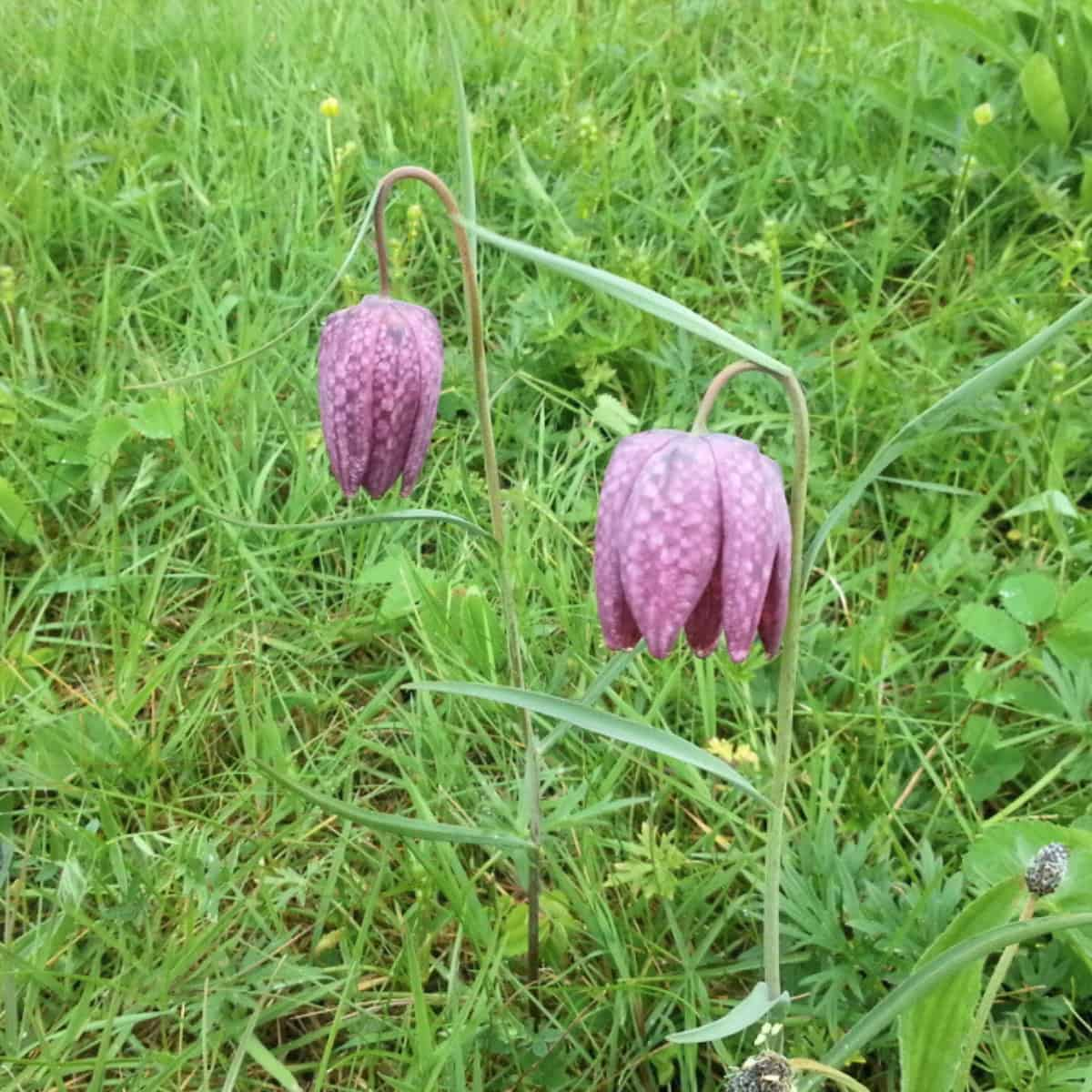



The site Bird Guides has an interesting story on Fritillaria meleagris, the Snake’s Head Fritillary. A recent survey has five times more of these rare flowers recorded than last year.
The survey is the annual count of Snake’s-head Fritillary at Iffley Meadows, which recorded almost 30000 flowers this year. Bird Guides quotes Senior Ecologist Colin Williams: “While it remained well below previous peak records, it’s a vast improvement on last year’s disappointing result.”
It’s a big success for the @bbowt.bsky.social who counted just 500 plants when they first started counting. Floodplain meadow is rare in the UK, and so is tremendously valuable for many species that rely on this habitat. The recovery highlights how resilient the fritillaries are.
Snake’s-head Fritillary is mostly found in the floodplains of the Thames and its tributaries. It is adapted to seasonal flooding, with floods suppressing competition, but dry seasons preventing bulb rot. According to Tatarenko et al it’s their ability to lie dormant that is key to their success. At some locations, Tatarenko and colleagues say that between 30% – 99% of plants can lie dormant over a year. This adaptation allows them to survive adverse conditions like the extreme flooding that devastated the 2024 count. It also allows one year’s count to vary wildly from another’s.
Another factor that helps the plants survive is that they take advantage of micro-topography. Hytteborn et al show that the plants respond flexibly to the same conditions, by having variety of habitat in one location, which helps buffer populations against extreme conditions.
A possible issue for F. meleagris conservation in the UK in the future may be a change of status. Kevin Walker argues that it’s most likely an introduced species, escaping downstream from gardens, when it was first grown in the 16th century. He finds no record of it in the wild before this time. He says: “It seems inconceivable that such an attractive plant would have been overlooked in the wild by herbalists in the fifteenth and sixteenth centuries.” He adds that it is known to have spread in Sweden and England, so may well be non-native. If so, it will no longer be as well protected in law.
Nonetheless, the Snake’s Head Fritillaries of Iffley Meadow are a good indicator species for the health of the meadow. At least here, under the eyes of the BBOWT, Oxfordshire’s county flower should be safe. You can read more at @birdguides.bsky.social’s blogpost.