

Here’s a story that you should be hearing more about. It’s got monster-sized plants, eternal youth and a plant most people have heard of. The Fraunhofer Institute for Molecular Biology and Applied Ecology IME have put out a press release titled: “Giant tobacco plants that stay young forever“.

The secret of eternal youth isn’t found in an elixir. It’s found in flipping a genetic switch to prolong the youth of a tobacco plant.
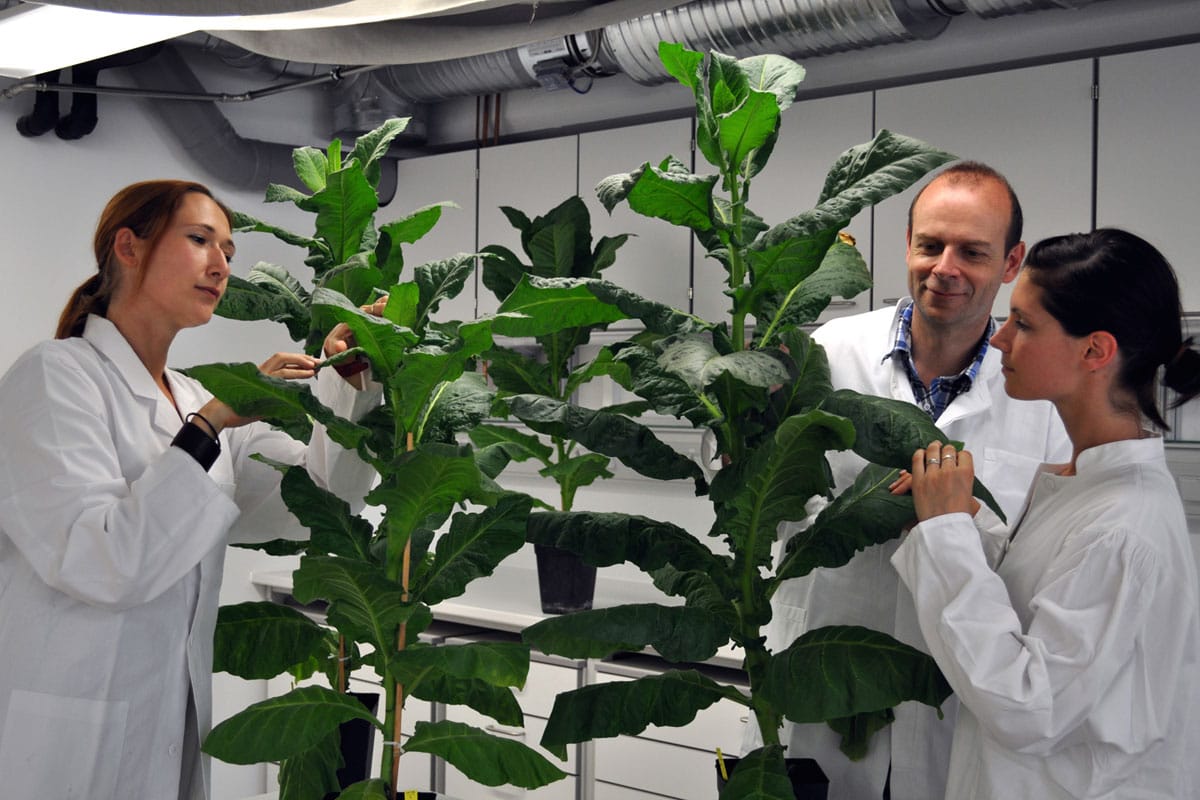
Normally tobacco grows for a few months, flowers and then dies. What Professor Dirk Prüfer and his team have done is tweak a gene to stop the plant from flowering. If the plant never gets round to flowering then it never gets round to decaying either. This isn’t simply long life but also youth as well. There are knock on effects from this youth and this is what makes the research so interesting.
Typically, a tobacco plant grows to around one and a half metres. It can only grow so far because it has such a short life. However, if it stays young then it can also keep growing. In the press release Professor Dirk Prüfer said: “The first of our tobacco plants is now almost eight years old but it still just keeps on growing and growing. Although we regularly cut it, it’s six-and-a-half meters tall.” The release looks like it’s been embargoed, but it still catches the zeitgeist with what could be an #overlyhonestmethod when Dirk Prüfer added: “If our greenhouse were a bit higher, it would probably be even bigger.”
It’s this increase in biomass that makes the news interesting. It’s not going to lead to bigger cigars, but it could help with other agricultural produce. The current target is potatoes. In the case of potatoes more biomass will mean more production of starch. “If we want to guarantee security of supply for foodstuffs and plant-based raw materials, the yield per hectare will have to double by 2050, claims the German Bioeconomy Council. This new technology brings us a great deal nearer to that target,” said Prüfer. “However, our method is only likely to deliver success as long as the flowers of the plant in question play no significant role – sugar beet, for instance. It would make no sense to use the technique on rapeseed.”
Giant plants look like they could be a gift to both sides in the GM debate: will eternally young GM crops spread out into the wild? Not if they don’t flower say the Fraunhofer Institute, but they also say this isn’t the long-term goal. The current method uses bacteria transfer the genes. However, once this gene is understood the Fraunhofer Institute will look to achieve the same result by modifying the genes with chemical mutagenesis. The press release notes: “The advantage is that a plant grown in this way would no longer be genetically modified but simply a plant grown using standard techniques.”
You can read the full release at: http://www.fraunhofer.de/en/press/research-news/2013/january/giant-tobacco-plants-that-stay-young-forever—research-news-jan.html