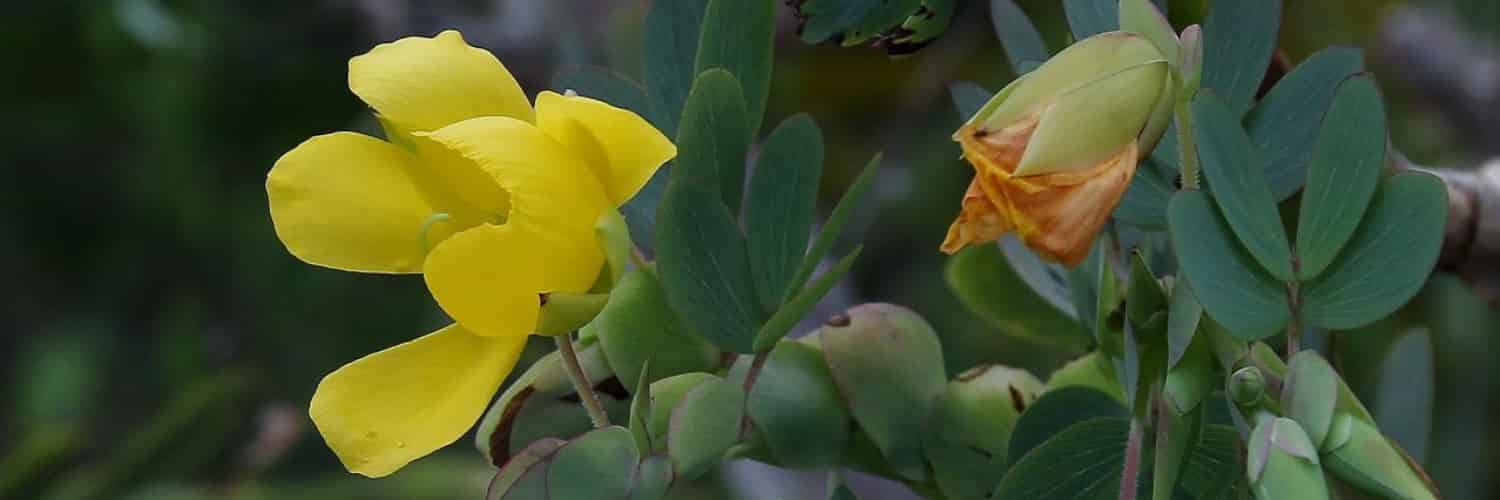



When it comes to plant reproduction, three’s company, not a crowd. Caroline Souza and colleagues have been studying Chamaecrista latistipula a yellow-flowered shrub from South America. The research, published in the American Journal of Botany reveals that pollinators prefer plants that are inoculated with nitrogen-fixing bacteria – but only in specific circumstances.
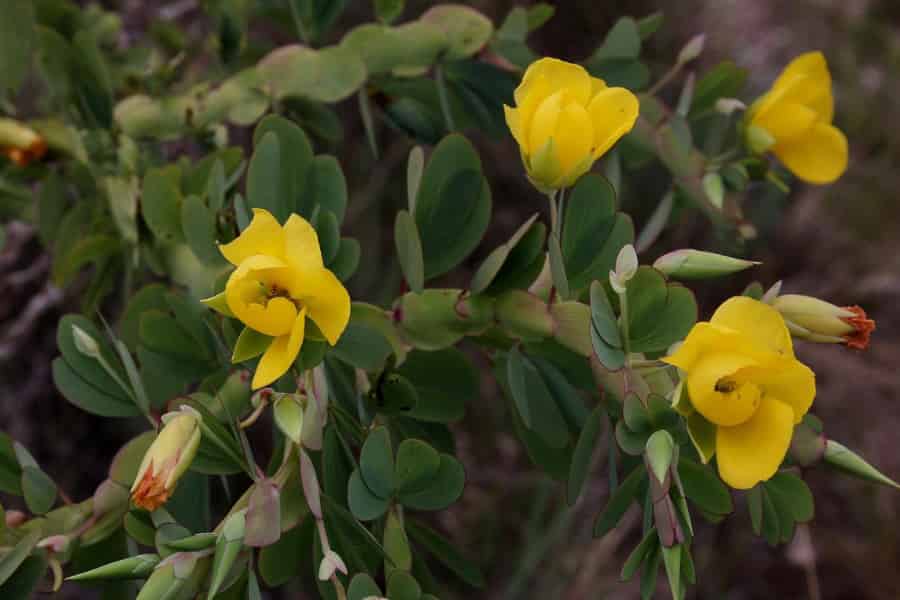
Chamaecrista latistipula is a member of the Fabaceae, the family of plants that includes beans, peas and other legumes. Being a legume can be an advantage in places where there’s little nitrogen available for plants, because legumes can form relationships with rhizobia. These bacteria form nodules on the plant roots, and then work to convert atmospheric nitrogen into ammonia. This way they convert nitrogen from a form plants cannot use to a form they can. But how much more effective are inoculated roots than bare roots, and how can the bacteria aid a plant’s reproduction?
Souza and colleagues set up a number of experiments to find out. They set up an experiment with four scenarios.
- Plants with nitrogen-fixing bacteria in poor, sandy soil
- Plants without nitrogen-fixing bacteria in poor, sandy soil
- Plants with nitrogen-fixing bacteria in rich, organic soil
- Plants without nitrogen-fixing bacteria in rich, organic soil
These treatments allowed scientists to observe how the presence or absence of nitrogen-fixing bacteria affected the plants’ growth and attractiveness to pollinators in different soil conditions. The experiment ran for 16 months, giving researchers plenty of time to observe the long-term effects of these variables.
Comparing the plants in the nitrogen-poor soil, the results were striking. These plants were the champions of flower production, generating the most flowers and flower buds among all groups. Not only did they produce more flowers, but they also boasted the highest floral density, creating an impressive floral display. Not only was the display more impressive, it was more visible too. These plants grew significantly taller and larger than their counterparts, potentially making them more visible to passing pollinators, and started blooming early with a more consistent flowering pattern throughout the study period.
Another difference was in the colour of the flowers or rather the anthers. The anthers, the part of the plant holding the pollen, had a stronger colour contrast in the inoculated plants. This made the flowers more attractive when they were close to the plants, something Souza and colleagues say is crucial in buzz-pollinating plants.
What makes this colour difference notable is that it was only seen in the inoculated plants in nitrogen-poor soil. Souza and colleagues write: “NF+ plants in +N organic soil did not consistently meet our expectations of increased pollinator attractiveness and resembled NF- plants in +N organic soil.”
The reason for this difference might be a lack of a relationship with the rhizobia in the plants in the nitrogen-rich soil. The scientists point out that forming these nodules and provisioning these bacteria is a lot more work than just pulling the nitrogen out of the soil. So the inoculated plants in nitrogen-rich soil did not make so many nodules and presumably did not have as strong a relationship with their rhizobia. This difference shows that it is the bacteria that are helping make the flowers more attractive to pollinators.
For agriculture, one of the interesting implications is that simply adding nitrogen to the soil might not be the best way to improve a crop. Despite nitrogen being critical to a good harvest, giving the plants the tools to work on grabbing nitrogen, rather than simply being given it, might produce a better crop. It would confirm that the secret to plant health is in the soil.
READ THE ARTICLE
Souza, C., Valadão-Mendes, L.B., Schulze-Albuquerque, I., Bergamo, P.J., Souza, D.D. and Nogueira, A. (2024) “Nitrogen‐fixing bacteria boost floral attractiveness in a tropical legume species during nutrient limitation,” American Journal of Botany. Available at: https://doi.org/10.1002/ajb2.16363.
Cover image: Chamaecrista latistipula. Photo Mauricio Mercadante / Flickr. CC BY-NC-SA.