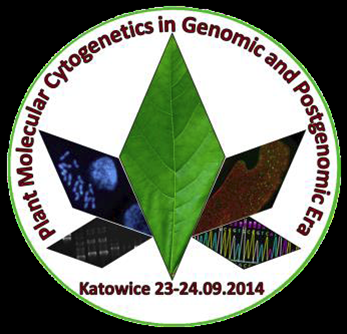

The way that we can address questions in genome evolution and expression has changed enormously in the last five years. We can get huge amounts of DNA sequence for any species for a budget within that of most labs. As importantly perhaps, the web and PC-based analytical tools now enable researcher to do something with all those giga-bases of sequence within your own lab. Linking DNA sequence to the physical chromosomes has been a continuing challenge though, despite the widespread use of in situ hybridization. The huge number of whole genome and whole-chromosome evolution processes are not amenable to whole genome sequencing, but chromosome analysis can use the information to understand real biological problems. So this week, I’m thinking about Plant Molecular Cytogenetics in the Genomic and Postgenomic Era at a meeting in Poland. Although my tweets from the conference gained quite some following (thank you for letting me know, Twitter analytics) under the @ChrConf user and #PMC tag, I didn’t have a partner on social media so impressions are a little one-sided. However, I hope the collation below will give some flavour of the range of topics addressed during the meeting – but as usual the posters and social events provided the source of new inspiration. Skype will never replace personal meetings with old friends nor give the opportunity for making new links!
This conference in Katowice, Poland, is bringing together about 150 people, mostly from Europe with a substantial addition from that hive of cytogenetic activity, Brazil. It is organized by Robert Hasterok, a leader in use of the grass Brachypodium as a model species (http://aob.oxfordjournals.org/content/104/5/873.short) and understanding its evolution (http://aob.oxfordjournals.org/content/109/2/385.short). The meeting honours Jola Maluszynska, one of the earliest people to use molecular cytogenetics and who I have been privileged to work with – not least with that other model species, Arabidopsis (some published in Annals of Botany long ago http://aob.oxfordjournals.org/content/71/6/479.short).
The programme includes good time to look at the impressive array of posters showing the vibrancy of the post-genomic research. These are described in the abstract book, but here I will overview a selection of highlights from the talks. Although speaking near the end of the programme, it is only fair to start with Robert Hasterok – it is always a challenge both to talk and organize a meeting in your home town. In a wide-ranging talk about Brachypodium, he presented a diverse range of cytomolecular work going on in his lab, drawing out broader points from the posters we had studied on the first day. He defined a model species as an organism that possesses certain features that make it more amenable to scientific investigation compared with other less tractable members of the group it represents. It is also helpful when it possesses well-developed research resources and infrastructure (including how to grow the plant) that enable efficient work. The Brachypodium genome project was established in 2006 and the Brachypodium distacyhon genomic sequence completed in 2010. At that time, even the definition of key species in the genus was not clear, and it was only in 2012 that use of in situ hybridization clearly showed that there were three species
http://aob.oxfordjournals.org/content/109/2/385.short , now named Brachypodium distachyon (2n=10), B. stacei (2n=20), and the hybrid B. hybridum (2n=30). Robert then addressed the question of “What is known about grass genome evolution at the level of the chromosome?” “How is the development of compound chromosomes from a grass ancestral karyotype?” Cytomolecular work is showing chromosome remodelling and compound chromosomes in Brachy and its nearer and more distant ancestors in work published earlier this year ( http://www.plosone.org/article/info%3Adoi%2F10.1371%2Fjournal.pone.0093503 _). The next section of his talk looked at nuclear organization. At interphase, there are clear chromosome territories, but for individual pairs of homologous chromosomes, all four possibilities of organization are seen with association of top arms of chromosomes, association of bottom arms, association of two homologous, or no association at all – the four being in very roughly equal proportions (perhaps the first a bit more frequent). A second group of experiments was looking at arrangements of centromeric and telomeric domains at interphase in various Brachypodium species: remarkably, there was a Rabl configuration with centromeres at one pole and telomeres at the opposite end of diploid interphase nuclei, while no such pattern was seen in the tetraploid 4x. This led to discussion of epigenetic effects, where nucleolar dominance is seen B. hybridum: the B. distachyon-origin rDNA genes are dominant over those of B. stacei. As with all good talks we were given insight into the brick walls of research: Brachypodium is nearly an anti-model for studying meiosis, while the obvious question about behaviour of resynthesized B. hybridum compared to the million-year old species is stymied by the lack of viability of the new hybrid.
So back then to the start of the programme with Dieter Schweizer giving insight into structural maintenance of chromosomes and epigenetics effects. The DMS3 structural protein interacts with DME Demeter, a DNA glycosylase domain protein and transcriptional activator, which has a function in directly excising 5 methyl cytosine from DNA and initiating replacement by unmethylated cytosine. In a lecture of two parts, Dieter’s second theme was cytogenetics and immunocytochemistry of triploid endosperm, where, there is parental genome separation and somatic pairing.
I’ll include a discussion of aspects of my talk (particularly one slide on crop production and the contribution of genetics) in a later post – meanwhile my talk is posted here although with little supporting text. Hans De Jong followed with discussing plant cytogenetics in the era of modern genomics where I wasn’t sure if he was happy or sad that the Dutch contribution to the tomato genome sequence project, chromosome 6, proved to be one of the most rearranged or variable and hence tricky to analyse. Amazing 6-colour in situ hybridization sorted out many complex problems in ordering contigs of continuous blocks of sequence, and then linked orders between tomato and potato. Hans concluded that assembly algorithms placed about 33% of all assembled contigs were in the wrong position or wrong order in tomato. I was also interested to hear his final discussion about wide comparisons at the sequence level now being made between different species and even genera in Solanaceae, although I look forward to seeing how these cope with the proportion of highly variable repeats between the species.
After our first break, Ingo Schubert and collaborator Giang TH Vu talked about break repair – double-strand breaks (DSBs) at meiosis of in somatic cells, linking the molecular with the microscopic level in the monocot crop barley. DSB are ubiquitous, frequent and hazardous to the genome, and if unrepaired are lethal for dividing cells. Ingo could distinguish by molecular constructs and microscopy between the different DSB repair pathways involving homologous recombination or non-homologous end-joining. The latter NHEJ was seen to be the dominant DSBs repair pathway in barley with the consequent small deletions and/or insertions with or without microhomology. In asking my question about the role of enzymes and differences between species, I felt like the notorious “third referee” of important manuscripts wanting even more work for what is the first demonstration of the relationships of the different DSB repair mechanisms!
Andreas Houben, one of a large delegation from IPK in Gatersleben, then discussed centromeres with his interests in haploid technology and doubled haploids. CENH3 is an essential centromere component in almost all eukaryotes as modified histone H3. Andreas showed another hybrid species, Arabidopsis suecica (were natural and this time artificial hybrids can be made), making specific antibodies specific to the CENH3 in the two ancestors. In stable hybrids, both CENH3 sequences immune-hybridized to both centromeres – not like the species-specific centromeric sequences (https://botany-one.ghost.io/content/files/www-le-ac-uk/bl/phh4/openpubs/openpubs/kamm_arenosa.pdf ) – but with high-resolution microscopy, his lab could see CENH3 variants are differentially loaded into distinct centromeric subdomains. Used some barley tilling mutation sets of lines, a mutated betaCENH3 was found which was not loaded onto the centromeres which had a normal phenotype except it was rather sterile: 56% univalents and 24% lagging at meiosis. Moving back to Arabidopsis, a mutant CENH3 that generates a haploid induce line (with a single amino acid change) was demonstrated, with the important consequence that hybrids using this could loose the maternal genome, enabling plant breeders to replace the cytoplasm in one generation.
Paul Fransz moved forward our understanding of a major paracentric inversion from 10000 yrs ago seen in Arabidopsis. His sequencing and cytogenetic work allowed detection of the inversion borders and hence the molecular mechanism of the inversion, work with (epi)genetic and phylogenetic consequences. Remarkable genome wide association analyses (GWAS) showed increased fitness under abiotic drought stress – the trait of fruit length and fecundity – was associated with the genes in the low recombination zone around the inversion.
Hanna Weiss-Schneeweiss showed the way modern cytogenetic approaches reveal “More than meets the eye: contrasting evolutionary trajectories in polyploids of the Prospero complex” and she was able to sort out the complex relationships in these species.
Our second day started with display of the wonderful timelapse films of the Polish botanists Bajer & Mole-Bajer, made in 1956, showing mitosis in Haemanthus endosperm. I knew these from my undergraduate days, and in the 1990s was given a 16mm film version by Professor Rachel Leech from York. I had them converted to VHS video tape, but happily we can now all access them freely on the web – whether downloadable from http://www.cellimagelibrary.org/images/11952 or several posts on YouTube such as https://www.youtube.com/watch?v=s1ylUTbXyWU .
An important practical question for breeding and selection, building from several talks on the first day, relate to Glyn Jenkins’ key question: Can we change sites of recombination to release novel recombination, new genetic variation and useful phenotypes? Then we are well on the way to 'optimising' the germplasm of barley by manipulating recombination. The range of meiotic antibodies - ASY1, ZYP1 and HvMLH3 - allowed study of recombination processes and give a recombination nodule map. Reconstructions of individual bivalents with meiosis antibodies shows distal bias of chiasmata (http://jxb.oxfordjournals.org/content/64/8/2139.short). Remarkably, a substantial but not extreme (15 C to 25 C) increase in temperature of growth for barley altered the genetic length, becoming much longer (more recombination) at high temperatures in male meiosis, although not on the female side. The map expansion was in pericentromeric regions, and significantly shifted HvMLH3 foci locations but not numbers.
AoB Editor Martin Lysak with Terezie Mandakova discussed very extensive work on Brassicaceae chromosome evolution under the title 'More than the cabbage: chromosome and genome evolution in crucifers' (eg http://www.plantcell.org/content/25/5/1541.short). The simplicity of the models of evolution of crucifer genomes that Martin showed belie the huge amount of underpinning data on comparative cytogenetics, sequenced genomes, genetic maps and phylogenetics, as well as the number of ‘envelopes’ that must have been used to sketch out models (although I’m not sure what replaces envelopes in the day of e-mails). Basically, the ancestral crucifer karyotype (ACK) in 'diploids' (themselves often of polyploid or hybrid origin) and polyploids can be divided into 24 ancestral genomic blocks. One of the most simple situations, in Capsella rubella (Slotte et al. 2013) the ACK remained largely conserved, while there can be diversification without large scale rearrangements in Cardamine. Arabis alpina is more complex, with seven of 8 ancestral chromosome reshuffled, probably involving five reciprocal translocations, four pericentric inversions, three centromere repositionings , one centromere loss and one new centromere. Wow! Martin treated us to consideration of all the major lineages in the group, from the extreme of chromosome number reduction to n=5 in Arabidopsis thaliana, through to the most remarkable 72 genome duplication events in oilseed rape/Brassica napussince origin of angiosperms! Clearly, a whole genome triplication spurred genome and taxonomic diversity in Brassica and the tribe Brassiceae and I will need to follow his next publications, with many colleagues but particularly talk co-author Terezie Mandakova, to understand the consequences of descending dysploidy from the ACK ancestral crucifer karyotype and PCK (Proto-Calepineae karyotype), with range of mechanisms involving translocations, loss of minichromosomes, end to end fusions, inversions, and centromere shifts.
The last talks before posting these notes came from Kesara Anamthawat-Jonsson - my first PhD student - addressing Where did birch in Iceland come from? Betula is another genus with lots of hybrids, even though the history of birch in Iceland only extends for the 10000 years of the holocene since Iceland came out from under the ice. Kesara builds on her Annals of Botany paper http://aob.oxfordjournals.org/content/99/6/1183.short showing that 10% of Icelandic birches are 2n=3x=42 hybrids, but only half of these can be seen from their morphology. Kesara has now looked at chloroplast DNA haplotypes across Iceland as well as evidence for extensive introgression between the species via 3x hybrids involving whole genomes of both Betula nana and B. pubescens.
There are still a few more talks, and then I am off for some lab visits - I'm sorry I can't cover everything but I hope this flavour of the exciting meeting will be useful to a few. It is clear that we are really in a post-genomic era, and cytogenetic approaches are making major advances in this new landscape.