


Seed banks are often seen as one of the most powerful tools for conserving plants. The idea is simple: dry the seeds and store them in cold, controlled conditions to keep them safe for decades. Because seeds are small, thousands can be stored in a limited space, making this approach far cheaper than maintaining the same number of plants in nurseries or botanical gardens. As a result, seed banks offer an efficient, long-term safeguard for plant diversity.
But there is a catch. Not all seeds can survive the drying and freezing needed for storage. Some are what scientists call recalcitrant, meaning they are sensitive to desiccation and quickly lose viability under these conditions. Identifying whether seeds can tolerate storage is, therefore, a crucial first step; otherwise, valuable material may be lost instead of preserved.
This problem is especially relevant for trees. Globally, up to 30% of tree species produce these difficult-to-store seeds, creating a major obstacle for their conservation through traditional methods. This may also be true for highly diverse countries like Chile, where early studies point to a similar pattern. However, much of that knowledge was based on indirect evidence, expert opinion or studies from other regions. In reality, only a handful of iconic species, such as Araucaria araucana and some Nothofagus species, had been properly tested—at least, until recently.
A recent study led by Ana Fernández investigated how common recalcitrant seeds are among Chile’s tree flora. The team also explored whether this trait can be predicted using simple, measurable seed characteristics, potentially allowing researchers to identify species with recalcitrant seeds.
The researchers collected seeds from 25 native Chilean tree species suspected to have recalcitrant seeds. For each species, the team split seeds into two groups. One group was gently dried using silica gel, mimicking the conditions of a seed bank, while the other was kept moist as a control. Once the drying treatment reached the low moisture levels typical of seed storage, both groups were tested for germination to assess whether drying provoked a major drop in germination.
But the study did not stop at experiments. Since direct testing is slow, costly and often destructive, the team also asked whether this behaviour could be predicted without drying seeds at all. For that purpose, they measured traits such as seed size and the proportion of the seed made up by its protective coat, then used these values in a mathematical model. They also applied a more complex model that incorporated information about climate, habitat and evolutionary relationships between species. By comparing predictions with experimental results, the researchers could assess how reliable these models are.
When the experiments were complete, a clear pattern emerged: most of the Chilean tree species thought to produce recalcitrant seeds were indeed found to have this characteristic. The results were striking in some cases. Fresh seeds of species such as Myrceugenia obtusa germinated readily, but even moderate drying caused germination to collapse, and further drying almost eliminated it entirely. A similar pattern was seen in Myrcianthes coquimbensis, where seeds went from perfect germination to none at all after drying. These dramatic shifts highlight just how fragile some seeds can be—and therefore unsuitable for conventional seed banking. Still, not all species followed the rule. A few, including Gevuina avellana and Crinodendron patagua, retained viability after drying, and in some cases even germinated better.
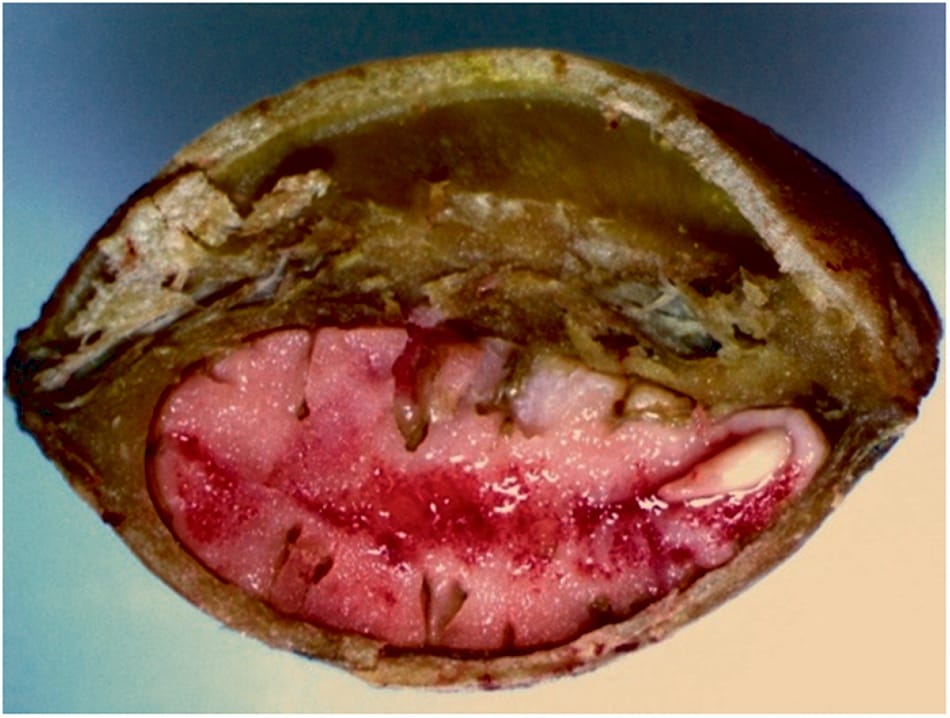
Encouragingly, the researchers found that it is possible to predict which species are likely to have these vulnerable seeds. The simpler model based on seed size and seed coat thickness proved surprisingly effective, correctly identifying more than 80% of the tested species. Overall, larger seeds with thinner protective coats were more likely to be desiccation-sensitive. However, prediction is not foolproof, with some species behaving differently from expectations, even within the same genus.
Perhaps most striking is the broader picture. Around one in five Chilean tree species may have recalcitrant seeds, a proportion similar to other humid regions of the world. Many of these species are endemic and already threatened, and their sensitivity to drying makes them especially vulnerable to climate change, particularly increasing droughts. This challenges a widely trusted conservation strategy and raises urgent questions about how best to protect these plants.
Taken together, the results paint a sobering picture: a significant portion of Chile’s unique flora may fall outside the reach of traditional seed banks. Conservation, therefore, cannot rely on them alone. To protect these species, scientists will need to combine prediction, experimentation and alternative strategies, such as cryopreservation and in vitro conservation. At the same time, the ability to predict seed behaviour from simple traits offers a powerful tool to identify priority species. In a biodiversity hotspot like Chile, this kind of targeted, evidence-based approach may prove essential to ensure that some of the world’s most unique plants are not lost before we learn how to protect them.
READ THE ARTICLE:
Fernández A, Araya L, León-Lobos P, Contreras S. 2026. Seed recalcitrance and its predictability in native and endemic tree species of Chile. Seed Science Research: 1-12. https://doi.org/10.1017/s0960258526100087
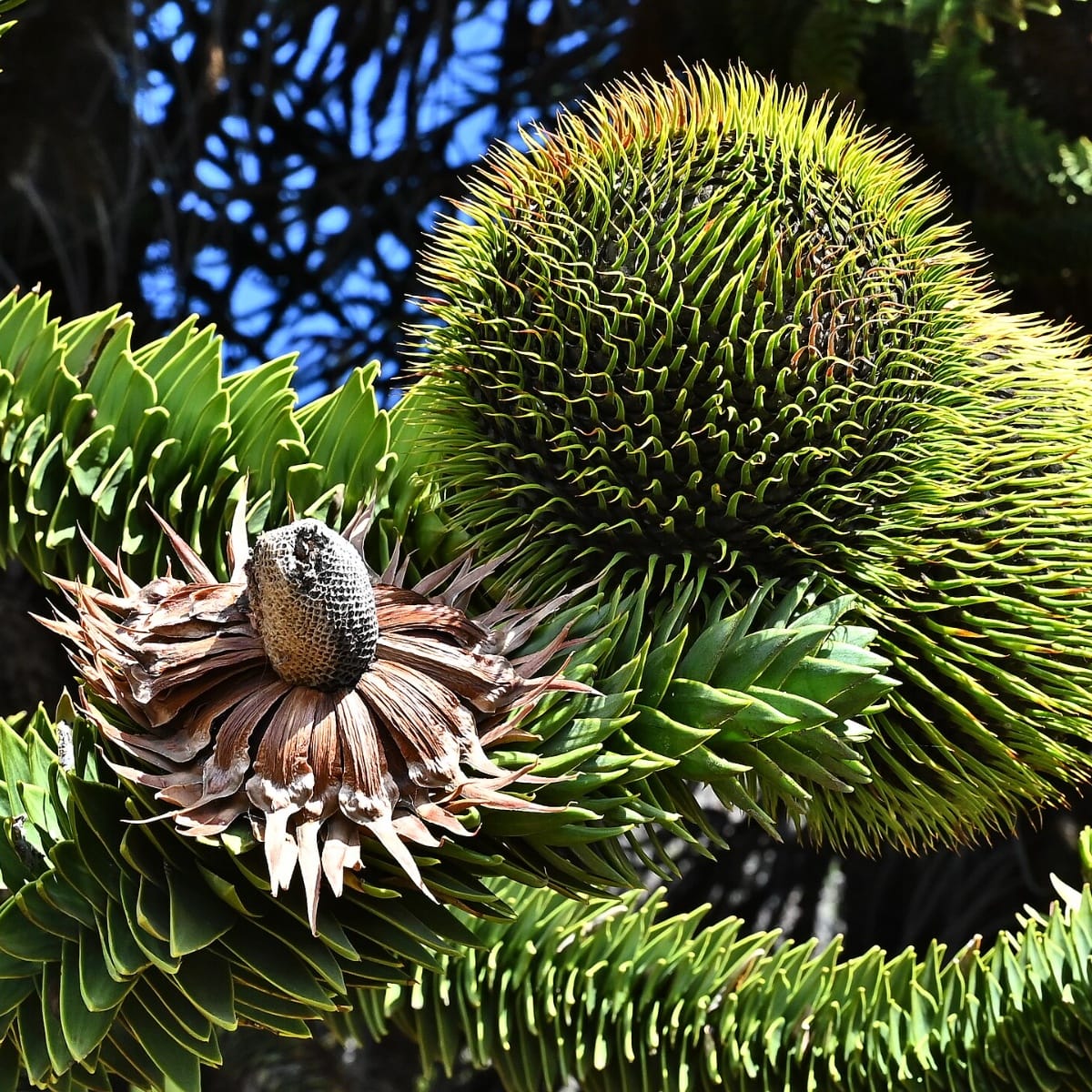
Cover picture: Araucaria araucana seed cones (Photo by Kenraiz Krzysztof Ziarnek, Wikimedia Commons).