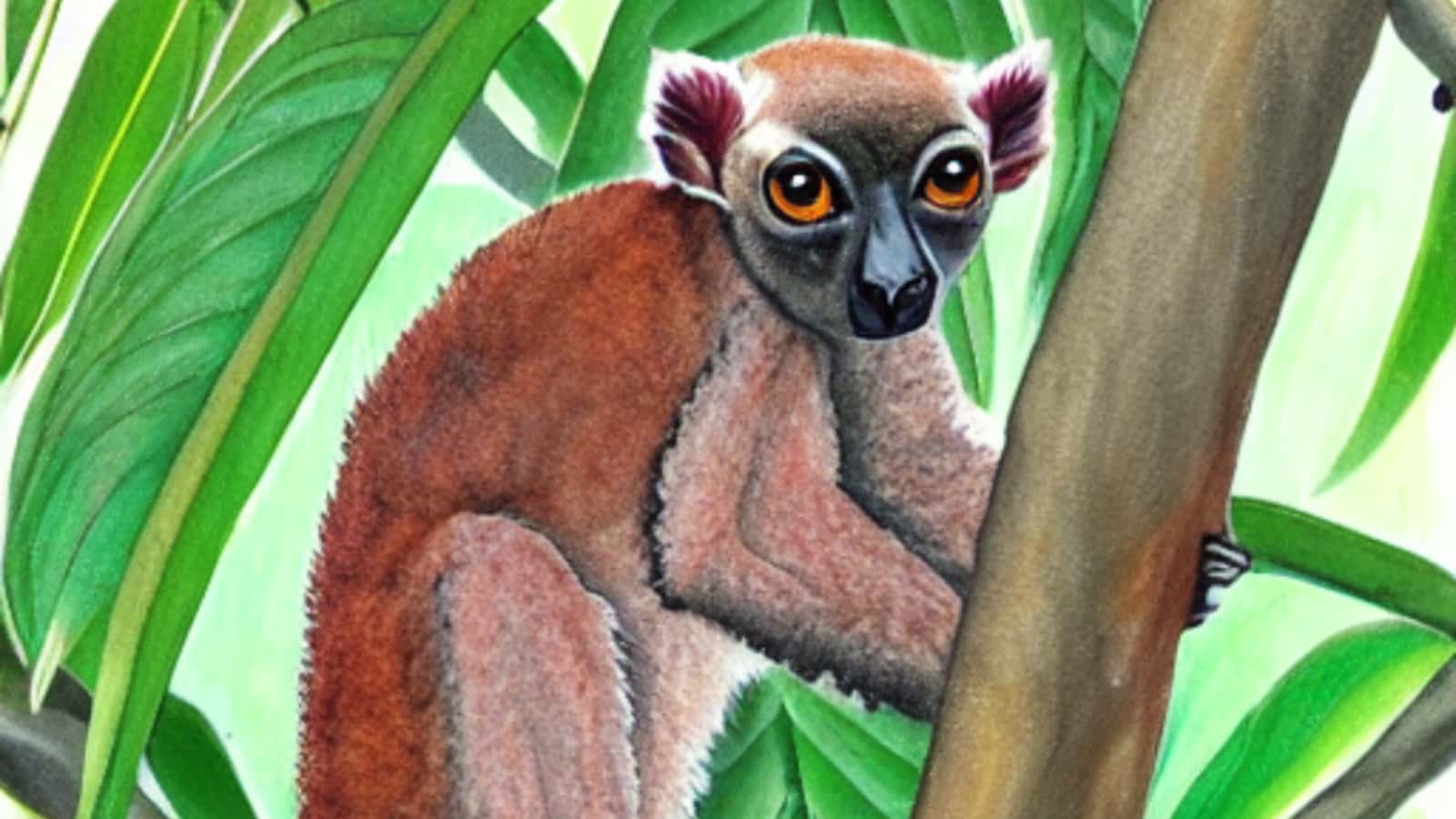



Trees don’t last forever. For a forest to persist, seedlings must grow to replace the oldest plants, but a forest with lots of shade is not a friendly place for a seedling. So trees need help getting their seeds to better locations where they can grow. Zoochory, seed transport by animals, is a popular solution. Trees can wrap their seeds into fleshy fruits and the unit, called a diaspore, can then be plucked by an animal in search of a meal. Hikori Sato examined how important these relationships with animals are, by studying the relationship between Eulemur fulvus, the brown lemur, and two trees, Astrotrichilia asterotricha and Abrahamia deflexa.
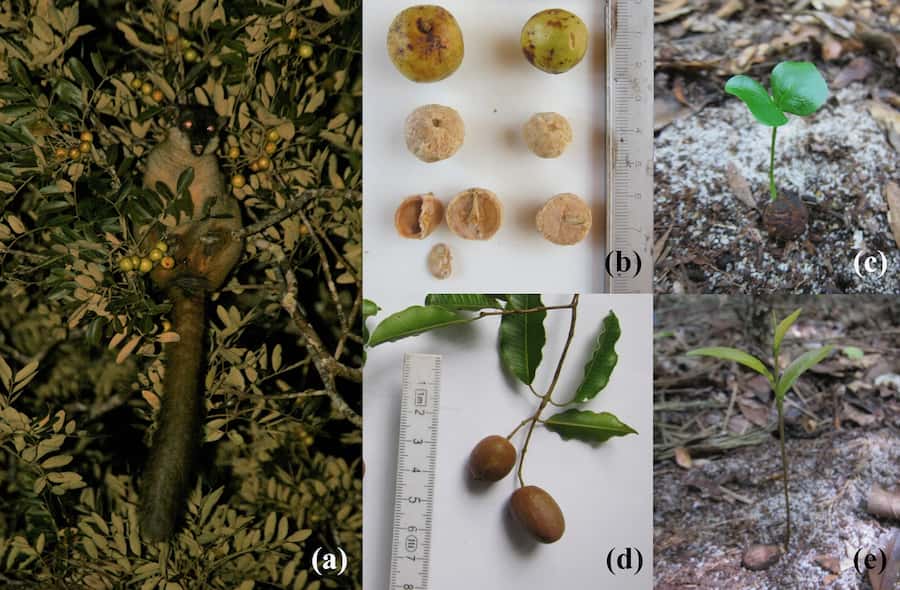
Sato carried out a survey in Ankarafantsika National Park in northwestern Madagascar. Here he staked out Astrotrichilia asterotricha, a tree that fruits in the dry season, and Abrahamia deflexa, which fruits in the wet season. Before fruiting began, he carefully chose the trees whose crowns had the best visibility for fruit and then set up watch.
As well as observing the lemurs in the trees, he set up fruit traps beneath the trees to catch what fell as the lemurs ate. This way, he could study what fruits and seeds fell. But he didn't just catch the fruits.
Lemurs are hungry and like to eat in the tree, but their digestive systems only have so much carrying capacity so, as they put food in, they would also let waste out, that Sato could analyse. While fieldwork in Madagascar might sound exotic, a sentence in his article reveals how it's not all glamour. Sato writes, "I confirmed the faeces of brown lemurs by size, smell, material traits and contents based on personal experience."
Sato found that only brown lemurs swallowed the fruits of Astrotrichilia asterotricha. Sportive lemurs (Lepilemur edwardsi) occasionally ate in the tree but always spat out the fruits. Sato had similar results for Abrahamia deflexa visited by brown lemurs and fat-tailed dwarf lemurs (Cheirogaleus medius). Again, the brown lemurs swallowed the fruits while the dwarf lemurs spat them out.
When it came to seedling establishment, Sato found evidence of Janzen-Connell effects. This is the tendency for predators to head for where the food is. If you're a weevil with a taste for the fruit of Astrotrichilia asterotricha, then under Astrotrichilia asterotricha trees is a great place to be. You can gorge yourself on all the fallen fruit. The lemurs, carrying seeds away in their digestive tract, get some seeds away from their parents and can deposit them in a new welcoming habitat.
Sato concludes: "My findings provide important insight that could facilitate the design of reforestation plans. For example, lemurs may be attracted by large fruiting patches, which can be created by agglomerating a range of tree species that fruit in the same season, thus improving [seed dispersal efficiency] during the seed dispersal phase. To strengthen [seed dispersal efficiency] during the post-dispersal phase, tree species with large, unprotected seeds should be planted in a scattered manner to weaken the Janzen-Connell effects, whereas tree species with epigeal cotyledons must be planted in high-light habitats."
READ THE ARTICLE
Sato, H. (2022) "Significance of seed dispersal by the largest frugivore for large-diaspore trees," Scientific Reports, 12(1), pp. 1–14. Available at: https://doi.org/10.1038/s41598-022-23018-x