


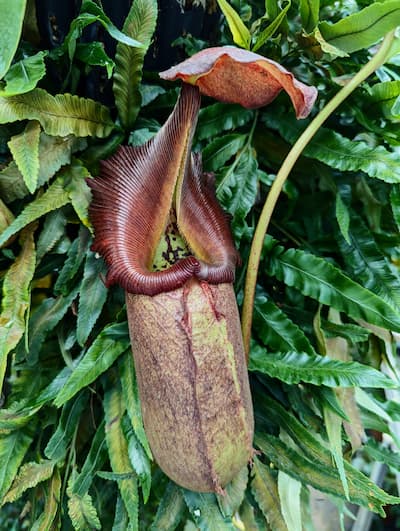
A new study by Derek Moulton and colleagues at the University of Oxford has uncovered how the shape of rimmed leaves in carnivorous pitcher plants impacts their ability to trap insect prey. Carnivorous pitcher plants such as the genus Nepenthes have evolved leaves shaped like pitchers that fill with fluid and lure insects inside. The rim of the pitcher, known as the peristome, is critical to capturing insects through its specialized slippery surface.
While the peristome has been well-studied, researcher Derek Moulton and colleagues noticed the wide variation in peristome size and geometry across different pitcher plant species. How these differences affect the pitcher’s insect trapping capabilities has been unknown. The researchers wanted to test if peristome shape influences prey capture.
To investigate this, the team developed mathematical models representing different peristome shapes and tested insect sliding dynamics on the virtual surfaces. This novel approach combined geometry and physics to link peristome form to prey trapping function for the first time. The findings, published in PNAS, provide new evolutionary insights into the diversity of this specialized carnivorous plant group.
How to Virtually Test a Pitcher Plant Trap
To examine how peristome shape affects prey capture, the researchers first developed detailed mathematical models representing the surface geometry of different Nepenthes peristome types. They categorized peristomes into four main categories based on their structure: Base, Flared, Flat, and Toothed.
Base peristomes are thin with a roughly 45-degree tilt and inconspicuous ribbing. Flared peristomes flare outwards to varying degrees. Flat peristomes have a wider rim and flatter orientation compared to the others. Toothed peristomes possess large, protruding rib structures that resemble teeth.
The researchers first constructed parameterized surface representations of each peristome type to create mathematical models of the traps. These mathematical surfaces enabled them to recreate the diverse peristome shapes and precisely control features like curvature, flaring, and ribbing.
With the mathematical surfaces established, the scientists could use the models to examine how factors like orientation, degree of flaring, and ribbing height impacted the dynamics of insects sliding on the virtual peristomes. This provided insights into whether changes in peristome geometry affected the likelihood and direction of prey capture into the pitcher trap. The modelling approach linked form to function by applying physics to examine how prey slid and landed on the different virtual peristome surfaces.
The Secrets Behind Successful Capture
The researchers' mathematical models revealed new insights into how specific structures of the peristome rim impact prey capture effectiveness.
Flared peristomes appear to facilitate a particular trapping strategy by allowing "scout" insects like ants to traverse the surface safely to locate nectar. These scouts then recruit other workers along the same path. As wetness increases, the wider back portion guides more insects toward the unstable inner rim, where they slide into the trap. So, the flaring enables plants to take advantage of social insect behaviour to capture whole groups.
The models also indicated an optimal tilt of around 45 degrees between the peristome and vertical axis for maximizing prey capture efficiency. Peristomes angled in this intermediate range become substantially more slippery as wetness increases compared to flatter or more vertical orientations.
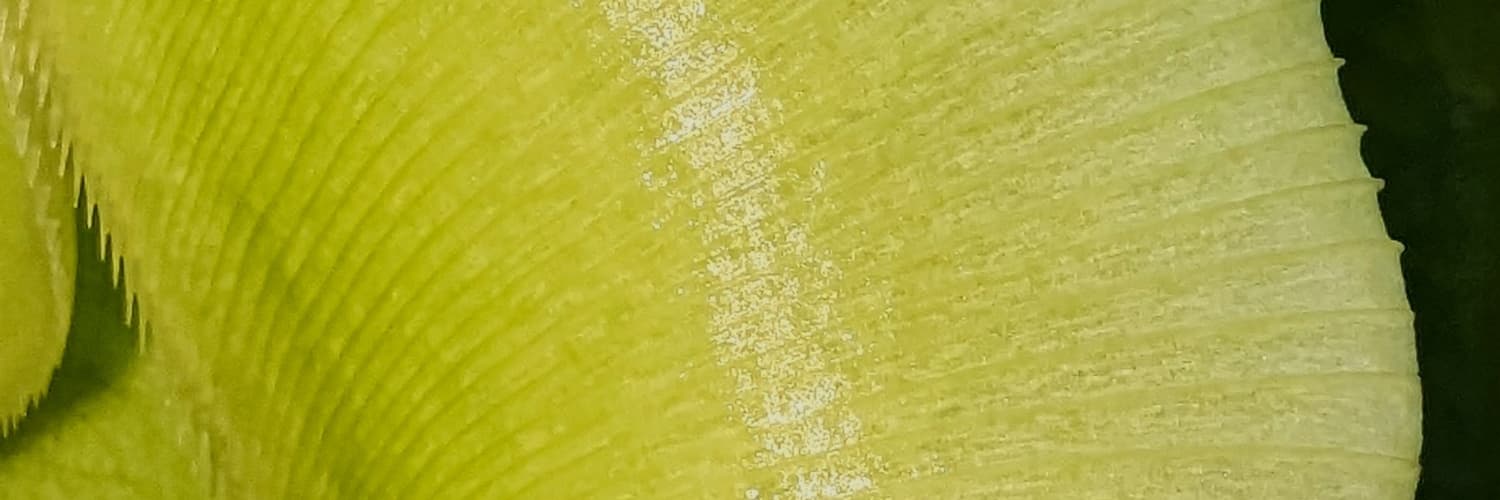
Large protruding ribs or "teeth" increase the peristome's prey capture area compared to a smooth surface. However, these structures come with a high energetic cost, substantially increasing the total surface area that requires construction.
Furthermore, the analysis suggests peristome size correlates with prey size for optimal trapping. There appears to be a linear scaling relationship between the diameter of the pitcher rim and the typical prey it is best adapted to catch. Co-author Dr Chris Thorogood said in a press release: "Just as birds' beaks are shaped differently to feed on nuts, seeds, or insects and so on, these pitcher plants are well-adapted to the different forms of prey that exist in their environments."
Unreal Plants Unlock the Inner Workings of Actual Pitcher Plants
The study provides several important insights into the functional significance of peristome shape diversity in pitcher plants:
The modelling approach represents the first time peristome form has been directly linked to prey trapping function through mathematical analysis. By simulating insect dynamics on the surfaces, the models demonstrate how aspects like flaring and tilting quantitatively impact capture capability.
The findings provide a new perspective on the potential adaptive benefits of the diverse peristome shapes observed across Nepenthes species. The different geometries appear connected to strategies for capturing certain prey types or sizes.
The analysis suggests the evolution of the various peristome forms may be related to shifts in available prey spectra in different pitcher plant habitats and niches. As insect prey change, so may selection pressures on optimal peristome size and geometry.
The modelling framework tests evolutionary hypotheses on how these highly specialized trapping organs have diversified. Derek Moulton, Professor of Applied Mathematics at the University of Oxford's Mathematical Institute, explained: 'Mathematical reconstructions enable us to explore the trade-offs that exist in these plants in nature. Large, flared rims are costly for a plant to produce. By simulating both realistic peristomes and extreme versions – geometries that don't exist in nature – we were able to show that in an optimal structure, the cost of production might be offset by the extra prey that can be caught.'

A Novel Approach to Understanding Diversity
This new research mathematically demonstrates for the first time how the shape of pitcher plant peristomes impacts their insect trapping capability. The findings provide insights that help explain the remarkable diversity of trap forms observed across the Nepenthes genus.
The study showcases a creative approach that unites geometry, physics, and evolution to understand how adaptationslike the specialized peristome evolve. By modelling form and simulating function, the researchers can now test ideas on how differences in shape benefit plants under varying conditions.
"Observing these plants in their natural environments is, of course, the best way to understand them. But many of these plants grow in remote, inhospitable places, so studying them in nature can be challenging," said Dr. Thorogood.
By merging maths and physics with botany and ecology, this research reveals new adaptive insights into how evolution designs effective traps. The novel methodology demonstrates an integrative way to understand diversity across Nepenthes and other carnivorous plant groups exhibiting striking functional variety.
READ THE ARTICLE
Moulton, D.E., Oliveri, H., Goriely, A. and Thorogood, C.J. (2023) "Mechanics reveals the role of peristome geometry in prey capture in carnivorous pitcher plants (Nepenthes)," Proceedings of the National Academy of Sciences of the United States of America, 120(38). Available at: https://doi.org/10.1073/pnas.2306268120.
Cover: The deadly rim of the pitcher plant’s trap. Credit: Chris Thorogood.