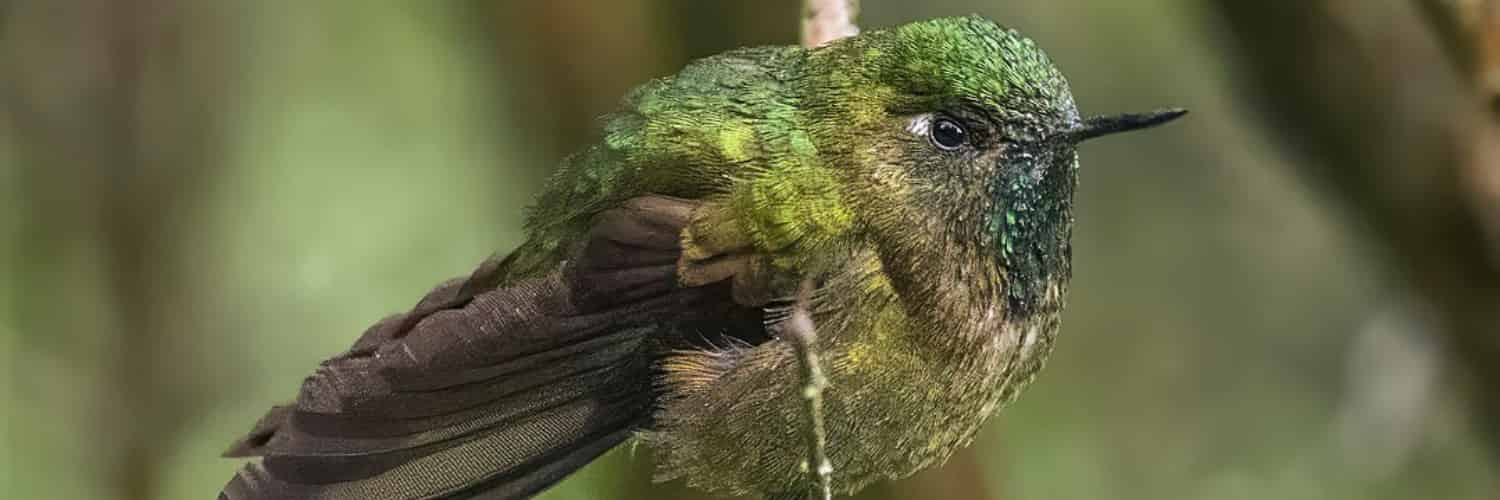



Altitude plays a crucial role in shaping biodiversity. As we go up mountains, the environment gets more challenging: colder temperatures, stronger winds, and less oxygen. These conditions make it harder for life to thrive, and fewer species can survive as we go higher. This is especially noticeable with pollinators, like bees, being replaced by flies at higher altitudes, which affects how plants reproduce.
Plants, in response, have developed remarkable adaptations not just to survive but —literally— flourish in these challenging environments. They alter their flower size, shape, colour, and nectar production to attract the limited number of pollinators available. Some plants even resort to self-pollination when pollinators are scarce, showcasing nature’s resilience and adaptability.
To understand how altitude influences floral traits, pollinator interactions, and reproductive success in plants, Gisela T. Rodríguez-Sánchez and her team studied Oenothera epilobiifolia, a hummingbird-pollinated plant from the Venezuelan Andes. They focused on two populations: one at 3600 meters in Gavidia and another at 4450 meters in Piedras Blancas. The researchers conducted field observations, measurements, and experiments.
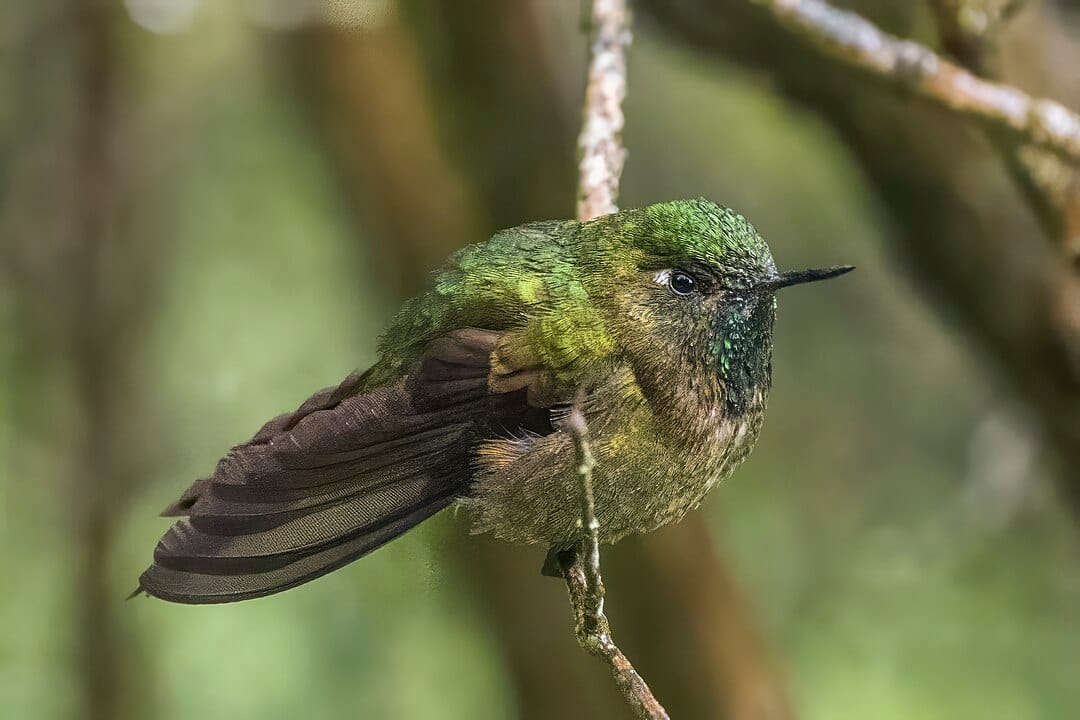
They found that at the lower altitude site, flowers are bigger, have sweeter nectar, and attract more pollinators, especially hummingbirds, producing more seeds. This happens because lower altitudes provide milder conditions, such as higher temperatures and better soil moisture and nutrients, promoting larger flowers with richer nectar. Consequently, these flowers are more attractive to pollinators and lead to more seeds thanks to better pollination by hummingbirds.
In contrast, at the higher altitude site, flowers are smaller with less sweet nectar, and despite more flowers being packed together, fewer pollinators visit. This is because higher altitudes have harsher conditions with colder temperatures, less water and nutrients in the soil, and stronger sunlight. These conditions make it harder for plants to grow, resulting in smaller flowers with less appealing nectar that fewer pollinators are adapted to.
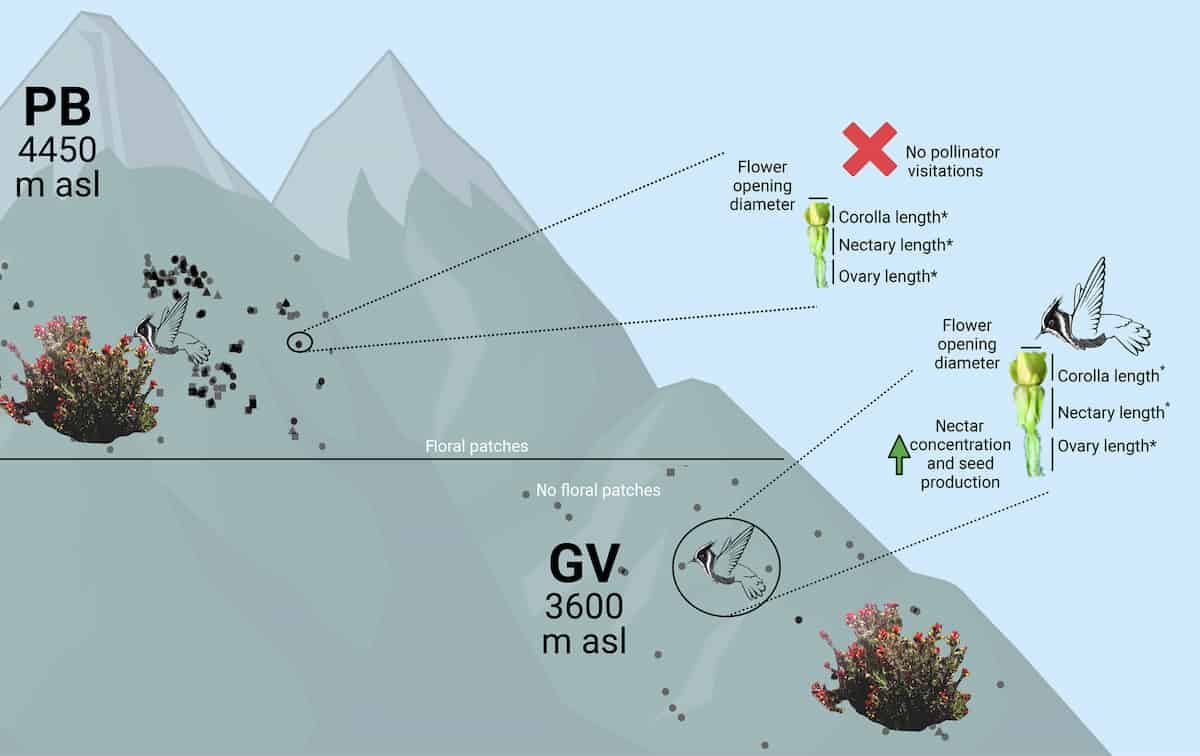
Despite these differences, the total amount of nectar and its energy content were similar in both populations. This is because, at higher altitudes, more flowers are present in a smaller area, even though they are smaller. The larger number of flowers contributes to the total nectar available. While a single small flower may not produce much nectar, many small flowers increase the supply. This strategy helps plants attract pollinators in challenging environments.
Lastly, they found that pollinator visits are more influenced by the availability of nectar rewards rather than flower colour, with significant pollination activities occurring only during the green flower stage. Unlike many other plant species where red flowers attract pollinators, in this specific plant species, red flowers are part of the plant’s ageing process and do not attract pollinators. Therefore, pollinators prefer to visit green flowers because they have more nectar.
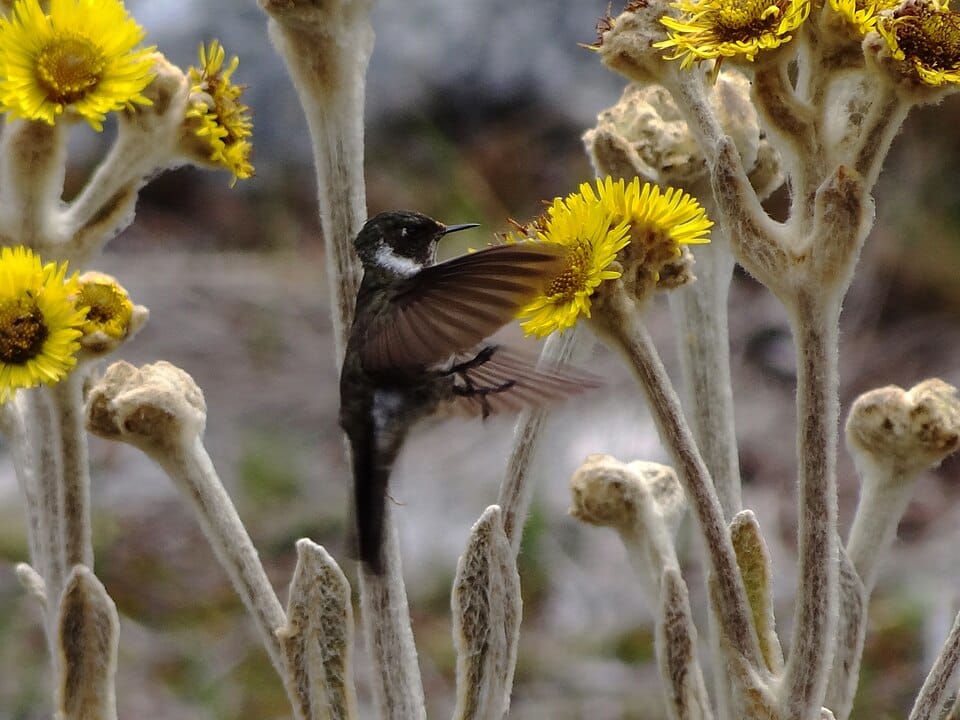
Overall, this research underscores the significant influence of environmental conditions on the pollination strategies of Oenothera epilobiifolia. Flower traits like size and nectar vary depending on altitude, showing how environment and altitude shape these traits and interactions with pollinators. Plants at higher altitudes compensate for fewer pollinators by having more flowers packed together. At lower altitudes, larger flowers with sweeter nectar attract more pollinators and produce more seeds when pollinators are around. These findings give crucial insights into how plants adapt to their environment and point out the vital role of pollinators in plant reproduction.
READ THE ARTICLE:
Rodríguez‐Sánchez, G. T., Pelayo, R. C., Soriano, P. J., & Knight, T. M. (2024). Intraspecific variation in pollination ecology due to altitudinal environmental heterogeneity. Ecology and Evolution, 14(6), e11553. https://doi.org/10.1002/ece3.11553

Victor H. D. Silva is a biologist passionate about the processes that shape interactions between plants and pollinators. He is currently focused on understanding how plant-pollinator interactions are influenced by urbanization and how to make urban green areas more pollinator-friendly. For more information, follow him on X as @another_VDuarte
Portuguese version by Victor H. D. Silva (in progress).

_Cundinamarca_2.jpg?ref=botany.one)
.JPG?ref=botany.one)