


Carnivorous plants have a few problems. One is that they live in nutrient-poor soils, so they have to catch prey to supplement their diet. The other is they’re plants, and can’t wander to hunt prey, they have to persuade the prey to come to them. Liu & Smith have investigated how they do that.
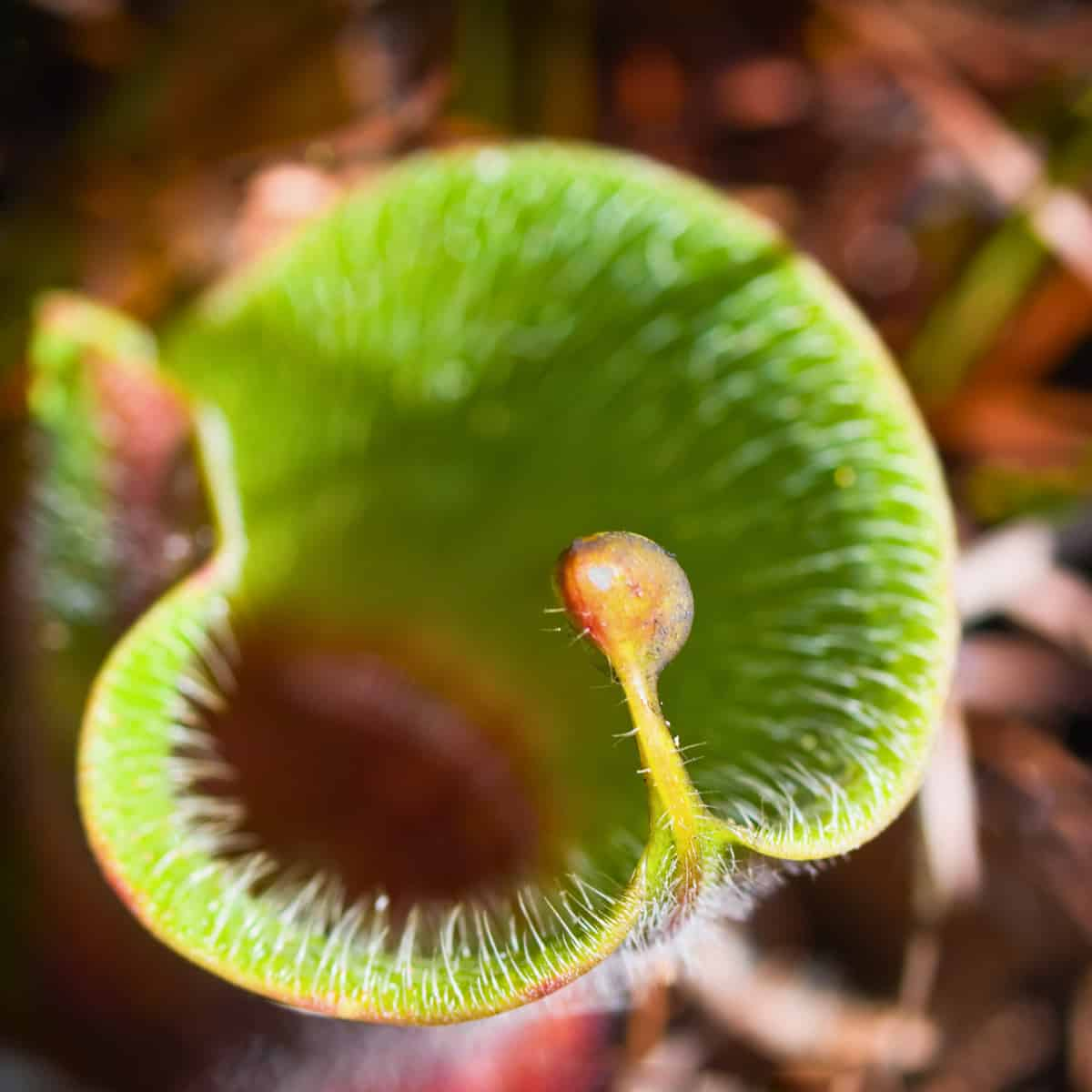
Heliamphora plants are carnivorous plants from South America, that have colourful “nectar spoons” to attract insects, and pitcher traps to digest them. Liu & Smith looked at gene expression in Heliamphora tatei to see what genes in the nectar spoon were helping attract the insects.
They used RNA sequencing on different plant tissues to see which genes were turned on the nectar spoon that aren’t on in the rest of the plant. They found that sugar transport genes (called SWEET14a) are highly active in nectar spoons, making the sugars needed for insect bait. The twist is that the nectar spoons don’t just produce nectar. The botanists found these organs also produce volatile organic compounds, scents, to attract visitors. Liu & Smith note that some pitchers produce complex compounds to create toxic nectar, but that’s not known here.
Instead it seems the nectar is produced to encourage ants to bimble over and around the rim of the trap. The problem for the ants being that Heliamphora tatei has a slippy pitcher, with wax scales, downward pointing hairs and a wet surface, making the sides of the trap extremely slippery.
Heliamphora are an interesting clade (related group) of plants. “This clade is endemic to the Guiana Highlands of Venezuela and comprises 24 described species and several yet to be described taxa (>70% of the entire family Sarraceniaceae),” write the authors. Yet not all the Heliamphora are true carnivores. Some like Heliamphora tatei have digestive fluids. Others just have water traps and rely on bacteria to break down prey. Understanding what genetic tricks the plants share, and what is unique could help explain the development of carnivory.
The authors conclude: “Our work opens the door for investigating the degree of molecular convergence in prey attraction in other carnivorous plant lineages, many of which use similar combinations of sugary reward and scent volatiles to lure prey.”
Liu, S. and Smith, S.D. (2025) “Recruitment of sugar transport and scent volatile genes for prey attraction in the nectar spoon of Heliamphora tatei,” Evolution & Development, 27(2), p. e70009. https://doi.org/10.1111/ede.70009
Cross-posted to Bluesky & Mastodon.
Cover: Heliamphora, unknown species. Photo chosen as it emphasises the nectar spoon. Image: Canva.