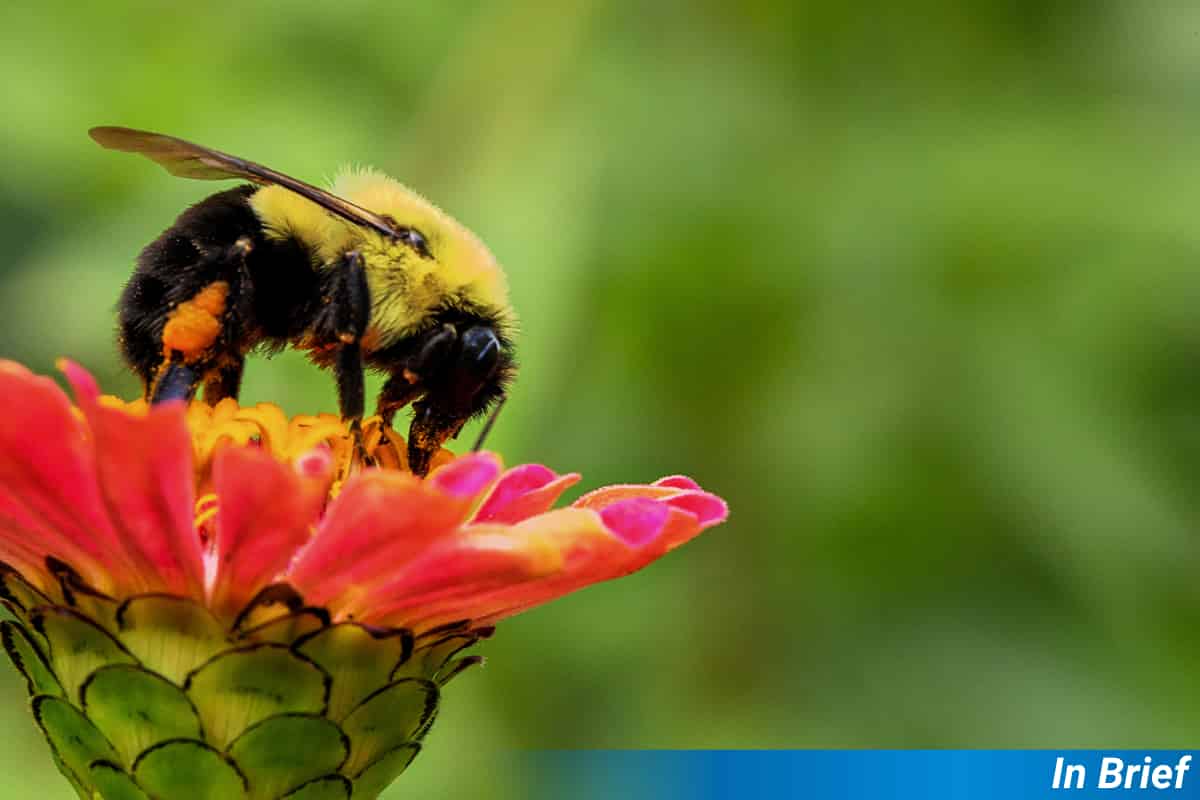


It’s easy to say that we should help pollinators, but can you really make a difference? Eldridge and colleagues examined the effects of floral resources and urban land-use on bee visits to gardens in eastern Tennessee. They found that the garden floral display was the strongest predictor of bee visits. They state: “This finding is promising for anyone wishing to promote pollinator populations by providing more floral resources.”
Their experiment involved planting four 3×2m garden plots with different plant families at five sites. They then surveyed the bees in the gardens and surrounding 50m area weekly for 5 weeks, and analysed the effects of the local flowers and landscape on both bee quantity and diversity.
They found that the diversity and floral display within garden plots strongly influenced bee visitation. However, the floral resources in the surrounding area (50m radius) did not significantly impact garden bee visitors. The authors also say that developed land use in the surrounding 2km had an effect, but it was relatively minor.
Along with other research, this study supports strategies for promoting pollinators by increasing floral diversity and floral display, especially when these plants provide a diverse range of floral resources… landowners have the power to promote their local pollinator communities by conserving existing natural patches or increasing the availability of floral resources.
Eldridge, D.S., Khalil, A., Moulton, J.K. and Russo, L., 2024. Do local and landscape context affect the attractiveness of flower gardens to bees?. PLoS ONE, 19(9), p.e0309000. https://doi.org/10.1371/journal.pone.0309000