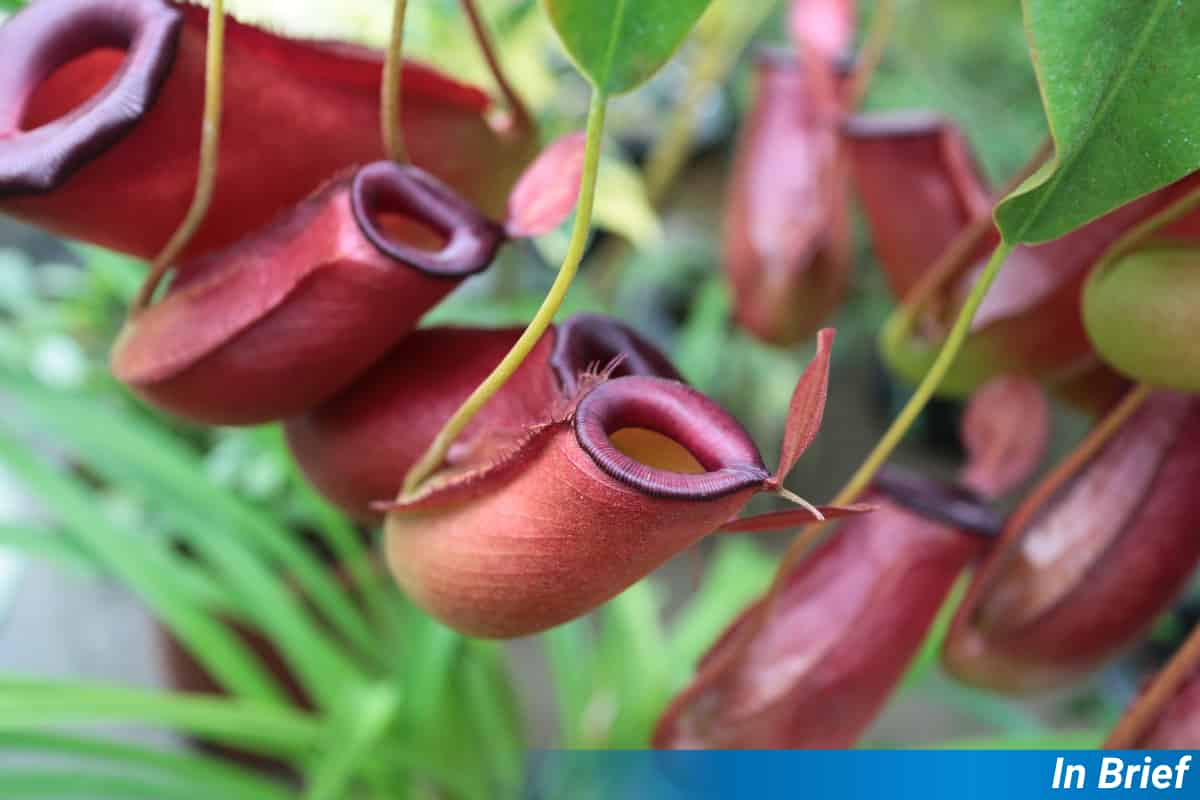



Pitcher plants are carnivorous plants that have traps for insects to fall into. When they do, the liquid in the pitcher starts digesting the proteins in the insect. But how do they digest insects without digesting themselves? Agnieszka Wal and colleagues at Warsaw University of Life Sciences have been investigating how pitcher plants avoid digesting themselves by studying Nepenthes × ventrata. They found that one part of the answer is in their use of nitric oxide.
Wal and colleagues found that nitric oxide has three effects. It acts like a digestive booster. It speeds up the breakdown of proteins from the plant’s insect meals, helping the plant get nutrients faster. It also helps counterbalance other molecules, known as reactive oxygen species, that could cause damage to the plant.
Finally, they also noticed that nitric oxide changes how certain enzymes behave in the digestive fluid. Some enzymes became more active, while others slowed down. This fine-tuning seems to help the plant digest its food more efficiently.
The scientists found this out by testing fluid from different pitcher plants. Some had been fed with flies or egg white and some were not fed at all. They also added nitric oxide to some of the plants to see how this affected digestion. It was these experiments that showed how nitric oxide balanced and promoted key chemicals both before and during the digestion process.
Wal et al. (2024). Nitric oxide action in the digestive fluid of Nepenthes × ventrata is linked to the modulation of ROS level. Plant Physiology and Biochemistry, 216, 109088. https://doi.org/10.1016/j.plaphy.2024.109088 (OA)