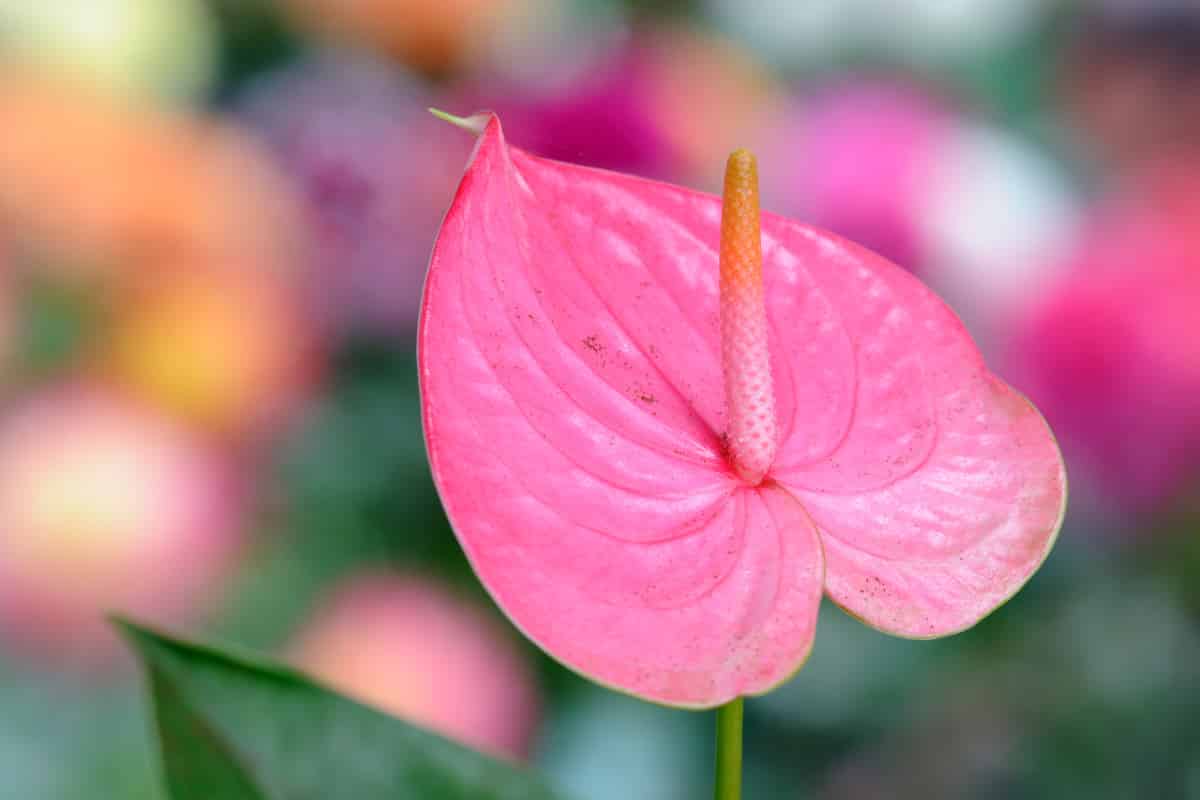



Beltrán Cano and colleagues studied seven Anthurium species in Colombian mountain forests, discovering how these plants share pollinators through clever timing of their flowering periods. This cooperation helps ensure successful reproduction in challenging mountain environments.
The researchers observed flowering patterns and insect visitors for a full year in two forest types. They found that while Anthurium species flowered continuously, each had distinct peak flowering times. This staggered schedule allowed plants to share pollinators without direct competition.
Interestingly, when multiple Anthurium species flowered together, they attracted more insects overall. This “strength in numbers” approach benefited all the plants, especially rare species with few flowers that might otherwise struggle to attract pollinators.
The study found that small insects, particularly thrips and beetles, were frequent visitors to Anthurium flowers and could be important potential pollinators in this ecosystem. Different Anthurium species also attracted slightly different insect communities, further reducing competition.
This research highlights the complex relationships between plants and pollinators in tropical forests. Understanding these interactions is crucial for conservation efforts in areas facing habitat loss and climate change.
Beltrán Cano, M.F., Cuartas Hernández, S.E. Flowering phenology patterns promotes pollination facilitation in coexisting Anthurium species from a mountain forest in Colombia. Arthropod-Plant Interactions (2024). https://doi.org/10.1007/s11829-024-10096-z ($)
ReadCube: https://rdcu.be/dSJEf