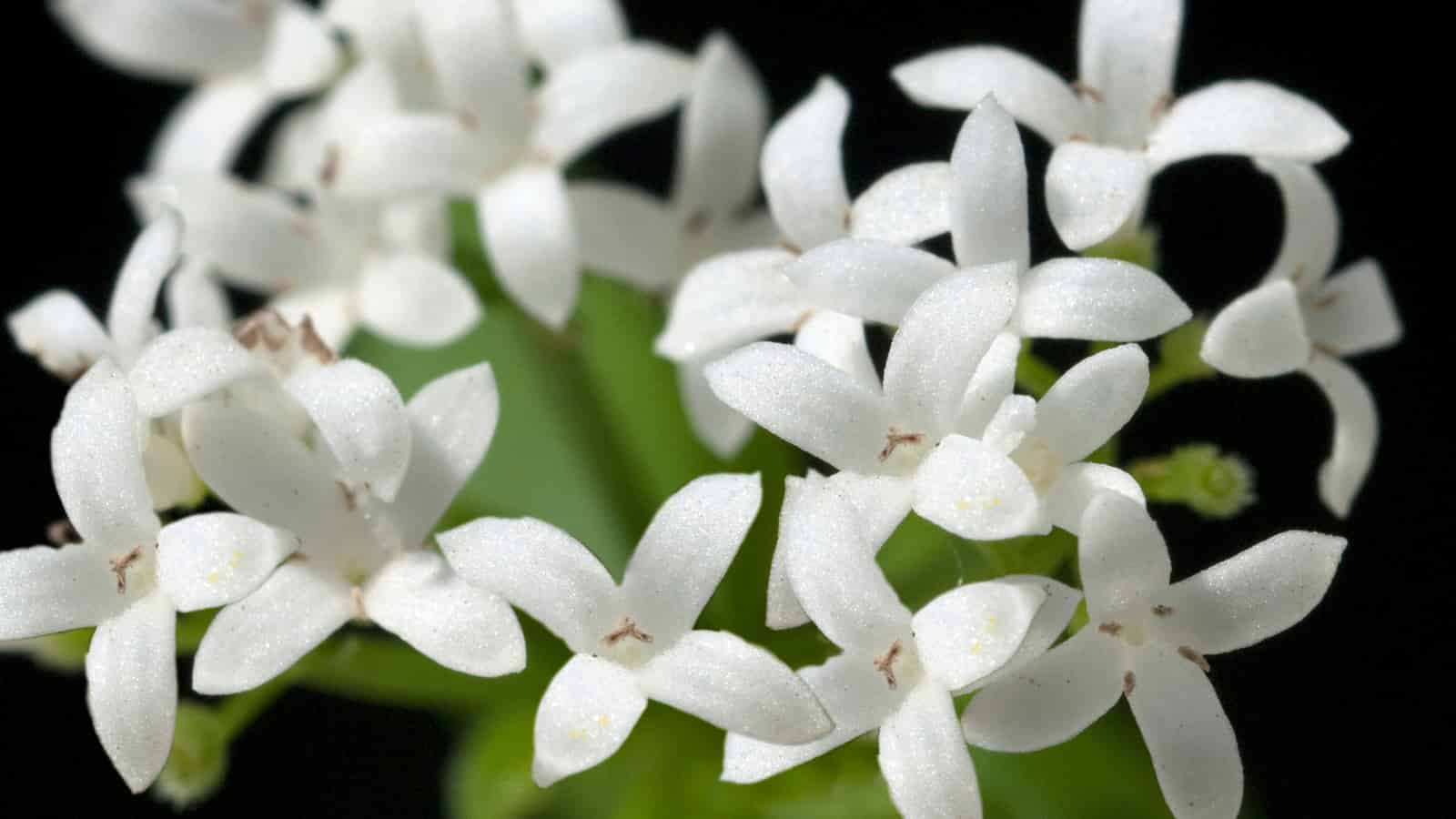



A recent study by Charlotte Møller and colleagues published in the Annals of Botany uncovers how forest understorey herbs adapt to climate change using intra-individual variation, enabling them to cope with environmental changes such as warmer temperatures, more frequent droughts, and earlier shading of the forest floor.
The researchers examined the forest understorey herb Galium odoratum, Sweet Woodruff, in 21 populations across three regions in Germany, where the plants were exposed to varying microclimatic conditions. The team transplanted these plants into a common garden and subjected them to shading and drought treatments, measuring plant height and leaf size to determine the coefficient of variation (CV) at different hierarchical levels.
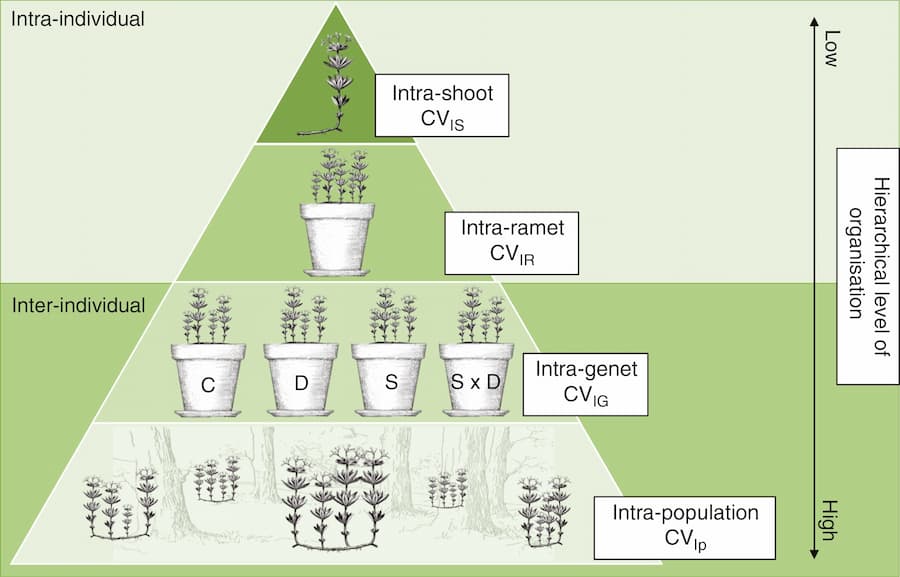
The findings revealed that most of the total variation occurred at the intra-shoot CV level, followed by intra-ramet CV. The study also found that the soil temperature at the plants’ origin negatively correlated with CV in plant height, indicating that intra-individual variation is at least partially genetically based and may be adaptive.
Early shade exposure led to increased intra-ramet CV in leaf length, while drought reduced intra-shoot CV in leaf width. Intra-shoot leaf width mean and CV were independent under control conditions but correlated under drought. These findings suggest that intra-individual variation helps plants plastically respond to drought and shading, allowing them to optimize light capture and reduce evapotranspiration.
The study is consistent with other research that shows that plants’ reproductive traits also become more variable in difficult weather. Other research has looked at genetic and epigenetic factors. A puzzle has been to pull apart the influence of the different factors. Møller and colleagues write in their paper:
This experimental study using G. odoratum as model species revealed that (1) intra-shoot variation, which is the lowest hierarchical level in our system, explains the vast majority of overall leaf trait variation in the populations, followed by intra-ramet variation – these two levels represent intra-individual variation, and our results thus confirm that intra-individual variation can exceed inter-individual variation, as previously observed (Herrera, 2017); (2) inter-individual and intra-individual trait variation at different scales is partly genetically based; (3) this variation may have been the result of selection by microclimatic conditions in the populations of origin; (4) intra-shoot and intra-ramet variations in leaf traits vary under induced drought and early shading; and (5) drought also led to a dependent relationship between mean leaf size and intra-individual variation in leaf size.
Møller et al. 2023
READ THE ARTICLE
Møller, C., March-Salas, M., Kuppler, J., De Frenne, P. and Scheepens, J.F. (2023) “Intra-individual variation in Galium odoratum is affected by experimental drought and shading,” Annals of Botany, 131(3), pp. 411–422. Available at: https://doi.org/10.1093/aob/mcac148.