

Darwin himself said it over a century ago: in the relentless logic of evolution, what matters most is not just to survive but to reproduce. And plants can take this very seriously. For millions of years, flowering plants have come up with the most eccentric strategies to make sure they have sex and pass on their genes, all while living forever anchored to the ground. Think of the textbook example of orchids that pose as fertile female bugs to fool mate-seeking males into carrying their pollen. As if such twisted trickery weren’t enough, a recent study in Current Biology reported on a rare Japanese herb whose flowers stink like dying ants to ensure pollination and increase the chances of leaving offspring.
But it’s not like cute hummingbirds or charming bees to be attracted to a bloody fragrance. It’s usually flies who fancy that kind of eerie flowers. Indeed, most plants that have settled on flies as their only pollinators engage in some sort of floral mimicry, that is, crafting a complex set of visual and olfactory signals that play on insects’ senses to make their flowers irresistible. For instance, with their corpsey smell and fleshy colour patterns, the flowers of many birthworts and pipevines make certain flies hallucinate their favourite rotting meals or the perfect place to raise their larvae. You might even recognize some huge-flowered superstars that use the same creepy strategy, like the titan arum or the Demogorgon-inspiring Rafflesias. However, this dying-bug-perfume thing was only discovered about a decade ago and seems to be a whole different twist on pollination.
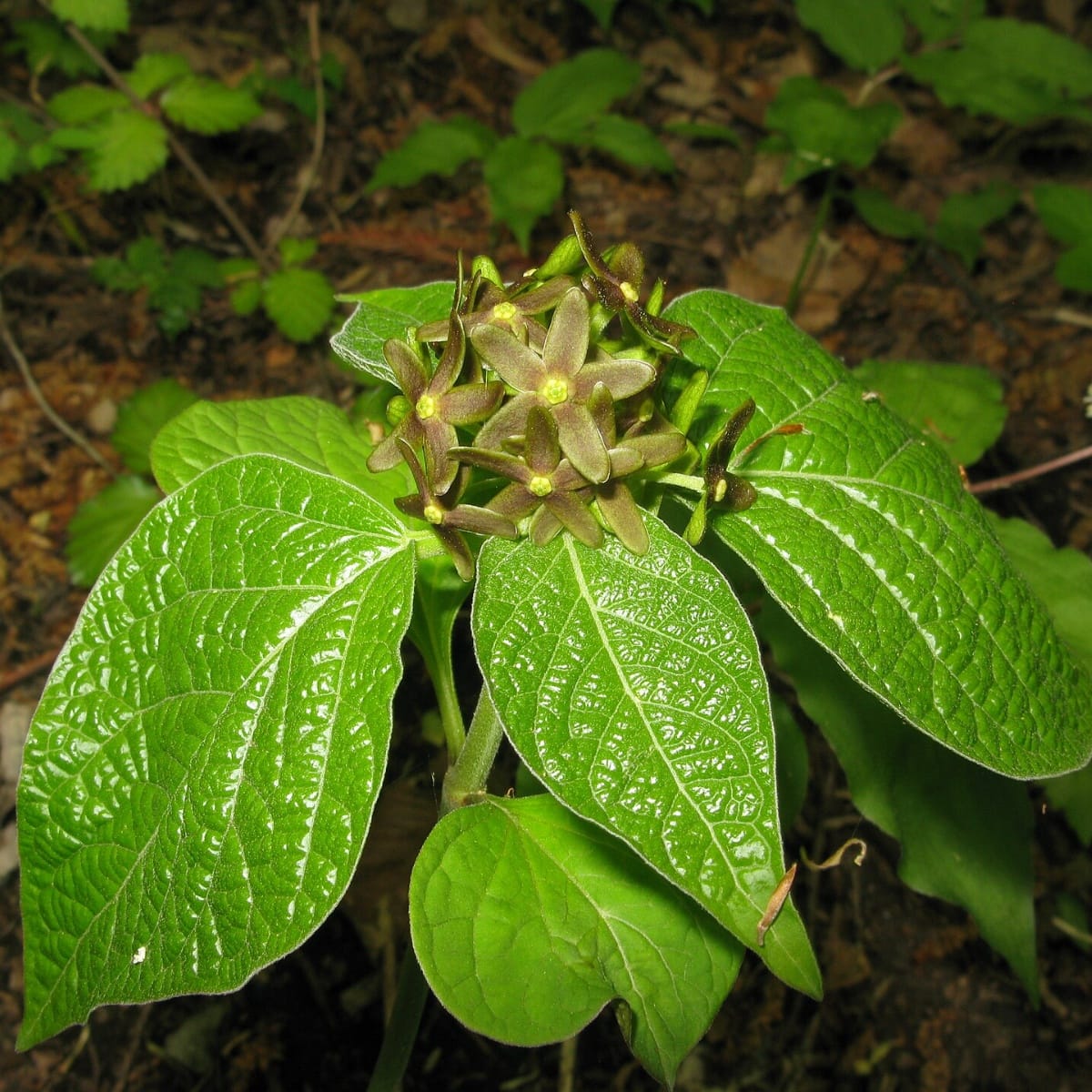
Back in 2021, while wandering around the Koishikawa Botanical Garden, Dr. Ko Mochizuki—a researcher at the University of Tokyo—came across a swarm of grass flies hanging around the pots of Vincetoxicum nakaianum. The tiny creatures appeared enticed by the small, brownish flowers of this distant relative of milkweeds, yet these are not the typical kind of fly that feeds on decaying meat or fermenting poop, something that Mochizuki was well aware of. Many grass flies instead follow a kleptoparasitic diet: they sit and wait for some proper predator, like spiders, to capture their prey and then just come by to share the meal. That’s when it all clicked in the researcher’s botanical mind. What if the flowers of this species were faking the smell of recently captured insect prey to lure those freeloader flies into pollinating them?
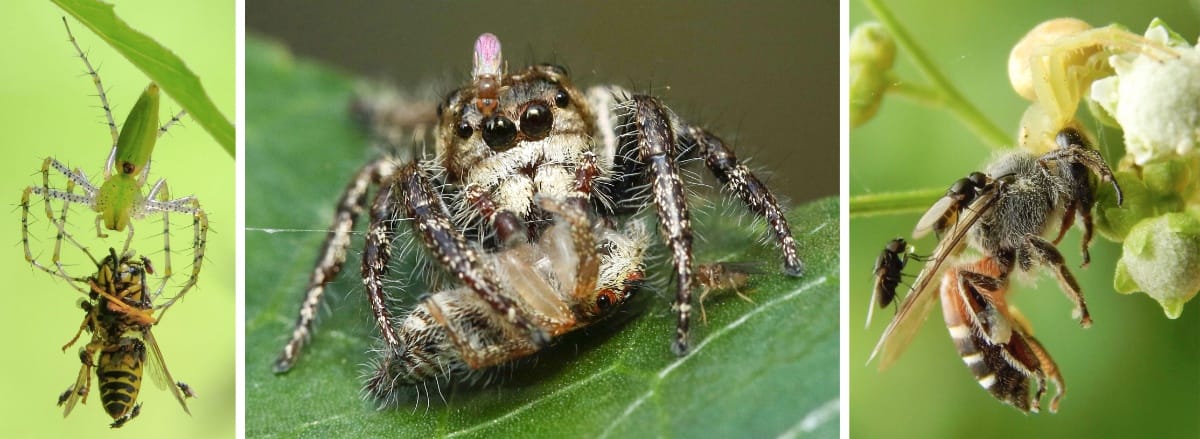
If Mochizuki were to answer that question, first he had to double-check whether grass flies were indeed promising pollinators for Vincetoxicum nakaianum. So, for five springs in a row, the researcher went on a field trip to the forested region of Japan where the plant originally comes from, carefully inspecting for any sort of flying or creeping creature that could be drawn to its flowers in the wild. What he observed was more than enough to keep his hypothesis alive. Out of the whole variety of ants, flies, and spiders he got to see, 80% of all flower visitors were actually grass flies. Moreover, only four of those fly species were found to carry the plant’s pollen attached to their bodies, making them the only potential pollinators documented so far, and they all shared that sneaky habit of living off someone else’s prey.
Back in the lab, Mochizuki and his team devoted themselves to a thorough chemical analysis of the floral scent of Vincetoxicum nakaianum. They identified the most pervasive odour molecules, then purchased commercial versions or synthesized them on their own, and selectively blended them into a range of different combinations. These lab-made perfumes were later taken to the field and used as baits in a handful of self-designed bug traps, to test the attractiveness of each volatile compound in the middle of the woods where the plant thrives. In the end, it was the mixture of two main molecules that turned out to be mouth-wateringly irresistible to the pollinating flies. What’s more, by looking them up in an insect-chemistry database, the author traced the fragrance back to its likely inspiration. One of the key compounds was reported to serve as an alarm pheromone among ants and bees, as well as a defensive substance among certain beetles. The second molecule, on the other hand, had only been documented as a multi-purpose pheromone in a specific lineage of ants.
And that wasn’t all. Just in case you still had any doubts, Mochizuki took some common bugs from the field to the lab, bothered them himself to capture the smell of their despair, and ran the same chemical analyses as before. Along the way, he even borrowed a few predatory spiders and pollinating grass flies to experiment with. His evidence was bloody clear: compared to crushed ants or harassed ground beetles, the scent of certain ants being devoured by their eight-legged predators showed the closest chemical match to the flowers of Vincetoxicum nakaianum, including their two major attractants. On top of that, the researcher conducted a behavioural assay to confirm if the captured grass flies would readily direct their flight toward ant-munching spiders in an experimental arena solely guided by scent, which they certainly did—bon appétit.
A couple of flowers had previously been shown to smell like dying honeybees or true bugs, but never like ants. In fact, although chemical ant mimicry is well known among diverse insect groups, this is one of the very few cases ever documented across the entire plant kingdom. Ants are well known for their remarkable abundance in the field, and the rate at which they fall prey to spiders and other small predators can be surprisingly high. Thus, this initially unexpected strategy of Vincetoxicum nakaianum may start to look like a fairly natural outcome of natural selection. All in all, Mochizuki’s astonishing findings remind us just how much remains to be learned about the diversity and evolution of plant pollination tactics across the Earth. Think of all the bizarre flower fragrances we could still be unaware of!
READ THE ARTICLE
Mochizuki K. 2025. Olfactory floral mimicry of injured ants mediates the attraction of kleptoparasitic fly pollinators. Current Biology 35: 5097-5105.e8. https://doi.org/10.1016/j.cub.2025.08.060
Spanish translation by Andrés Pereira-Guaquetá.
Cover picture: Vincetoxicum magnificum by Qwert1234 (Wikimedia Commons).