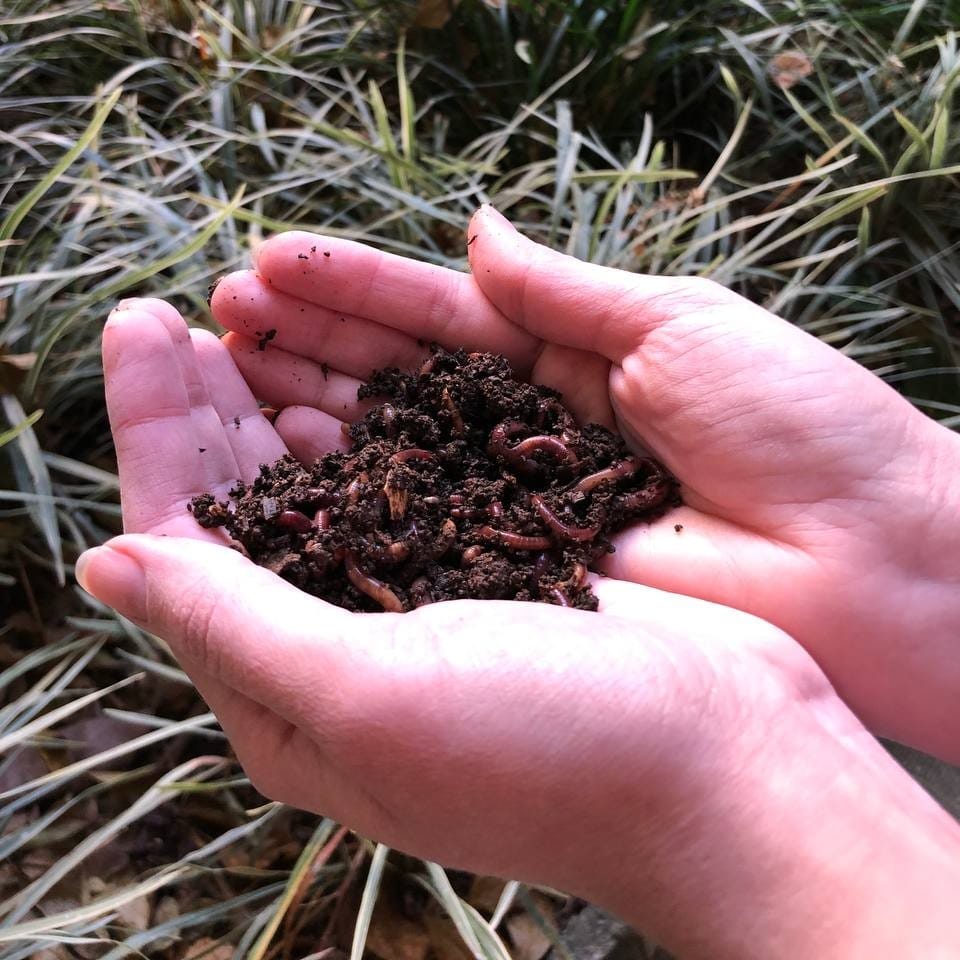



Bryophytes are traditionally seen as travellers of the wind, dispersing their spores mainly through the air. However, not all of their journeys take place in the skies. Many species also move across the landscape with the help of animals, a process known as zoochory, and the species involved may be more diverse than previously imagined. A recent study investigated whether earthworms could act as dispersal agents for soil-dwelling bryophytes in tropical environments, revealing surprising results.
The study focused on three terricolous bryophytes common in south-eastern Brazil: the liverwort Fossombronia porphyrorhiza and the mosses Chryso-hypnum diminutivum and Hyophila involuta. To test their hypothesis, Teixeira and colleagues used the composting earthworm Eisenia andrei. After a period of fasting and washing to remove any residues from the digestive tract, the earthworms were subjected to two treatments. In the “bryophyte mat” treatment, intact portions of 16 cm² of each species were placed on the soil, while in the “macerated bryophytes” treatment, equivalent portions were fragmented using a 0.5 mm sieve to simulate natural fragmentation processes. Additional controls consisting of soil only, vermiculite only, and earthworms without contact with bryophytes allowed the researchers to rule out the possibility of external contamination by propagules.
The earthworms remained in each treatment for seven days. Their castings were then collected, transferred to fresh soil and monitored in a growth chamber for four months. During this period, the researchers recorded the emergence and area occupied by regenerated bryophytes.
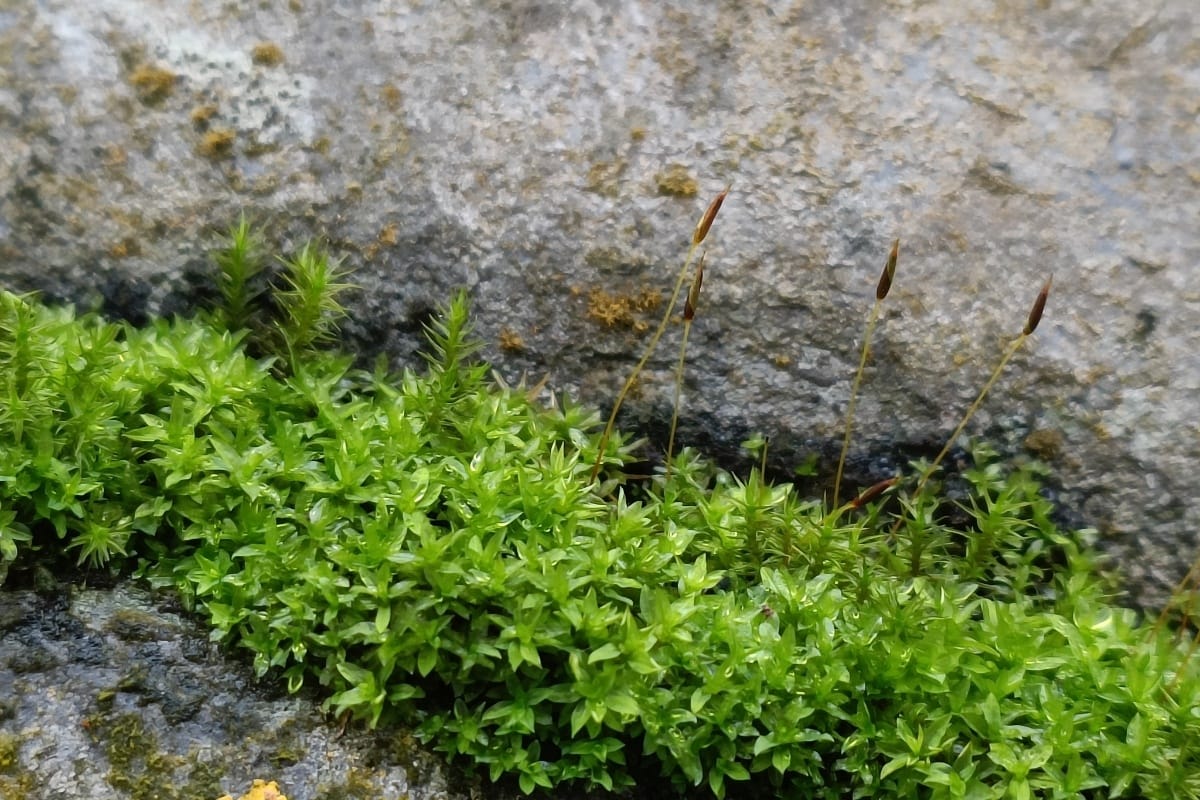
Almost half of the units inoculated with castings (47%) showed bryophyte growth, while none of the controls exhibited regeneration, confirming that viable propagules survived passage through the earthworm gut. Dispersal success varied markedly among treatments and species. The macerated material was clearly more effective than intact mats, with an establishment rate of 67% compared with 28% in the mat treatment, as well as greater cover per unit area. Among the species, Hyophila involuta stood out, establishing in 67% of the units and achieving the greatest cover, especially when ingested in fragmented form. Fossombronia porphyrorhiza showed intermediate success (50%), while Chryso-hypnum diminutivum was the least successful (25%).
These differences can be explained by contrasting biological traits. Hyophila involuta produces abundant gemmae, little buds of tissue, on the filidum and has a high capacity for vegetative regeneration, as evidenced by the intense formation of gemmae in the castings. Fossombronia porphyrorhiza, in turn, has relatively large, thick-walled spores that are more tolerant of desiccation, favouring their persistence in the soil. By contrast, Chryso-hypnum diminutivum produces small spores with short viability, which may limit its establishment after dispersal.
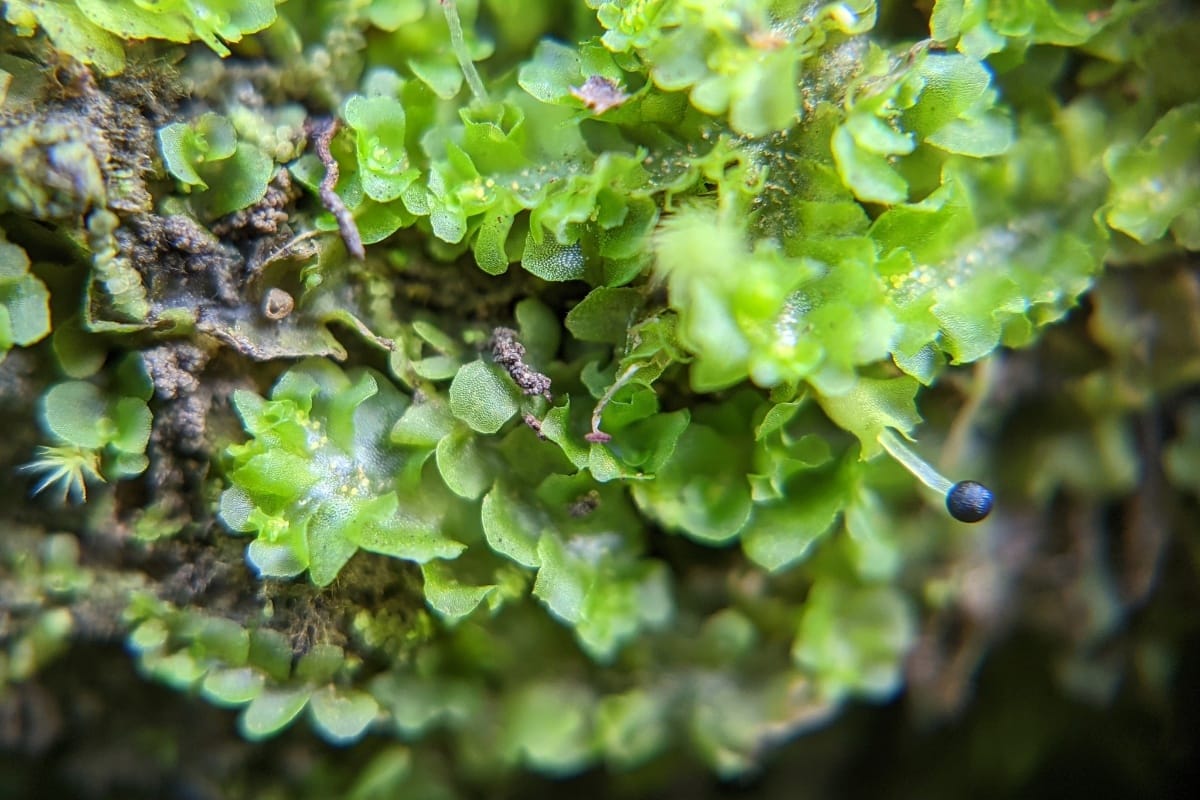
The results suggest that earthworms may play a relevant role in bryophyte communities by redistributing diaspores present in the thin soil layer associated with bryophyte mats. By burrowing and feeding, these invertebrates mix spores and asexual propagules into new microsites, potentially facilitating colonisation after disturbance and maintaining connectivity between vegetation patches.
By demonstrating that earthworms are capable of ingesting, transporting and excreting viable bryophyte propagules under controlled conditions, the study reveals a little-explored facet of bryophyte–animal interactions and points to a potentially important, and hitherto underestimated, role of soil invertebrates in the distribution of tropical bryophytes.
READ THE ARTICLE:
Teixeira OA, Oliveira MF, Maciel-Silva AS. 2025. Earthworm-mediated bryophyte dispersal: an experimental study. Journal of Bryology: 1-10. https://doi.org/10.1080/03736687.2025.2597682
Portuguese translation by Pablo O. Santos
Cover picture: Orvalina A. Teixeira