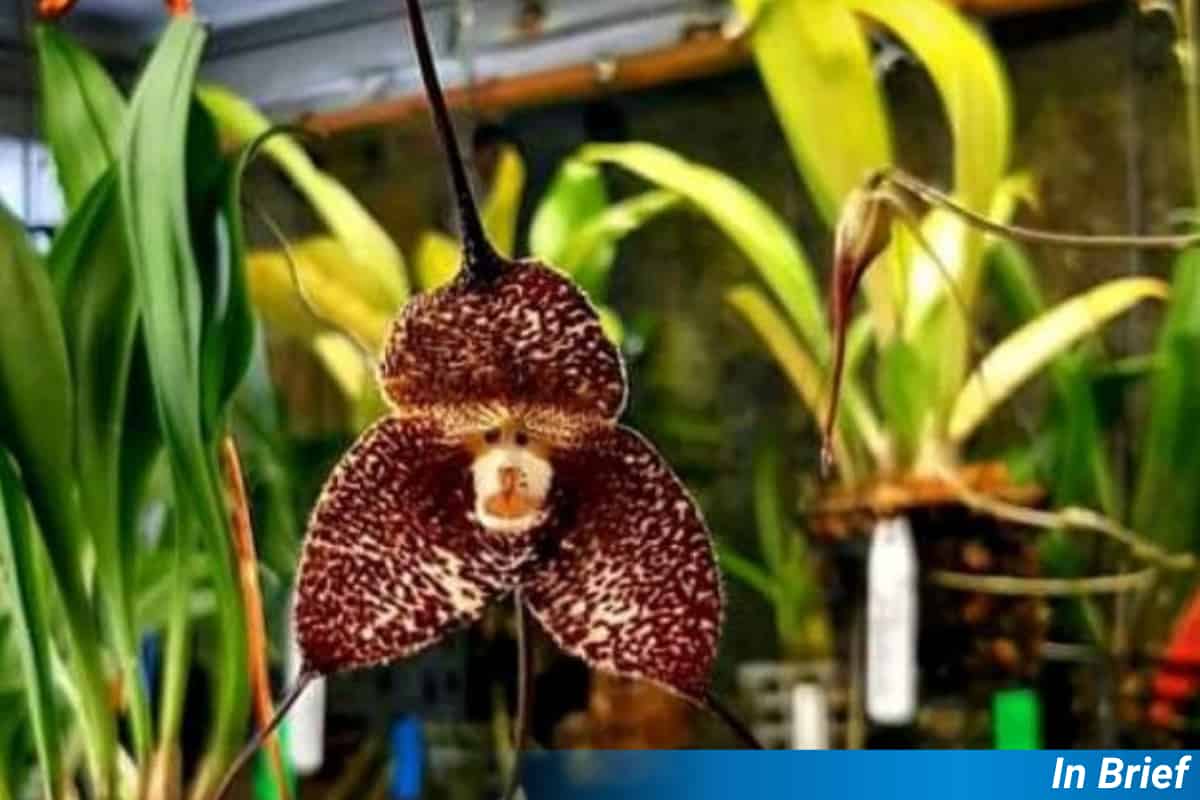



Scientists studying Dracula erythrochaete orchids discovered a clever pollination strategy. Alvarado and colleagues found these orchids mimic mushrooms to attract flies, but also offer a protein reward. This challenges the previous idea that Dracula orchids only trick flies without providing benefits. The research reveals a mixed approach of fungal mimicry and food rewards, shedding new light on how these mysterious orchids interact with their pollinators.
Zygothrica flies were identified as the main pollinators, visiting both Dracula flowers and nearby mushrooms. The orchids produce proteins in specialised structures on their flower parts, which the flies feed on. This protein reward keeps flies on the flowers longer, increasing pollination chances. The study reveals a sophisticated strategy combining visual mimicry with nutritional rewards.
Researchers observed and filmed fly behaviour on orchids and mushrooms in Costa Rica. They collected and identified flies visiting flowers and mushrooms, with 75% coming from flowers and 25% from fungi. Special staining techniques were used to detect proteins and other substances in flower tissues.
Previous studies suggested Dracula orchids only tricked flies into pollinating them without providing rewards. This new research reveals they actually use a mix of deception and food rewards, similar to some other orchid species. The findings help explain how Dracula orchids maintain relationships with their fly pollinators.
We have confirmed for the first time that Dracula flowers effectively share the same group of visitors with nearby macrofungi, specifically from the orders Agaricales and Russulales, establishing that the flowers are indeed fungal mimics.
Alvarado, K.G., Karremans, A.P., Fernández, M., Grimaldi, D., Ospina-García, L., Ackerman, J.D. and Bogarín, D., 2024. Pollination ecology of Dracula erythrochaete (Orchidaceae): brood-site imitation or food deception?. Botanical Journal of the Linnean Society, boae054, https://doi.org/10.1093/botlinnean/boae054 ($)
Cross-posted to Bluesky, Mastodon & Threads.
Cover image: Dracula erythrochaete CC BY-SA Unknown artist / Pl@nt Net