

Most international archaeological work in South America has concentrated on the Andes for various reasons. It’s more accessible, the ruins are more visible, there’s a better ethnohistorical record from the conquistadors, there’s variety over short distances because change in height makes vertical economies possible where different foods grow at different heights and they’re just the reasons that come off the top of my head.
It means the Amazon has been overlooked.

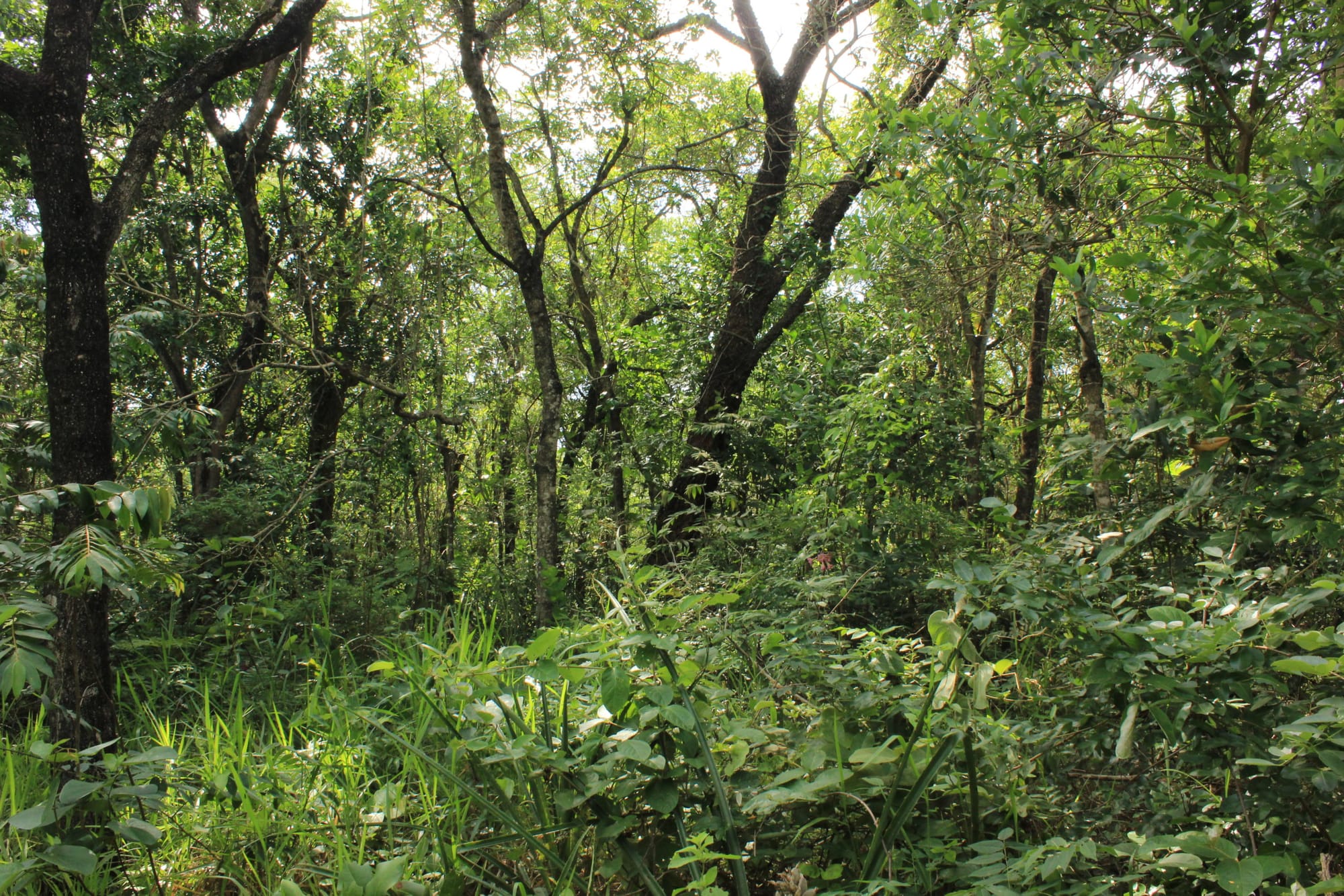
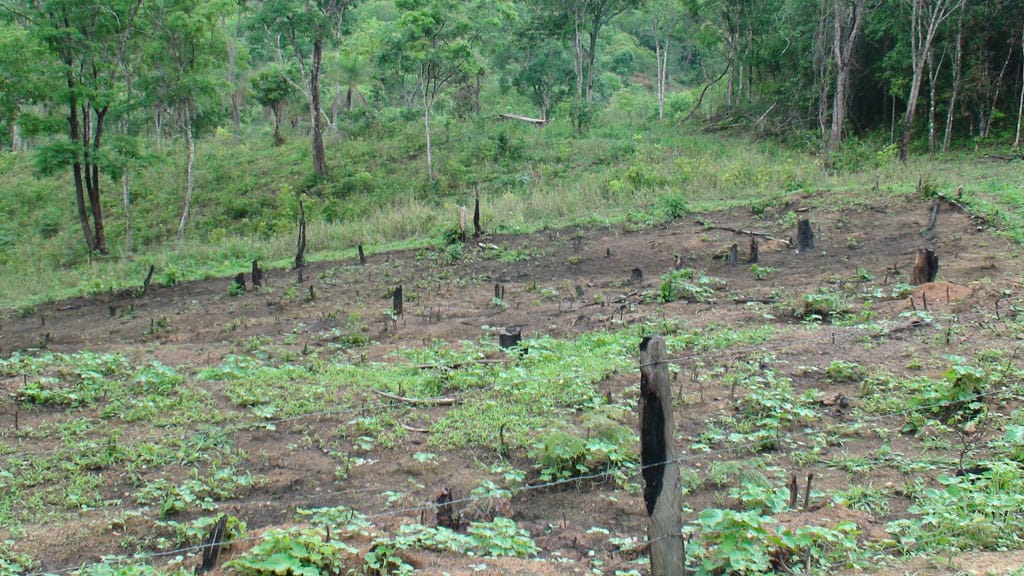
Now discoveries in the Amazon reveal human occupation, with large areas dominated by geometrical earthworks. One of interesting things with this find what it means about rain forest regeneration. It’s thought that primary rainforest is irreplaceable. What you get back after cutting down a large area of rainforest is secondary rainforest. On the ground secondary rainforest is much more like the popular image of a jungle where you hack your way through the undergrowth. In primary forest the canopy keeps a lot of light reaching the ground. Though it looks empty primary forest creates a rich habitat in the canopy making it among the most biodiverse habitats in the world. Secondary forest, without the canopy doesn’t do that.
This is why regrowth of cut-back forest isn’t as good as not cutting it down in the first place. There’s also been a puzzle of how long it would take the scars of secondary forest to heal and primary forest to return. Study of the area, it’s size and its abandonment date could help. On the downside because someone’s already cut down the trees you don’t know if this area would have stood out as a biodiversity coldspot in the forest.
Sadly I doubt you could neatly extrapolate the data to say when the current cuts will heal. I’m willing to bet however big these clearances were, they weren’t as big as the modern clearances. Despite this, an archaeological/ecological investigation could still provide useful data on the relationship between area cleared and the time taken to grow back forest.
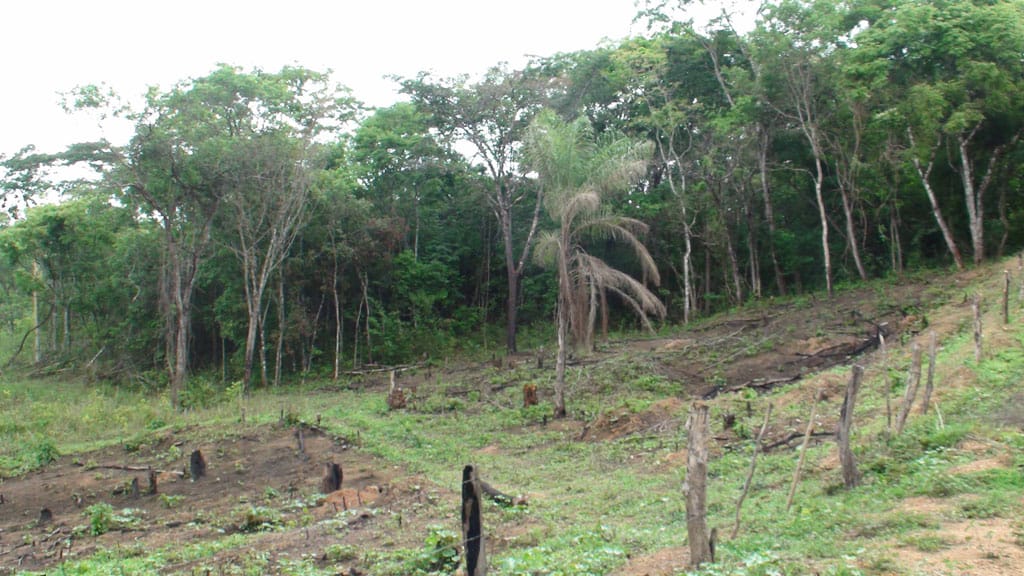
This kind of environmental approach to human settlement can be seen elsewhere. There’s a Botanical Briefing: Fire, Forest Regeneration and Links with Early Human Habitation: Evidence from New Zealand by Ogden, Basher and McGlone that you can pick up as a free PDF from Annals of Botany. The background here is that prior to humans New Zealand was covered in temperate rain-forest. Crucially this hadn’t evolved fire adaptations. The periods between major fires in any place were more often thousands, not hundreds, of years. Polynesians discovered New Zealand late, around AD 1200. That seems strange, because New Zealand has the largest Polynesian islands, but it’s also a long way south. Polynesians preferred to travel east-west. When they did arrive they brought agriculture with them and a great way to clear areas for crops is with fire. There is an increase in the number of fires post-colonisation, but sifting the natural fires from the man-made fires at any given site is difficult. If you find regenerating forest in New Zealand, it doesn’t automatically follow that it’s evidence of prehistoric human settlement.
However, if you can find human artefacts at a regenerating site, you can date the initial damage. A number of sites with different dates or areas gives you a series of snapshots instead of having to run a series of thousand year experiments. I’m not disparaging the work of The Long Now Foundation, but sometimes it’s nice to have an answer quickly.
Amazonian hat-tip @alexbellos on Twitter and +Tom Elliot on Google+