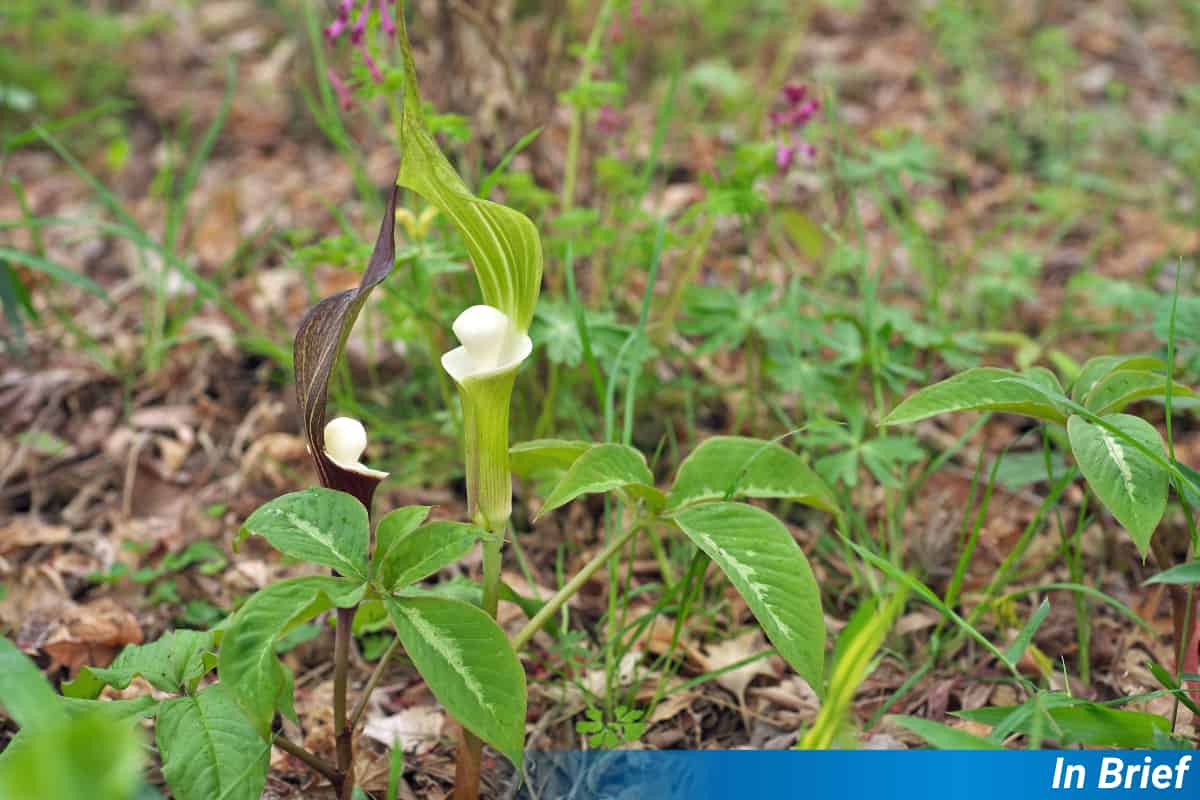



In the world of plant-insect interactions, Arisaema urashima stands out. This plant is known for its deadly flower traps that capture pollinators. But has a surprising secret. Suetsugu and colleagues discovered that while some fungus gnats perish in its blooms, others escape and use the flowers as nurseries. This study challenges long-held beliefs about Arisaema pollination, revealing a complex relationship where flowers serve as both lethal traps and breeding grounds for different gnat species.
Suetsugu’s team discovered a remarkable twist in A. urashima pollination. Adult Sciophila yokoyamai gnats can enter the flower, deposit eggs, and then successfully escape – a feat unique among the plant’s visitors. Their larvae then develop in the decaying blooms, with multiple adults later emerging. This contrasts with other gnat species, which perish in the plant’s trap. The findings reveal A. urashima flowers as both lethal snares and nurturing nurseries, depending on the pollinator species, showcasing a complex ecological interplay.
Researchers examined 313 A. urashima flowers, collecting trapped insects. They incubated 416 inflorescences to observe emerging insects. In controlled experiments, they introduced S. yokoyamai into A. urashima spathes, monitoring escape rates and behaviour with video cameras. They also released S. yokoyamai in cages with A. urashima plants, later examining the gnats for pollen. These methods allowed the team to study lethal trapping, nursery and pollination roles, revealing the complex interactions between A. urashima and its pollinators.
This study challenges long-held views on Arisaema pollination. Previously, these plants were thought to exclusively trap and kill their pollinators. However, the discovery that S. yokoyamai escapes and uses A. urashima as a nursery reveals a more complex relationship. This finding bridges the gap between deceptive and mutualistic pollination strategies. It also highlights the importance of examining pollinators’ full life cycles in flowers.
Our study emphasizes that traditional methods of defining pollinator assemblages based solely on trapped visitors may overlook critical aspects of Arisaema ecology.
Suetsugu, K., Nishigaki, H., Sato, R., Kakishima, S., Ishitani, E., Fukushima, S., Sugiura, S., & Sueyoshi, M. (2024). Fungus gnat pollination in Arisaema urashima: the interplay of lethal traps and mutualistic nurseries. Plant Biology. https://doi.org/10.1111/plb.13714
Available free via ResearchGate at https://botany.fyi/pcllae