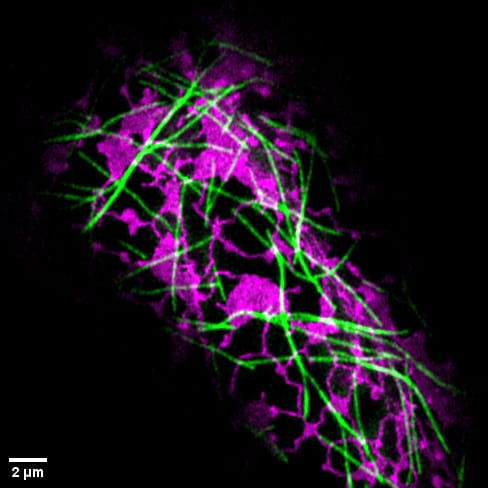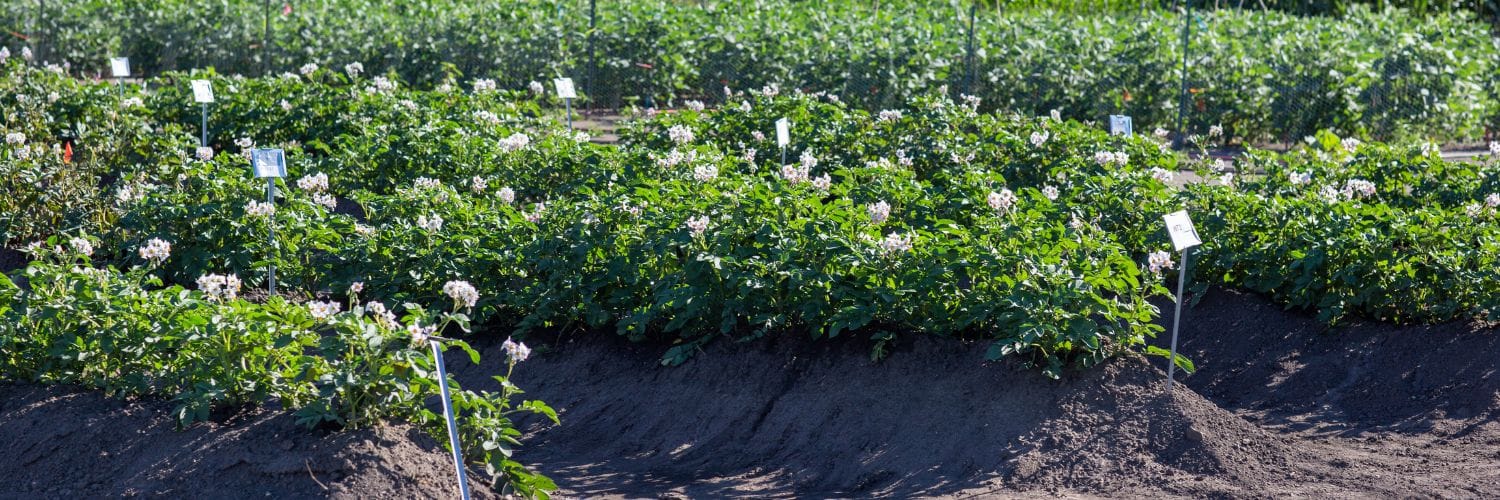


A team from the University of Illinois has engineered potato to be more resilient to global warming showing 30% increases in tuber mass under heatwave conditions. This adaptation may provide greater food security for families dependent on potatoes, as these are often the same areas where the changing climate has already affected multiple crop seasons.
“We need to produce crops that can withstand more frequent and intense heatwave events if we are going to meet the population’s need for food in regions most at risk from reduced yields due to global warming,” said Katherine Meacham-Hensold, scientific project manager for Realizing Increased Photosynthetic Efficiency (RIPE) at Illinois. “The 30% increase in tuber mass observed in our field trials shows the promise of improving photosynthesis to enable climate-ready crops.”
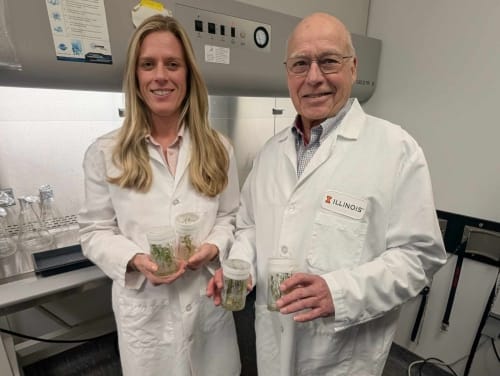
Meacham-Hensold led this work for RIPE, an international research project that aims to increase global food access to food by developing food crops that turn the sun’s energy into food more efficiently. RIPE was supported from 2017-2023 by the Bill & Melinda Gates Foundation, Foundation for Food & Agriculture Research, and U.K. Foreign, Commonwealth & Development Office and is currently supported by Bill & Melinda Gates Agricultural Innovations (Gates Ag One).
Photorespiration is a photosynthetic process that has been shown to reduce carbon uptake, and therefore the yield of soybean, rice, and vegetable crops by up to 40%. Photorespiration occurs when Rubisco reacts with an oxygen molecule rather than CO2, which occurs around 25% of the time and even more frequently in high temperatures. Plants then have to use a large amount of energy to metabolize the toxic byproduct caused by photorespiration (glycolate). Energy that could have been used for greater growth.
Previous RIPE team members had shown that by adding two new genes, glycolate dehydrogenase and malate synthase, to a model plants’ pathways, they could improve photosynthetic efficiency. The new genetics metabolized the toxin (glycolate) in the chloroplast, the leaf compartment responsible for photosynthesis, rather than needing to move it through other regions of the cell.
These energy savings drove growth gains in a model crop, which the current team hoped would translate to increased mass in their food crop. Not only did they see a difference, the benefits, recently published in Global Change Biology, were tripled under heatwave conditions, which are becoming more frequent and intense as global warming progresses.
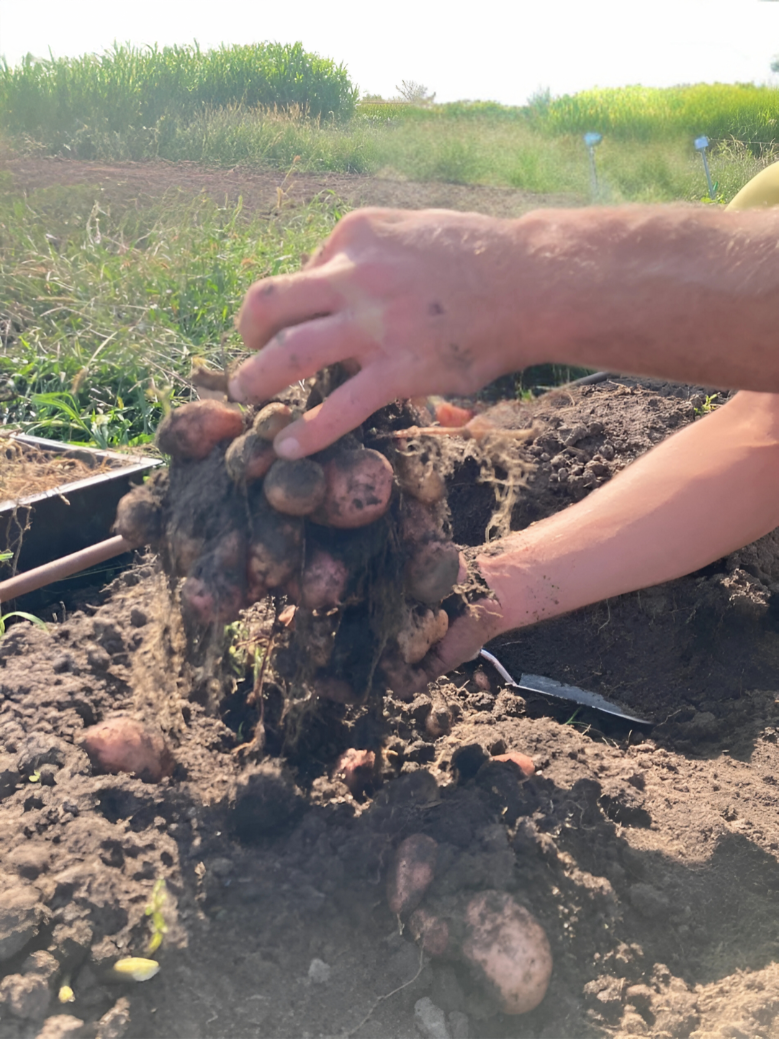
Rather than withering in the heat, the modified potatoes grew 30% more tubers than the control group potatoes, taking full advantage of their increased thermotolerance of photosynthetic efficiency.
“Another important feature of this study was the demonstration that our genetic engineering of photosynthesis that produced these yield increases had no impact on the nutritional quality of the potato,” said Don Ort, Robert Emerson Professor of Plant Biology and Crop Sciences and Deputy Director of the RIPE project. “Food security is not just about the amount of calories that can be produced but we must also consider the quality of the food.”
Multi-location field trials are needed to confirm the team’s findings in varying environments, but encouraging results in potatoes could mean similar results could be achieved in other root tuber crops like cassava, a staple food in Sub-Saharan African countries expected to be heavily impacted by rising global temperatures.
READ THE ARTICLE:
Meacham-Hensold, K., Cavanagh, A.P., Sorensen, P., South, P.F., Fowler, J., Boyd, R., Jeong, J., Burgess, S., Stutz, S., Dilger, R.N., Lee, M., Ferrari, N., Larkin, J. and Ort, D.R. (2024), Shortcutting Photorespiration Protects Potato Photosynthesis and Tuber Yield Against Heatwave Stress. Global Change Biology, 30: e17595. https://doi.org/10.1111/gcb.17595
An easy-to-read commentary article that contextualizes this research is available here: https://doi.org/10.1111/gcb.17609