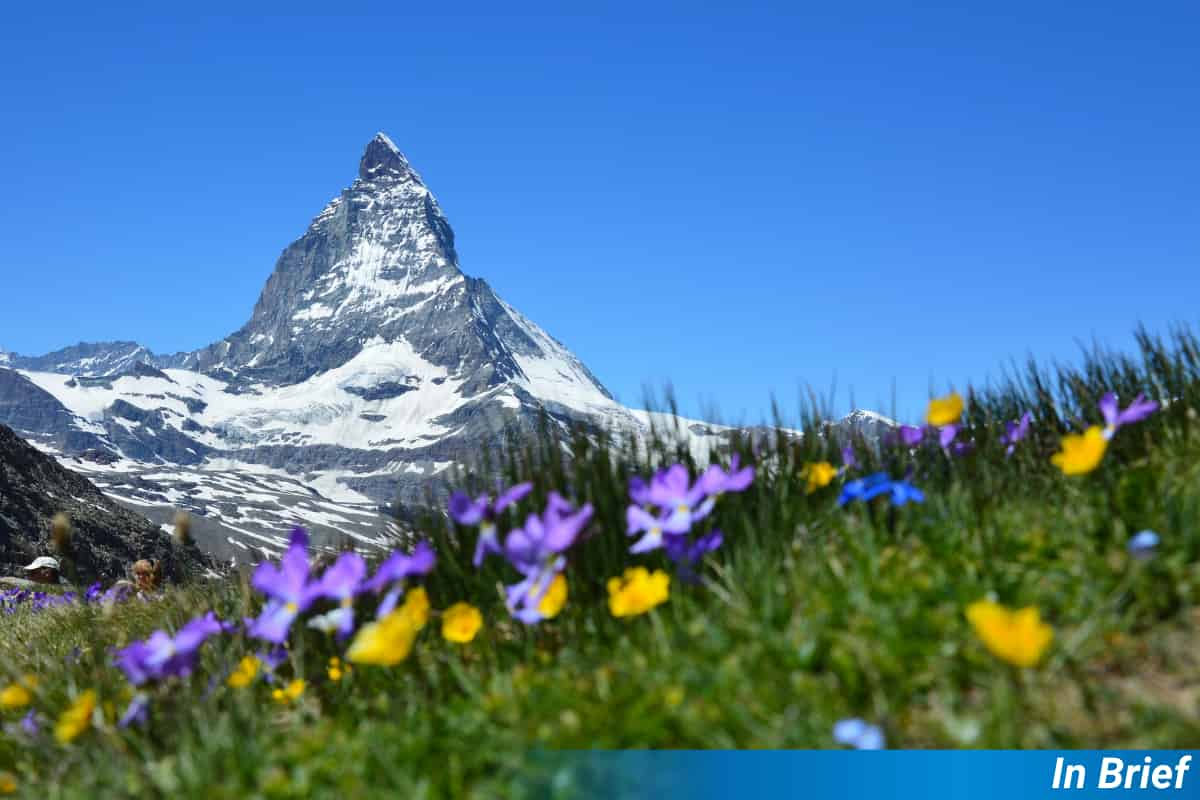



It’s well-known that climate change is causing flowers to open earlier, but what happens when they open? Powers and colleagues studied how earlier snowmelt and changing rainfall affect flower scents in a mountain wildflower. They found that climate change altered both flower scents and how the scent affects flower reproduction. These changes, they argue, could disrupt relationships between flowers, pollinators, and pests.
Powers and colleagues found that both earlier snowmelt and different amounts of summer rain changed the scent of the flowers. However, pinning down details remains difficult they say. “The responses of volatiles to changes in the environment were complex and often nonsignificant despite one of the largest sample sizes (374 plants) for any floral volatile study, partly because of the high variation in emissions”
They also found that soil moisture only explains some scent changes. The combination of earlier snowmelt and irregular rain suggests that flowers may fall out of step with pollinators and, when the pollinators are around, might not be in the best shape to signal to them.
The team got their results with some creative time-travel. They were able to speed up spring for some plants by covering their plots in black plastic, heating the ground to bring forward snowmelt by 3-11 days. They then used electronic “noses” to sample the flower scents, and watched to see how many seeds plants produced.
Previous work has usually concentrated on managing one effect, like drought or temperature. Powers and colleagues say their study is one of the first to combine both factors. They also say that their complicated results mean that it shouldn’t be the last if we want to see what the future holds.
Powers, J.M., Briggs, H.M. & Campbell, D.R. 2024. Natural selection on floral volatiles and other traits can change with snowmelt timing and summer precipitation. New Phytologist. https://doi.org/10.1111/nph.20157 (OA)