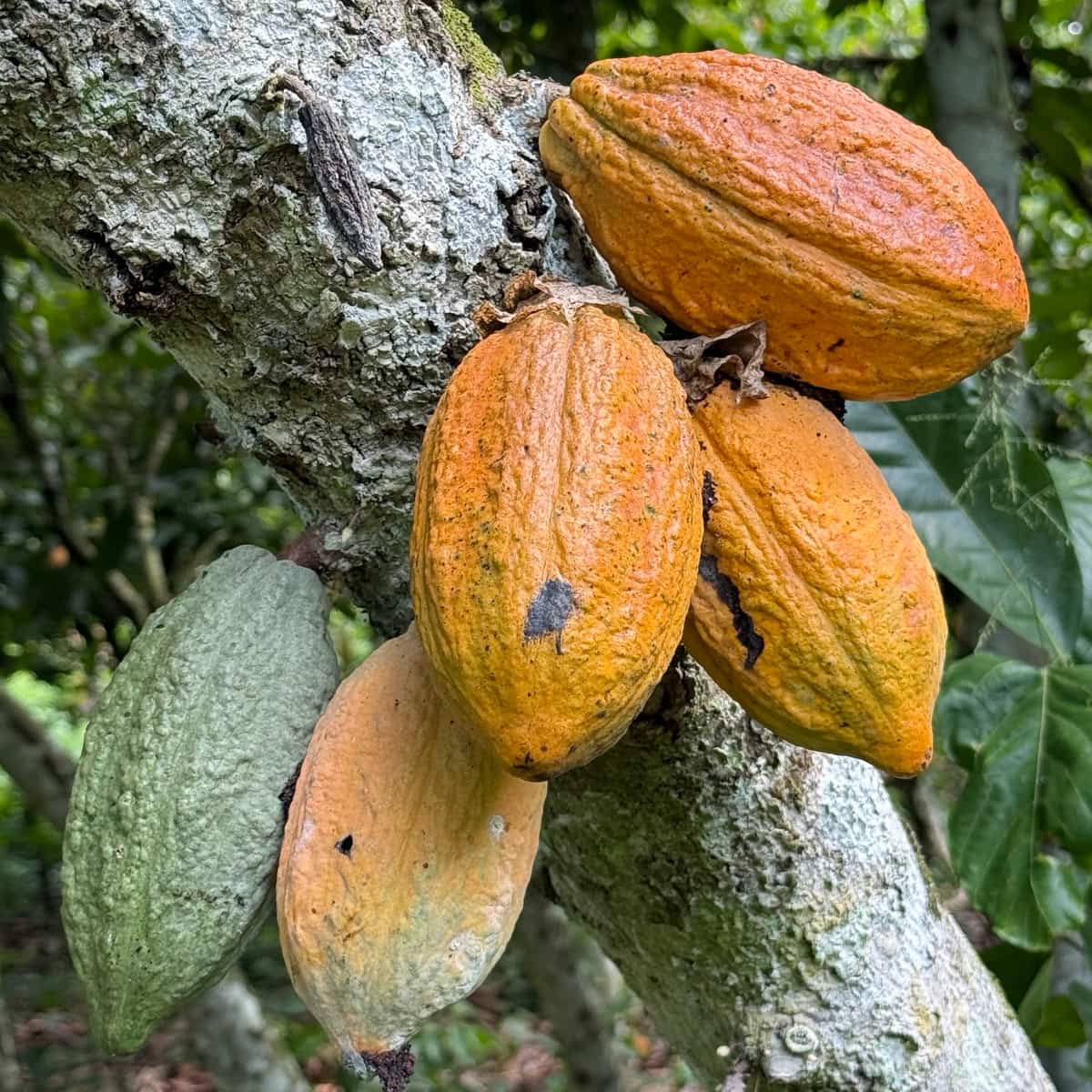



Food Dive has a blog post about Mars, makers of Snickers, M&Ms and the Milky Way, licencing CRISPR gene-editing from Pairwise to create disease-resistant cocoa plants. The aim is to use the genes cacao trees already have to help them fight stress and disease. It’s a serious problem in West Africa, which produces 70% of the world’s cocoa. We reported recently that rising temperatures are causing problems for farmers, and the rising temperatures are not abating. The result? Cocoa prices have surged 136% since 2022, with futures crossing $10,000/metric ton.
Farmers are doing their best, but climate change is playing havoc with traditional skills in adjusting seasonal planting. Anning et al 2022 find that Ghanaian farmers now report intensifying sun, erratic rainfall, and increased bushfires as well as increased tree dieback. It’s also turbocharging pathogens. Phytophthora, which causes black pod disease, and has been destroying 20-30% of pods before harvest annually. Combatting it through breeding is difficult. Traditional breeding is slow, using Cacao trees that take 5-7 years to mature. CRISPR offers to speed things up.
Recent research shows it’s feasible. Fister et al. (2018) achieved the first successful CRISPR editing in cacao, targeting the TcNPR3 gene that suppresses plant defenses. Results showed 27% gene deletion rate and enhanced resistance to the Phytophthora tropicalis pathogen. What appeared to be a complicated genetic response to pathogens has been tracked. Baruah et al. (2024) identified specific gene expression patterns that distinguish resistant from susceptible cocoa varieties showing 1,625-6,957 differentially expressed genes during pathogen attack.
Gene editing offers unprecedented precision in developing climate-resilient crops, but whether the consumer is going to accept it remains to be seen. Prices are already shifting consumers to gummy sweets. Without help 5 million small holders who depend on chocolate for a living will be in trouble.
Story source: Food Dive, https://botany.fyi/ps7vcy
Cover image: Theobroma cacao in Ghana by Catalina Tong. CC-BY-NC