


Last summer, my wife grew Kale in the garden as she decided this would be healthy. Fortunately, by the time they would have been ready for harvest, their leaves were a lattice of lacework. Good news for wildlife, and anyone who dislikes Kale. But there’s a puzzle. The bitter taste that causes me to dislike brassicas so much is part of the plant’s defence against getting eaten, so how can caterpillars happily munch their way through the leaves without trouble? Martin & Reymond have investigated this in a new paper in Plant Direct, and the answer is in the caterpillar’s bite.
It’s a problem worth investigating. The global market for brassicas is expected to be worth over forty billion dollars this year. But this is a market under siege from pests like Spodoptera littoralis, the cotton leafworm, that – contrary to its name – will happily eat plants from from over forty families. On top of that, there are specialists like the Cabbage White butterfly, Pieris brassicae, that seek out brassicas because they’ve adapted to life on them to such an extent that they can’t survive on other plants. They just take bite after bite from the plants, so what happens when you bite a brassica?
Botanists thought that the plants detected the damage and triggered chemical alarms like jasmonic acid. This activates the defensive genes, producing toxic compounds and stronger cell walls to repel the attacker. The caterpillars in turn would have their own defences against these attacks.
The caterpillar attacks don’t just come with physical damage. The caterpillars also have saliva, and botanists have thought that plants can detect this saliva to trigger their defences faster. But if plants can use caterpillar spit, can the caterpillars use it too? Martin & Reymond decided to examine the oral secretions of caterpillars to see if it contained effectors, chemicals that work to sabotage plant defences.
The way they tested this was by simulating caterpillar bites on an Arabidopsis thaliana plant. Arabidopsis thaliana isn’t cabbage, but it’s in the same family. It’s also extremely well-studied, so it’s easier to track what is going on with the genes, when the bites happen. In this case, they were able to study thousands of genes at once.
The bites were punctures of 1 millimetre, similar to holes made by a bite of a young caterpillar. Martin & Reymond then added two microlitres of either Pieris brassicae saliva, Spodoptera littoralis saliva, or just plain water. That plain water would allow them to see what defences the physical damage alone caused. Any extra defences caused in the other two tests would then have to have been caused by the additional saliva. Three hours and twenty four hours after the “bites”, they tested for RNA.
Testing for RNA is the important part. The genes are all coded in DNA, but they don’t have any effect unless they produce RNA copies that travel to the ribosomes to start building proteins. It’s not enough for the gene to be there, it has to be “switched on” to have an effect. So finding out what RNA is around tells us what genes are actually having an effect.
Martin & Reymond found that damage alone affected 800 genes, but things took a big change when the plant detected caterpillar saliva. Then over 5000 genes were affected, amplifying wound responses and triggering stress responses. But among all these defence alarms, something went silent. Saliva seems to shut down expression of genes involved in cell wall strengthening, and making aliphatic glucosinolates.
Aliphatic glucosinolates are the plant’s chemical defences. When you taste bitter horseradish, or mustard, these are the compounds that are trying to persuade you that eating more is a very bad idea. They get activated by the enzyme myrosinase. Intact plant cells keep these two components apart, but when a cell wall is broken by a caterpillar bite, they come together to create their toxic payload. By shutting down a plant’s ability to make aliphatic glucosinolates, the caterpillars are removing danger before it has even been made.
Another battlefront was on wound healing. Martin & Reymond found that the saliva also shut down the ERF114 gene. This is a gene that helps the plant heal wounds. The combined effect is that when new caterpillars start eating a leaf of a plant, it becomes much more hospitable to all its siblings. And so the leaf gets stripped.
The value of this research is that it reveals just how sophisticated this molecular arms race has become. For decades, plant breeders have been trying to stay one step ahead of pests by boosting plant defenses, only to find that caterpillars eventually adapt. Now we know why the battle has been so difficult. The defences don’t matter if the caterpillars don’t have to face them. It’s clearly a successful approach, as both the specialist and generalist pests have adopted the same strategy.
This discovery opens up new research directions. Scientists can now hunt for the specific effector molecules in caterpillar saliva that shut down plant defenses, potentially leading to targeted countermeasures. They might also look for plant varieties that are naturally resistant to this molecular sabotage. However, this is likely to take a while to achieve, so I’m in no immediate danger of eating kale myself yet.
READ THE ARTICLE
Fernandez Martin, A. and Reymond, P. (2025) “Impact of Lepidopteran Oral Secretions on the Transcriptome of Arabidopsis thaliana,” Plant Direct, 9(6), p. e70085. Available at: https://doi.org/10.1002/pld3.70085.
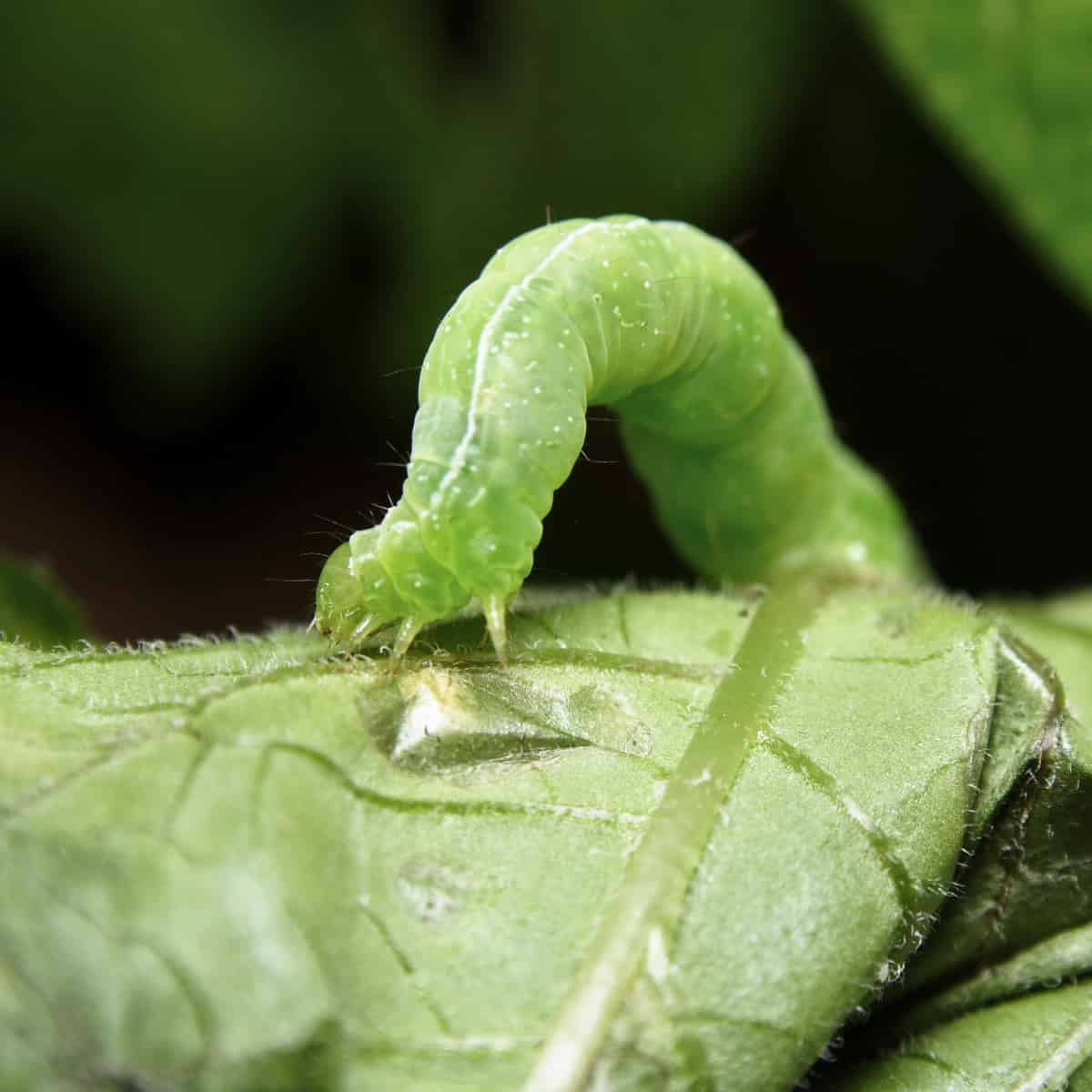
Cover image: Cabbage White caterpillar. Photo: Andrew Waugh / Getty Images / Canva.