

Contemporary interest in agricultural sustainability can be traced to environmental concerns that began to appear in the 1950s and 1960s. However, concepts and practices about sustainability date back at least to the oldest surviving texts from China, India, Greece and Rome. Today the global challenge is great.
In order to provide sufficient food for growing populations and their changing consumption patterns, some indicate that agriculture will have to expand into non-agricultural lands. However, the competition for land from other human activities makes this a costly solution, particularly if protecting biodiversity and the public goods provided by natural ecosystems (e.g. carbon storage in forests) is given priority. Others suggest that yield increases must be achieved through redoubled efforts to repeat the approaches of the green revolution; or that agricultural systems should embrace only biotechnology or become solely organic. What is clear despite these differences is that more will need to be made of existing agricultural land.

Agriculture will, in short, have to be intensified. Traditionally agricultural intensification has been defined in three ways: i) increasing yields per hectare, ii) increasing cropping intensity (i.e. two or more crops) per unit of land or other inputs (water), or livestock intensity (e.g. faster maturing breeds), and iii) changing land use from low value crops or commodities to those that receive higher market prices or have better nutritional content.
The notion of “intensification” remains controversial to some, as recent successes in increasing food production per unit of resource have often also caused environmental harm and disruption to social systems.
The desire for agriculture to produce more food without environmental harm, or even positive contributions to natural and social capital, has been reflected in calls for a wide range of different types of more sustainable agriculture: for a ‘doubly green revolution’, for ‘alternative agriculture’, for an ‘evergreen revolution’, for ‘agroecological intensification’, for ‘green food systems’, for ‘greener revolutions’, and ‘evergreen agriculture’.
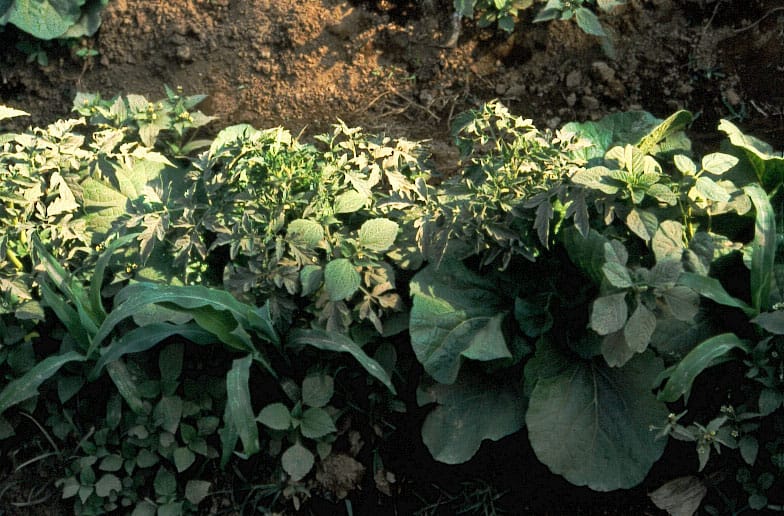
Sustainable intensification (SI) is defined as a process or system where yields are increased without adverse environmental impact and without the cultivation of more land. The concept is thus relatively open, in that it does not articulate or privilege any particular vision of agricultural production. It emphasises ends rather than means, and does not predetermine technologies, species mix, or particular design components.
[fullclear]
Pretty J. & Barucha Z.P. (2014). Sustainable intensification in agricultural systems,
Annals of Botany,