


The preservation of archeological sites does not always overlap with the conservation of biodiversity. At the most basic level, the United Nations Educational, Scientific, and Cultural Organization separates cultural heritage sites and natural heritage sites: Of 981 heritage sites, 759 are cultural, 193 natural, and only 29 (2.65%) have mixed properties (whc.unesco.org/en/list). Cultural conservation and biodiversity conservation have overlapped in the sustainable use of natural resources (Timmer and Juma 2005), but shared targets of elevated conservation importance for both archeological and biodiversity priorities are still few.
Vanderplank, Mata and Ezcurra 2014
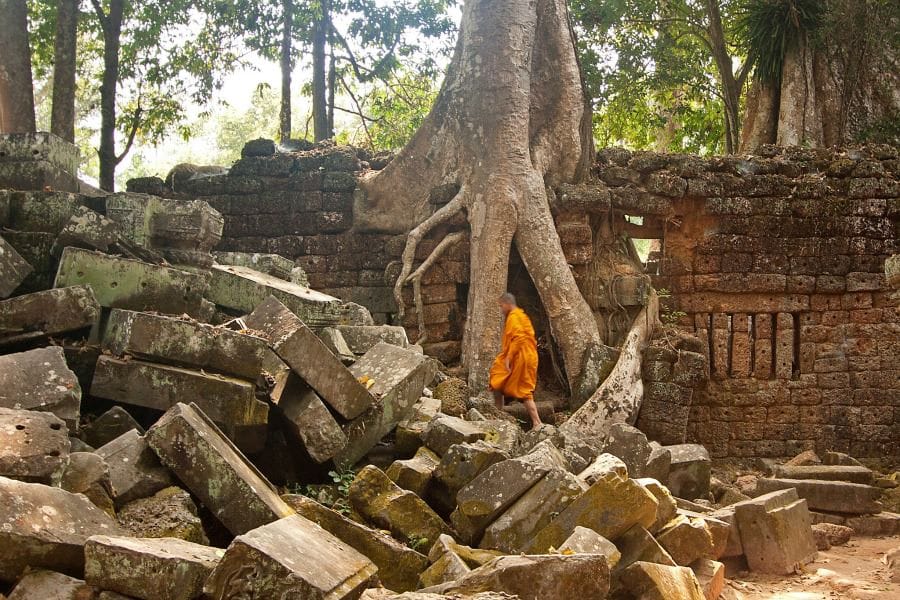
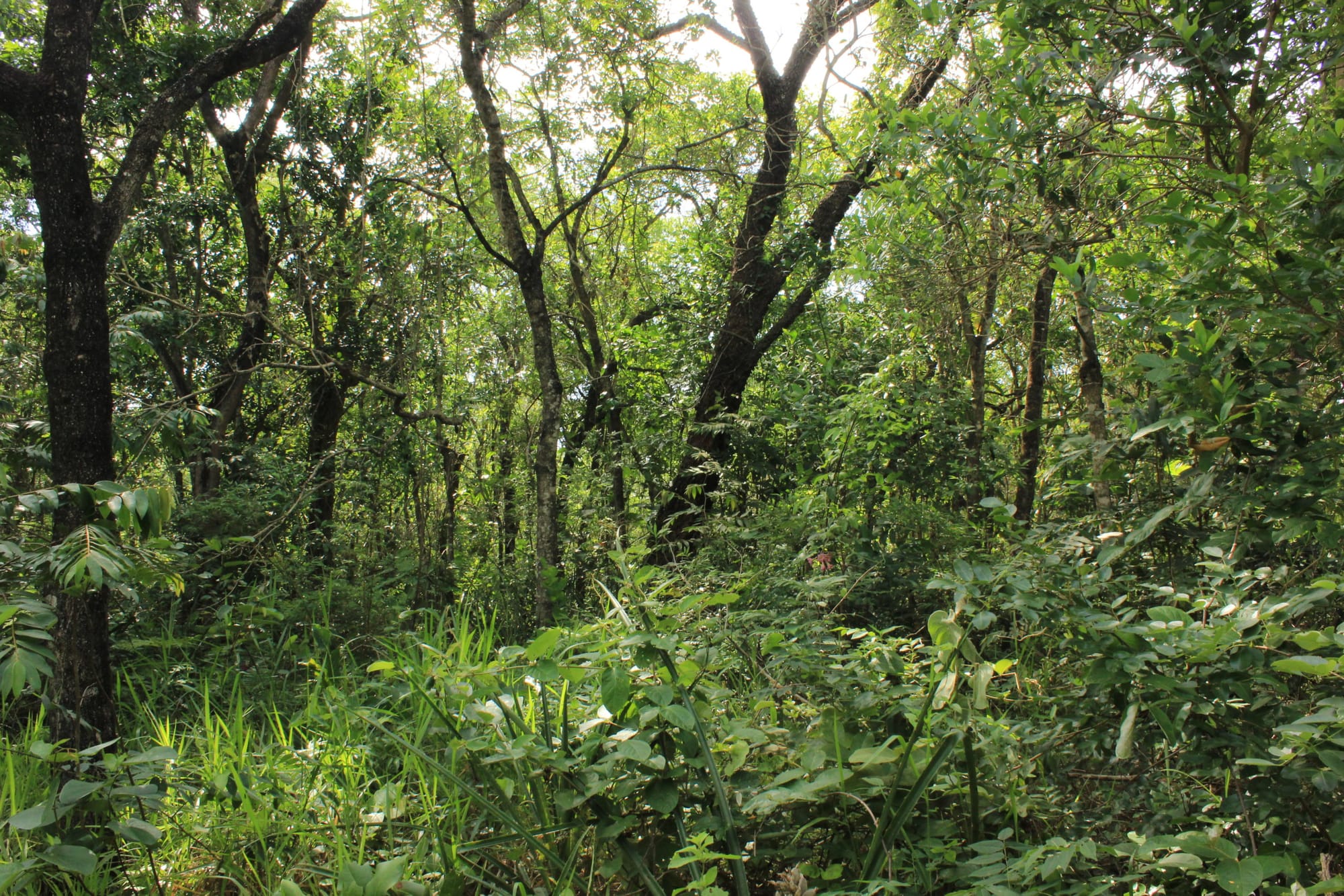
The first archaeological dig I worked on, I could probably have used a little less biodiversity. Or at least fewer horseflies. And fewer trees. The site was a Gallo-Roman farmstead in what had become a forest. The roots of the trees were pulling apart the remains of the building. However, the trunks were thick and the roots had come to support parts of the walls, even as they were prising the bricks apart. A similar effect is even more visible in places like Ta Prohm. For archaeologists the natural environment can be a pest.
In their paper Biodiversity and Archeological Conservation Connected: Aragonite Shell Middens Increase Plant Diversity, Vanderplank et al. point out that an archaeological site is not always good news for biodiversity as humans tend to clear sites of anything they think gets in the way. Finding a site where the conservation priorities for archaeology assist biodiversity is rare, but it seems to be the case in Baja California.
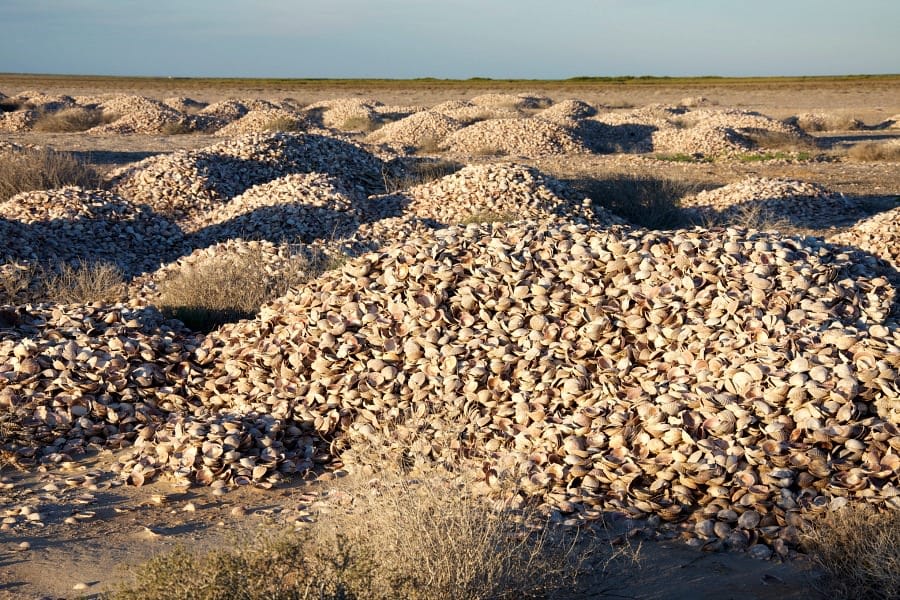
The archaeological sites might look dull at first sight. They're piles of shells. In fact they're piles and piles of shells. Masses of them. Once someone had eaten what was inside, the shell could be thrown away, so you get what are effectively rubbish dumps. One of the surprises about them is how old they are. The earliest sites are around ten thousand years old. This dates from close after the arrival of humans in the landscape Another surprise is how many people made the middens. Not as many as you might think.
It's thought the groups of people occupying places would have been fairly small, maybe around thirty people closely connected as a family. They'd forage on the shore for food and move inland when the season was right to take advantage of food sources there. For small groups to make mounds this big, they'd have to be eating shellfish for a long time. Dates from the shells show this is what happened, with some sites being in use till the arrival of Europeans.
With occupation going on for so long, it's not surprising that it has an effect, almost like geology and this is what Vanderplank et al. have found. Shells are becoming part of the local geology, in particular clam shells which degrade comparatively quickly compared to other species hunted for food. Vanderplank et al. decided to test to see if plant biodiversity could be an indicator of archaeological remains. The targets were middens by Colonet and San Quintín, Mexico.
It would have been neat if they could have shown a simple relationship between middens and biodiversity. Sadly, life's not so considerate. There was quite a bit of difference in species between the two sites. They found that middens increased biodiversity at San Quintín, while biodiversity was greater away from the middens at Colonet.
While that's slightly annoying, it shouldn't be surprising. Obviously the local species will vary with the environment. Around San Quintín, the land is low-lying and often floods. The leaching of calcium from the shells allows plants to thrive that otherwise would not grow in the saline soils around the middens. Colonet had much less saline soils, so the effect there was somewhat different.
Vanderplank et al. argue that the effect of these middens makes them a marker of the Anthropocene. This is a proposed geological age that reflects humanity's effect on the environment. Vanderplank et al's paper would put the start of the Anthropocene somewhat early, but with things like the Ruddiman Hypothesis it's not wildly out of step with some academics.
It certainly opens the possibility of using botanical survey as a means for prospecting for archaeological sites, not just in Mexico, but anywhere where humanity has had a major impact on sites.
Vanderplank S.E., Mata S. & Ezcurra E. (2014). Biodiversity and Archeological Conservation Connected: Aragonite Shell Middens Increase Plant Diversity, BioScience, 64 (3) 202-209. DOI: http://dx.doi.org/10.1093/biosci/bit038