


Plants are incredibly diverse, and so are botanists! In its mission to spread fascinating stories about the plant world, Botany One also introduces you to the scientists behind these great stories.
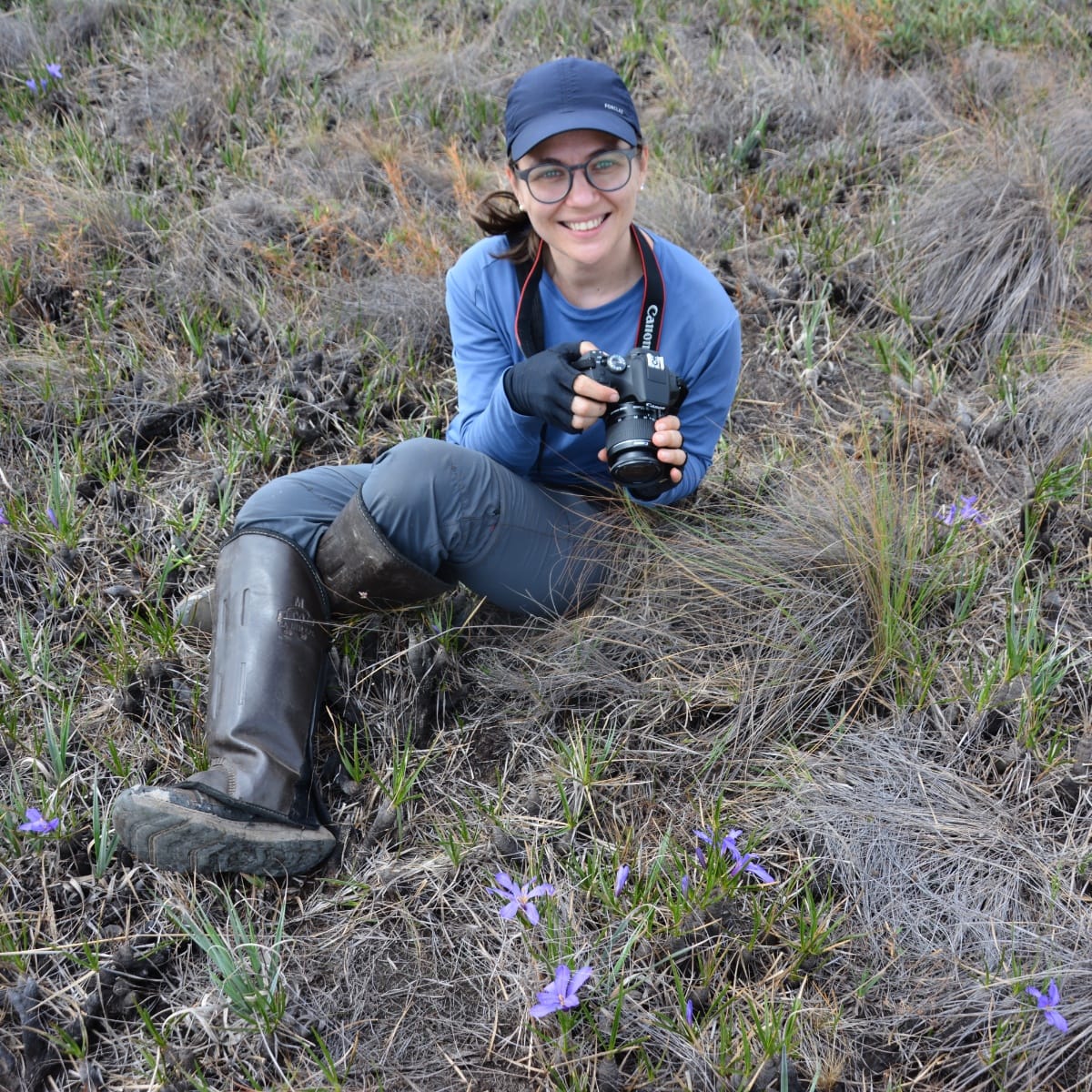
Today, we have Bianca Schindler, a PhD candidate from the University of Brasília (Brazil). Schindler has been deeply involved in the studies on wild plants, their taxonomy and conservation. Working on the botanical identification of forest inventories and floristic surveys of the main Brazilian biomes, she has an in-depth knowledge regarding the taxonomy, distribution and ecology of plant species, and extensive field experience for having participated in these expeditions in different biomes in Brazil. Her thesis revolves around the species from the genus Vellozia Vand. (Velloziaceae) occurring in the Central region of Brazil, popularly known as ‘canelas-de-ema’. You can follow her on ResearchGate and Instagram.

What made you become interested in plants?
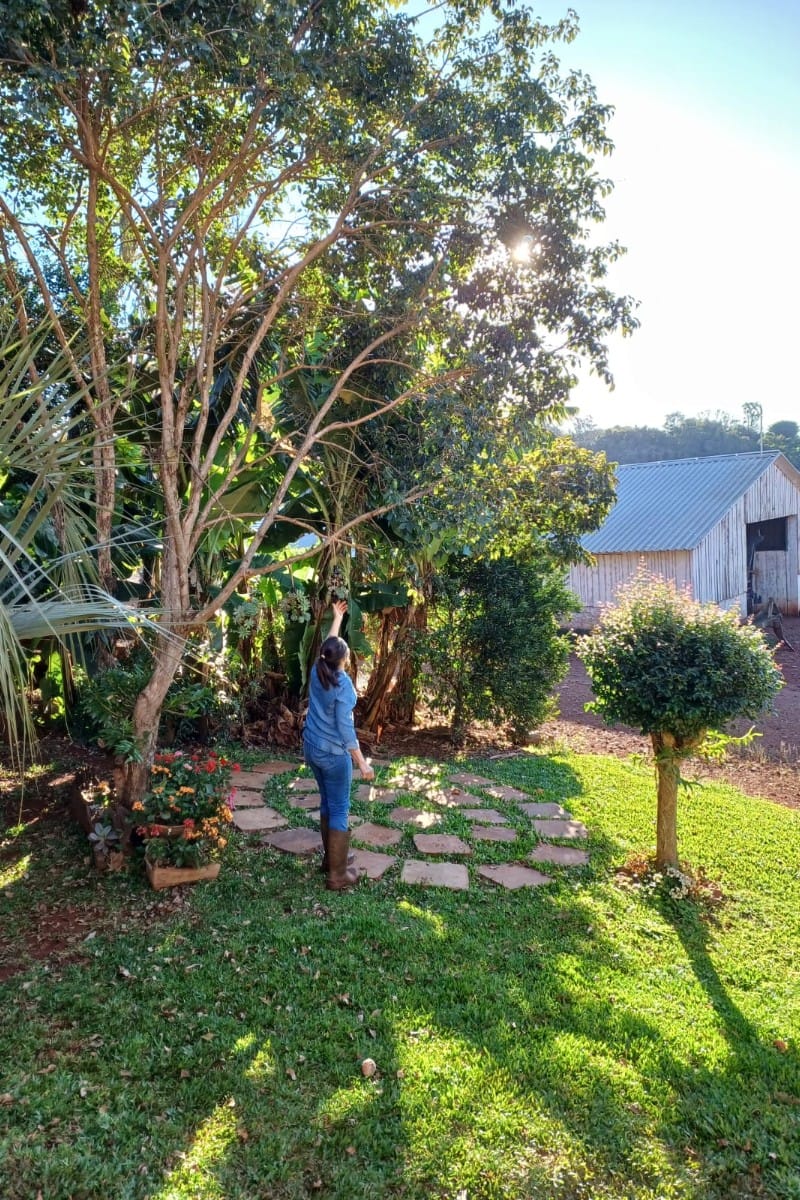
Without a doubt, my interest in plants comes from my mother’s influence. I grew up in the rural area of a small town, where daily contact with plants was part of life, whether playing, cultivating, harvesting herbs and fruits, or, even better, tasting them straight from the plant.
Thus, plants have always been a very natural part of my life. However, my curious perspective on them, beyond their practical use, I owe to my mother, who each year continues to surprise me with something new in her garden and in her incredibly productive vegetable patch, even in a small space. As she often says, “every seed is magical because it carries a life.”
From an early age, my fascination with plants was born from observing my mother’s enthusiasm for this universe, which naturally guided my professional choices. Today, I cannot imagine working in any field that is not related to them: Plants! These incredible, beautiful, and complex beings that continue to reveal mysteries and offer fascinating research opportunities.
What motivated you to pursue your current area of research?
My journey in the world of plants has always been quite broad. Throughout my education and professional experience, I have worked in a generalist manner, collecting and analysing specimens from different families. As I always say, Brazil is a true playground for botanists. We are privileged to host a tremendous diversity of environments, resulting in an impressive richness of incredible, often endemic, plants.
For a botanist, all plants are fascinating, and each group has its own peculiarities. That is why choosing a family or genus for my doctoral research was not an easy task; there is always so much to study in any plant group.
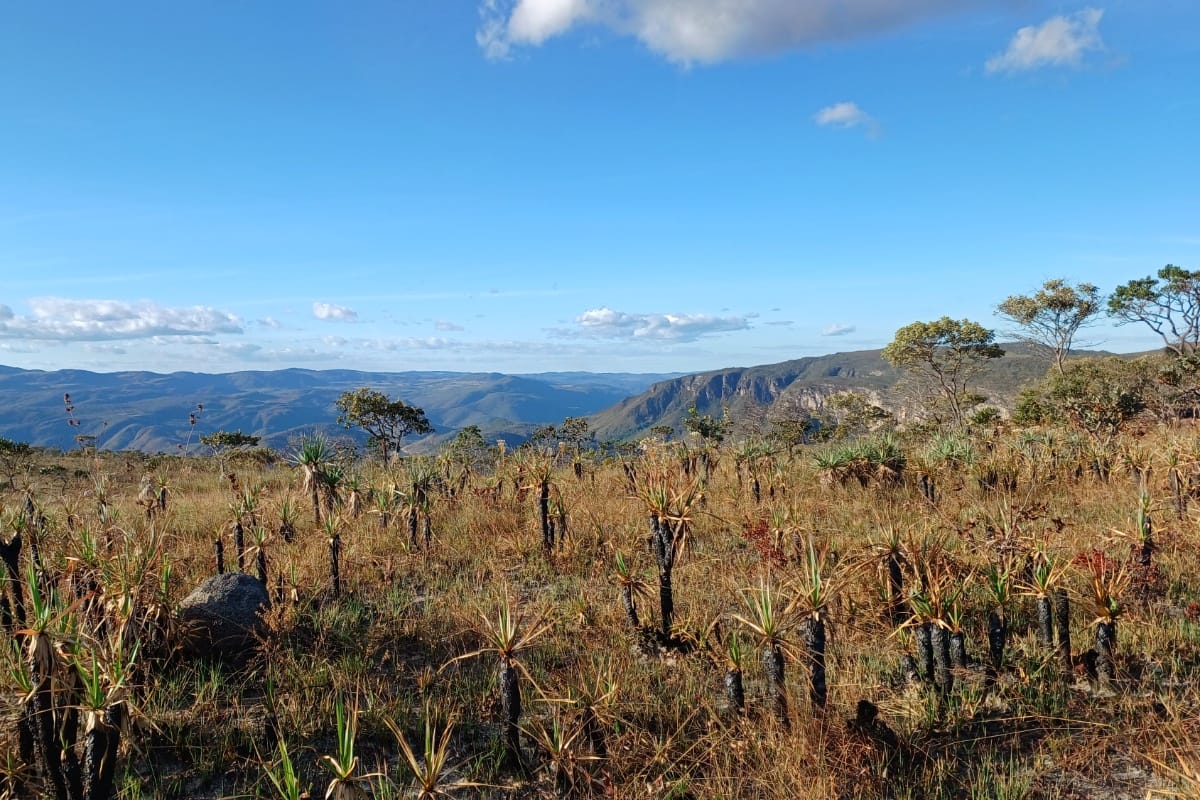
However, my decision to work with Vellozia was sparked in 2018, when I moved to the heart of Brazil and had my first direct contact with the Cerrado. Until then, I had never personally experienced this biome, nor had I seen this emblematic group of plants in the field: the Vellozia, locally known as canelas-de-ema, a genus almost entirely endemic to the rocky outcrops of the country.
Field experience, combined with the scarcity of literature on these plants in the region, reinforced my decision to work with this genus. Thus, the ongoing research aims to understand and reveal the diversity present in this area, as well as propose and update conservation measures for these fascinating and resilient plants, which occur in rocky formations and deserve special attention in light of climate change and the high deforestation rates in the Cerrado year after year.
What is your favourite part of your work related to plants?
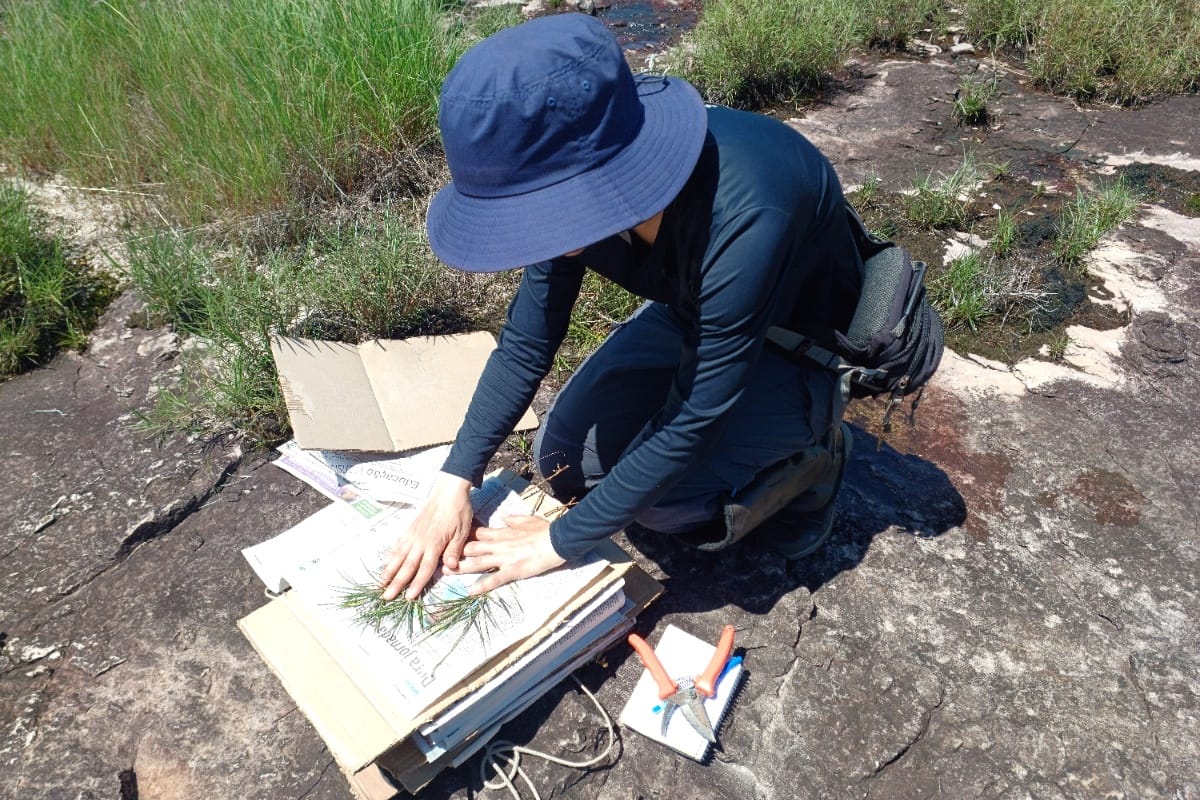
I believe that the study of plants offers an endless range of fascinating work and opportunities for new discoveries. What I enjoy the most, in fact, is the entire process from fieldwork to the analysis of material in the laboratory. Botany gives us the chance to explore new places, collect plants in different environments, and interact with diverse people and cultures, experiences that are deeply enriching. I am very grateful for all the fieldwork opportunities I have had throughout my journey.
From my perspective, fieldwork is fundamental for opening pathways of understanding in many stages of a taxonomist’s work. It is in the field that we begin to gather the first “pieces,” which later help us characterize and better understand what will be analyzed in the lab. For this reason, each new expedition represents countless possibilities and is always a special experience for me.
In addition to this, there is the analysis of specimens in scientific collections, the herbaria. At this stage, while trying to understand the entity we collected comparing it with other materials. It is also an opportunity to experience history: these specimens carry records of the places and people who collected them over many decades. Being able to work with this scientific and historical heritage is truly incredible.
Are any specific plants or species that have intrigued or inspired your research? If so, what are they and why?
As mentioned earlier, it is truly difficult to choose just one plant or a single situation when there is so much to discover about them. That said, my current research with Vellozia has been especially intriguing (often to the point of keeping me awake at night trying to understand them - laughs).
As taxonomists, we try to fit this enormous diversity into a large puzzle, in which each species represents a piece. To do so, we bring together morphological, ecological, genetic, chemical, and geological information, among others, in an effort to make sense of this complex set. In this sense, Vellozia species are particularly fascinating because they exhibit high complexity and remarkable adaptations to extreme environments: they survive under intense solar radiation, in nutrient-poor conditions due to growing almost exclusively on rocks, and they also face strong seasonality in some regions.
These adaptations result in a rich arsenal of ecological strategies, which are often reflected in complex and highly variable morphologies that are not always easy to classify. This makes the research both fascinating and, at times, a bit “mind-bending,” as while we seek to define clear boundaries between species, plants continue to follow their own evolutionary paths to survive and adapt to a wide range of conditions.
Thus, what truly inspires and intrigues me is not a single species, but all of these puzzle pieces together. I am excited to see what I will be able to contribute at the end of this learning journey and to share these advances with others.
Could you share an experience or anecdote from your work that has marked your career and reaffirmed your fascination with plants?
Every day, I feel grateful for the opportunity to choose to work with plants! One experience that always stands out for me is seeing the impact our work can have on other people. For example, there have been times when students or even people outside the field have been inspired during a lecture or a field expedition and started to see plants in a completely new way, noticing the complexity and beauty that often go unnoticed. Moments like these reaffirm my path and remind me of everything I have already learned.
Other unforgettable moments happen during field collections, when I come across a rare species that I have never seen in its natural habitat or have been trying to document with flowers or fruits for a long time, and finally succeed. It is in these moments, between physical effort, careful observation, and discovery, that my fascination with plants is renewed.
What advice would you give young scientists considering a career in plant biology?
My main advice is to find a topic that truly motivates you. To do that, take advantage of the opportunities throughout your studies or course, talk to people who are more experienced in the field, and don’t be afraid or embarrassed to ask questions, start something new, or even walk away from a topic or internship. That’s often how your true interests reveal themselves.
Doing research is fascinating, but the path is not always easy. That’s why it’s essential to choose something you genuinely love and that truly motivates you, so that even on the cloudiest days, you can still see the sun ahead and remember that all the effort will be worth it.
What do people usually get wrong about plants?
Often, the diversity of plant species is underestimated, and plants are seen merely as a uniform and passive “green background” of the landscape. This lack of awareness prevents us from recognising the complex network of interactions that exists even within a single plant species. As a result, we overlook many of the fundamental roles plants play on the planet, including ecosystem services such as carbon storage, climate regulation, soil protection, and many others that are still being discovered.
For this reason, plants are frequently undervalued in conservation strategies, despite being essential to the resilience of the ecosystems of which we are all a part. I must admit that it makes me a little sad to see this poor judgment reflected in everyday language—when someone describes another person as “boring” by saying they are “like a plant.” Come on, poor plants! They are incredible, complex organisms full of surprising strategies, and we still have so much to learn from them.