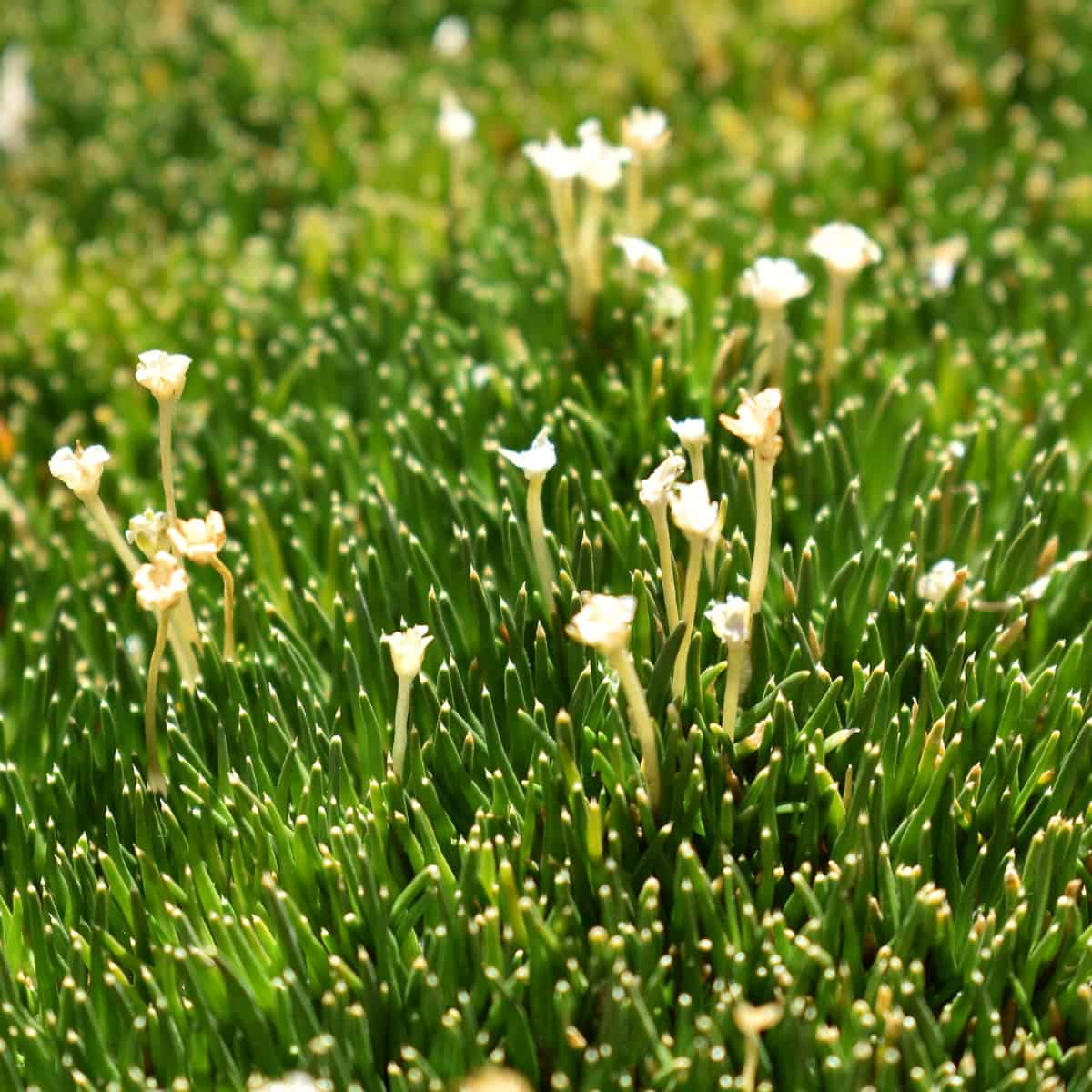


What will be the first colonists of other worlds? Cesar Amaral and colleagues examined how two hardy survivors from Earth’s most extreme continent might help make this a reality. The researchers tested a moss called Sanionia uncinata and a flowering plant named Colobanthus quitensis in simulated Moon and Mars soils, discovering surprising potential for lunar gardening. Experiments in Antarctica, show how these resilient species might pioneer our first steps toward space agriculture.

The Antarctic plants showed strikingly different responses to the alien soils. While Mars soil proved too harsh, causing the plants to struggle and lose their vibrant green color, the Moon soil told a more hopeful story. Both the moss and flowering plant not only survived but thrived in lunar conditions, with the Colobanthus even growing new roots – much like they would in their Antarctic home.
Amaral and colleagues created a controlled testing ground to understand how these plants might fare beyond Earth. The team grew their specimens in three distinct environments at Antarctica’s Comandante Ferraz research station: soil from the plants’ native Antarctic home, and special mixtures that replicated the surface conditions of both the Moon and Mars. For 15 days, they carefully tracked how these botanical pioneers adapted to their alien soils.
Antarctica is a much more hospitable environment for life than the Moon or Mars, but does have some value for testing plants. To survive the plants have to withstand extreme cold, months of darkness, harsh UV radiation, and prolonged drought. There’s still the critical matter of respiration, where will the oxygen come from? However, the hardiness of the plants suggest that some factors might require less mitigation than more fragile plants and help convert regolith into soil for use by crops at a later date.
Amaral, C.R.L., Anjos, D., Bones, F.L.V., de Freitas, A.C., Magalhães, M.G.P., Moreira, L.M., Goldenberg-Barbosa, R. & Donato, A. 2024. May Antarctic plants grow on Martian and Lunar soil simulants under terrestrial conditions? Anais da Academia Brasileira de Ciências 96: e20240571. https://doi.org/10.1590/0001-3765202420240571
Cross-posted to Bluesky, Mastodon & Threads.
Image: Colobanthus quitensis, by Patricio Novoa Quezada from Valparaíso, Chile / Wikimedia Commons

_Bart_(Caryophyllaceae)_(39733512800).jpg?ref=botany.one)