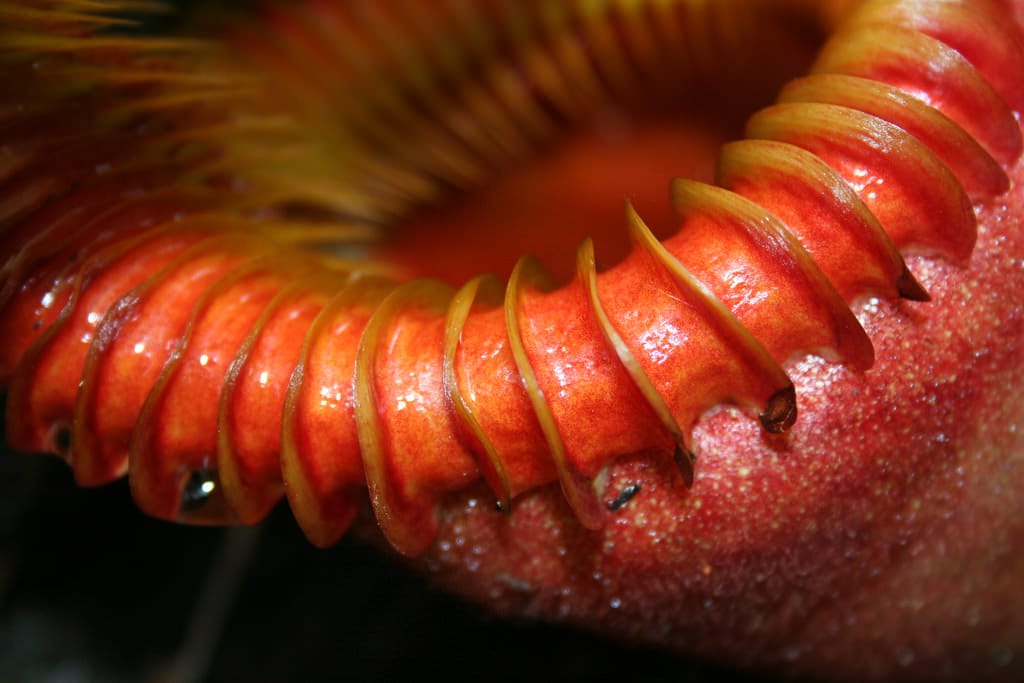



When it comes to carnivorous plants it’s Venus Flytraps that get the most attention, with their snapping jaws. Bladderworts have stunningly fast traps. Sundews glisten and coil around their prey. Pitcher plants like the Nepenthaceae in contrast don’t seem to do much. It looks like they’re just sitting there, waiting for gravity to do the work, almost like couch potatoes. In fact there’s a lot going on, as a paper from next month’s Annals of Botany shows.
Jonathan A. Moran, Laura K. Gray, Charles Clarke and Lijin Chin have written a paper Capture mechanism in Palaeotropical pitcher plants (Nepenthaceae) is constrained by climate (you can read it for free) that not only looks at what pitcher plants do, but also where they do what do. And they’ve looked at a lot of plants – almost 2000 populations of over 90 different species. So what is it that pitcher plants are doing?