


Botanists in South Australia have been researching how they can help protect an endangered forest of Red Stringybark, Eucalyptus macrorhyncha, in the Clare Valley north of Adelaide. While you might see this tree around in Victoria or NSW, it’s extremely rare in South Australia.
The study spent six months tracking tree stress through the summer heat and drought conditions. They wanted to see how topography affected stress, what conditions helped the trees tackle the heat, and which sites could help recruit seedlings to keep the species alive. If you think that it’s odd that Red Stringybarks are endangered, when you look around where you live, then that’s probably because you live over 500 km away from the Clare Valley. The trees have no relatives living close, and have experienced around 40% tree death from drought.
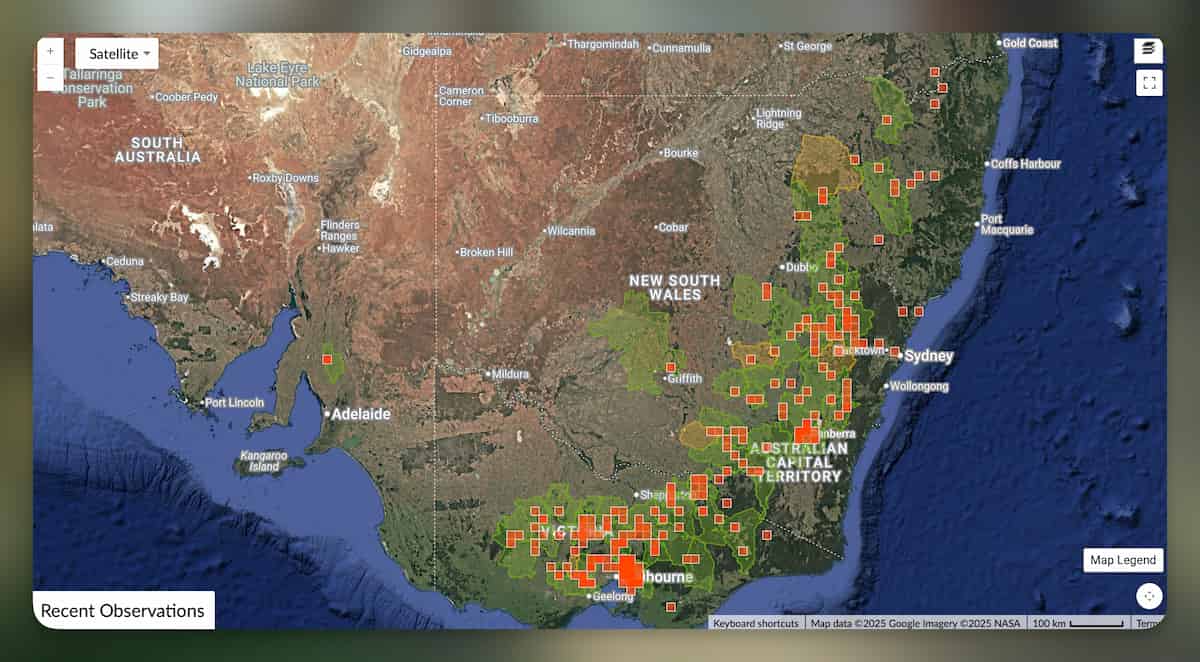
What the team were looking for was hydraulic damage in tree vessels. This was examining how well water could pass up the trees. They combined this with measures of canopy health, and temperature and humidity at 14 sites. Putting all this together they were able to identify microrefugia.
The microrefugia were found on south-facing slopes, away from the summer sun. These sites were 6°C cooler and more humid than the more exposed areas. Look up and the difference was visible. The trees at the coolest site had an average canopy dieback of 15% compared to the 81% at the hottest. The existence of microrefugia sounds like good news, but even here the measurements showed trees were in trouble, with 20% vascular damage. Once a tree passes 40% damage death comes rapidly. That suggests that even the trees in the microrefugia need help.
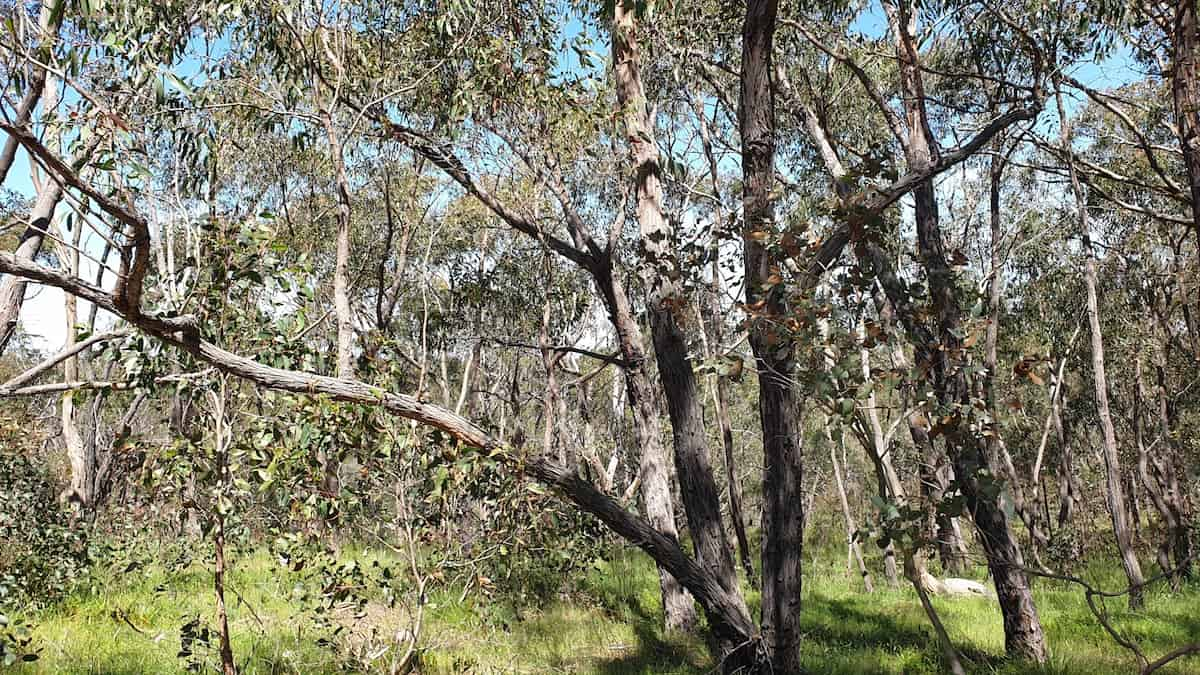
The authors write: “Night-time watering within, & at the margins of refugia may help sustain mature trees and avoid loss of recruits during summer heatwaves, where high vapor-pressure deficit may cross a threshold leading to runaway embolism & severe damage for recruits & mature trees alike.”
The research may be based on one species of eucalyptus, but the method of finding the best protected locations through mapping cooler microclimates and measuring tree stress, can be applied to other species facing drought stress.
For the Red Stringybarks of South Australia, this is timely work, but drought intensity is likely to increase in many places as the climate continues to heat up. This work offers insight into how best to manage limited resources to protect the trees most likely to survive extreme events.
READ THE ARTICLE
Bentze, C., Guerin, G.R., Hurren, A. and Keppel, G. (2025) “Using in situ microrefugia to safeguard stringybark eucalypts from hot droughts,” Conservation Science and Practice, (e70093). Available at: https://doi.org/pxck (FREE)
Cross-posted to Bluesky & Mastodon.
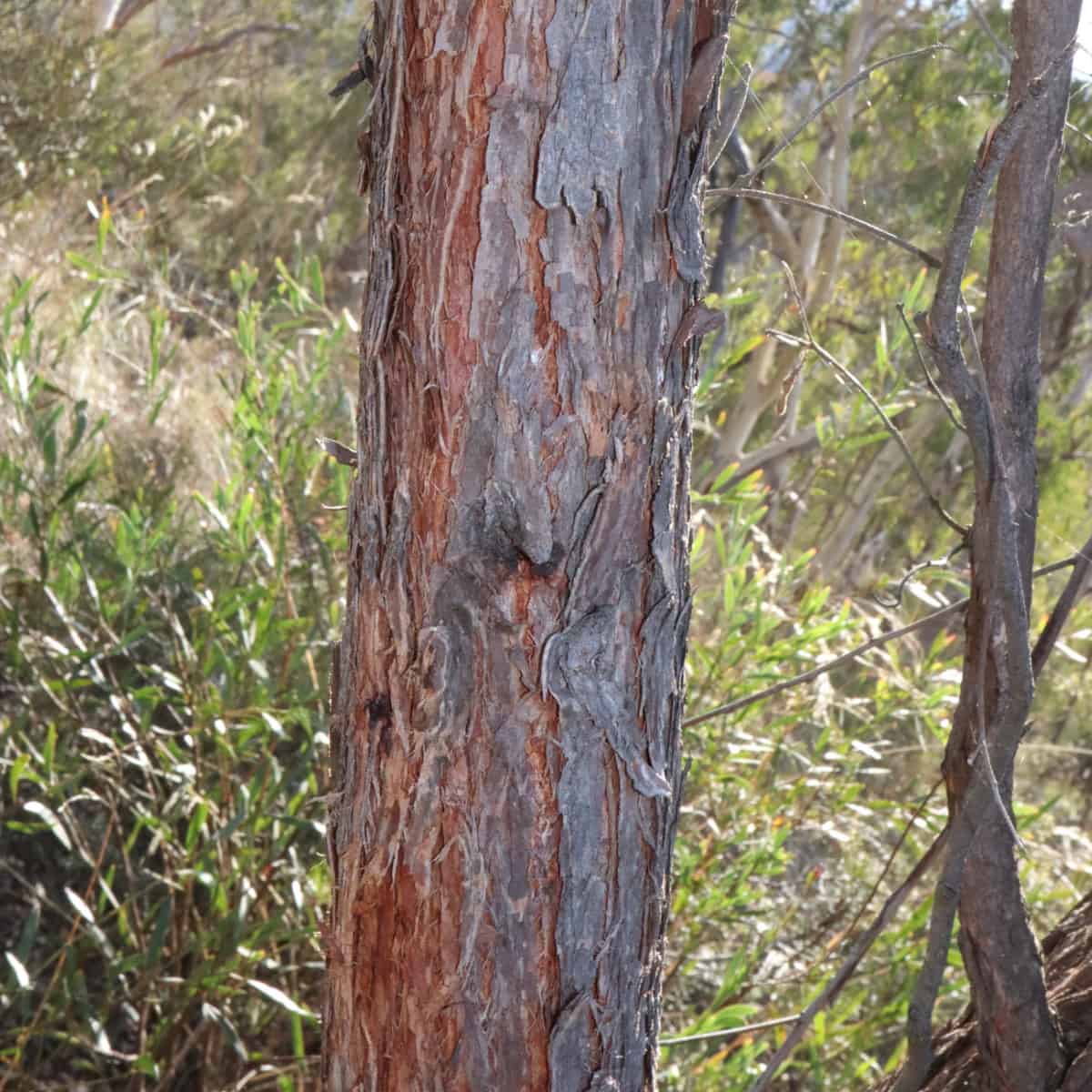
Cover Image: Eucalyptus macrorhyncha, Red Stringybark in the ACT. Photo: Thomas Mesaglio / iNaturalist CC BY