

Plant scientists are essential to help provide solutions to three of the most important current and future threats to mankind’s existence on the planet – food security, water supply and climate change. But as universities close plant biology courses we have to ask: Where are those plant scientists to come from?

One way or another all human life depends upon plants – whether directly as vegetables and fruits or indirectly via the products from our domesticated animals fed on grass and grain – or just thanks to the oxygen produced as a by-product of plant’s photosynthesis. World population is forecast to reach 9.7 billion by 2050 [it’s currently 7.3] – these extra mouths need food, ultimately from … plants.
Our ability to produce sufficient crops [i.e. plants we or our food animals eat] is under constant threat as agricultural land is lost to salinization and desertification [approx. one third of the world’s arable land is thought to have been affected by degradation and desertification – Economics of Land Degradation 2015 Report], plants and people compete for diminishing supplies of fresh water, and climate change affects plants in unpredictable ways.
Human survival is intimately and inextricably linked to plant survival; we need to understand how plants work to ensure the future of mankind (yes, it’s that straightforward!). Tackling these life-threatening issues of food production requires people who understand the biology of plants, in addition to those already engaged in farming and plant husbandry. Yet, over the years the UK has closed all of its botany degrees (the last botanists graduated from the University of Bristol in 2013).
Whilst botany may be an unappealing title with its amusing images of ‘flower-pressers’ (and notwithstanding the passion about their subject from botanists such as Chris Martine, and the great efforts of the “#I am a botanist” Twitter campaign), rebadging the degrees as plant biology or plant science doesn’t seem to have made that much difference, still too few phytologists are being produced. And this is a global problem – well, it’s certainly pan-Atlantic with the number of undergraduate degrees in botany having fallen by 50% in the USA since the late 1980s – which should concern us all.*
We’re not producing the people we desperately need who can understand, and are able to provide imaginative and workable solutions to, the problem.
Why don’t students see plant science as a career? Is this just another casualty of the widely-recognised human condition that is the malaise known as plant blindness? What will it take to get students to embrace the study of plants? Would a new, inspiring plant scientist role model help? Maybe.
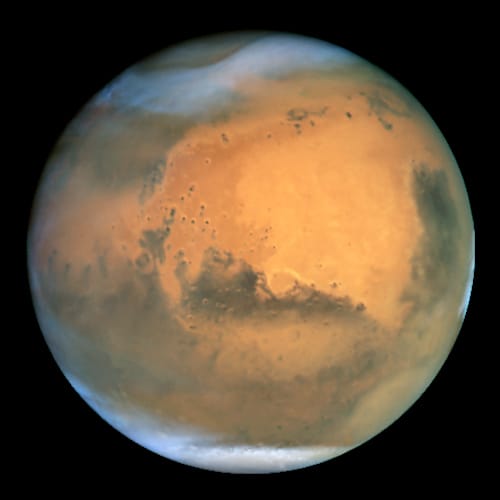
Hopes are therefore not surprisingly high that Matt Damon’s character in the film ‘The Martian’ will give plant science a much-needed boost. Why? Because Damon plays astronaut Mary Watney, a BOTANIST, who has to use his BOTANICAL know-how to survive on Mars when he is abandoned there.**
And, if botany/plant science/plant biology/'plant whatever' is cool [in its slang meaning of excellent or first-rate] in the context of space exploration and extra-terrestrial survival, maybe (surely?) students will clamour to take plant biology classes and degrees back on Earth? If it takes just one Martian to save 9.7 billion Earthlings, that’s fine by me. So, no pressure, Mr Damon/Watney, the planet’s greatest botanist!***
[Ed. – Mr P Cuttings would like to extend a big thank you to Alun Salt whose AoB Blog item first alerted him to the existence of the film and Matt Damon’s role therein. We also hear, on the grapevine (sorry, couldn’t resist!), that a new species of Solanum is to be named in honour of Mark Watney by Chris Martine’s lab group at Bucknell University(Lewisburg, Pennsylvania, USA)]
* And I can vouch for this plant-aversion amongst students at my own institution. Exhibit A, complaints that there is too much mention of plants in the Ecology module(!!!). Exhibit B, my beloved Plants and People module has had to be ‘rested’ this academic year because of insufficient students signing up to take it. With those experiences, is it any wonder that I’m just a little pessimistic about the future?
** Arguably, the film is also a metaphor for how, having trashed our own planet, we need to reconnect with those planetary plant basics – “plants = life” – to ensure our survival.
*** At the risk of making a really bad pun [Ed. – no risk at all…], can botany’s identity be rebourne by this movie?