


Heatwaves are increasingly straining cotton production, leading scientists to hunt for plants that can handle these stressful events. A recent study in the Annals of Botany by Dubey et al identified four wild Australian cotton species that are not only thermotolerant but benefit from high heat. Scientists can now use these wild species as a starting point for breeding thermotolerance into commercial cotton.
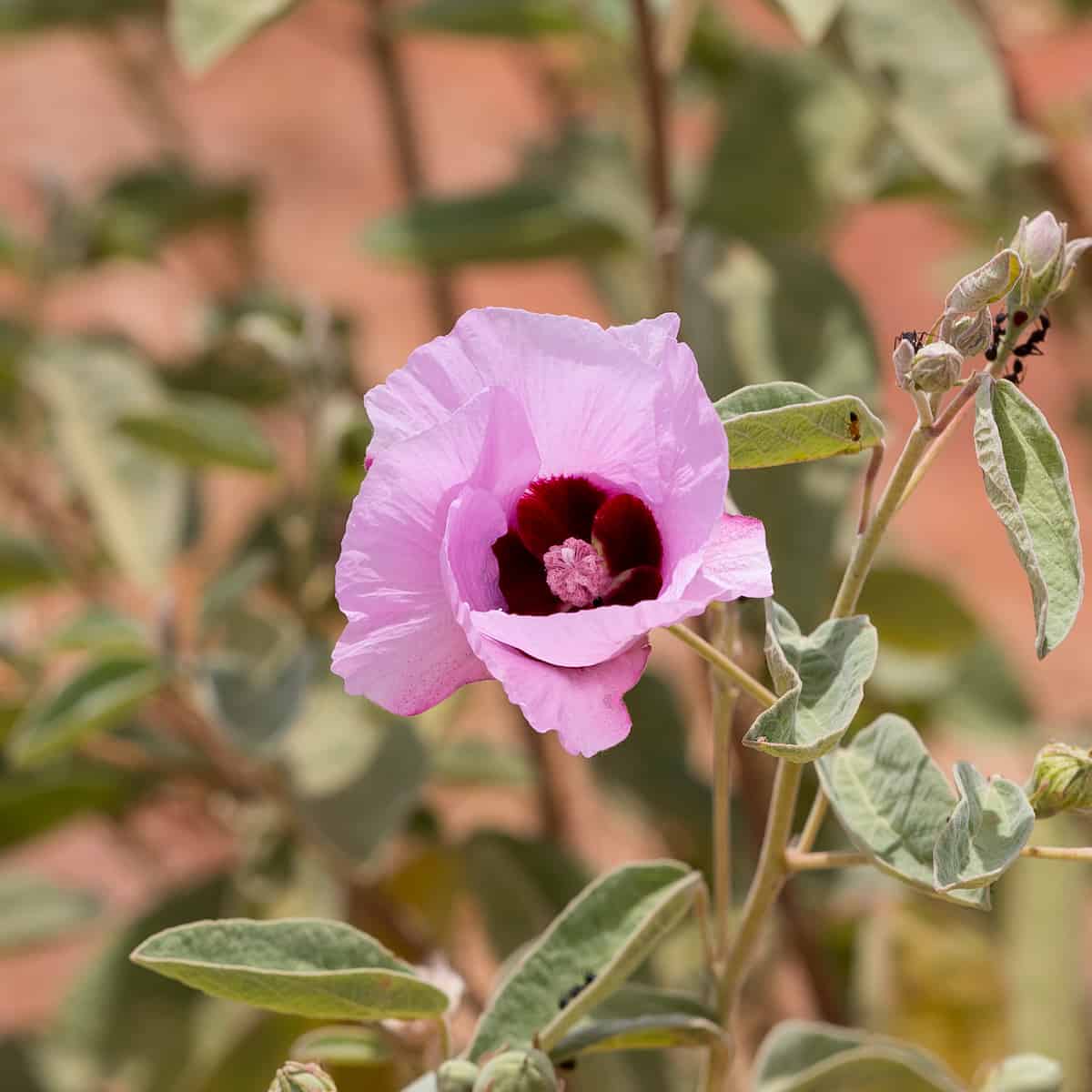
To determine whether any wild cotton species have evolved thermotolerance, Dubey et al performed a controlled glasshouse experiment in which four wild cotton species (Gossypium australe, G. bickii, G. robinsonii and G. sturtianum) that are endemic to arid regions of Australia and a commercial species (Gossypium hirsutum) that is known to be susceptible to high heat were exposed to a 25-day heatwave.
Dubey et al explain that the optimal daytime maximum temperature for cotton cultivation is about 30°C, and at temperatures greater than 36°C, reproductive processes, such as flower formation, are negatively affected. At 40°C, basic physiological processes are impaired. In their study, plants were therefore grown at a constant daytime temperature of 38°C and nighttime temperature of 22°C to induce daytime heat stress.
“The overarching rationale for this study was that at least one of a selection of four arid-zone wild Australian Gossypium species chosen from two genomic clades should have evolved superior thermotolerance not present in a commercially cultivated cotton cultivar,” say Dubey et al. Two of the species chosen, G. robinsonii and G. bickii, are found in the hottest landscapes in the Australian continent, while G. australe and G. sturtianum are distributed across the northern savannah of Australia.
By examining the leaf physiology and morphology of the five species before and after exposure to the heatwave, Dubey et al determined that the wild species have adapted to hot days. The high temperatures of 38°C enhanced the growth rates of the four wild species but suppressed growth in the commercial cultivar. Additionally, only the wild relatives were able to cool their leaves, using transpiration as an effective form of temperature control.
Based on their results, Dubey et al suggest that “a case can be made for more focus on transpirational cooling as a favourable trait [in breeding programmes], in part relieving the need for metabolic modifications aimed at improved thermotolerance.” Dubey et al also suggest that research into leaf surface structures that improve heat dispersal, such as the ‘fuzzy’ texture and waxy cuticles seen in wild cotton species, may yield improvements to thermotolerance.
“Wild crop relatives are always a rich source of potentially useful genetic diversity,” say Dubey et al. “Most crop species have suffered a reduction in genetic diversity owing to intensive and selective crop breeding programmes and domestication, leading to a bottleneck in allelic diversity.”
Thus, Dubey et al suggest that wild crop relatives be further explored as material for crop breeding programmes since “the germplasm of wild relatives of all crop species endemic to diverse environments is a valuable resource, harbouring a wide range of untapped genetic diversity to tackle abiotic and biotic stress.”
READ THE ARTICLE
Dubey, G., Phillips, A.L., Kemp, D.J. and Atwell, B.J. (2025) “Physiological and structural traits contribute to thermotolerance in wild Australian cotton species,” Annals of Botany, 135(3), pp. 577–588. Available at: https://doi.org/10.1093/aob/mcae098
Cover image: Gossypium australe by Kym Nicolson / iNaturalist. CC-BY