


In the animal kingdom, sex separation is usually based on sex chromosomes that evolved deep in evolutionary time. But in plants – it’s complicated. While most plants have bisexual flowers that include male and female anatomy, about 10% of plant species have unisexual flowers that are strictly male or female. In these cases, the flowers of both sexes may be on a single plant (monoecy; maize, cucumber) or they may grow on different individuals (dioecy; asparagus, spinach).
Even rarer, representing fewer than 100 dioecious angiosperm species across 30 genera, plants rely on sex chromosomes to determine male and female anatomy. These sex chromosomes contain critical genes involved in flower sexual development. And, like in animals, recombination between the male and female chromosomes is suppressed.
The palm family (Arecaceae) is particularly interesting in this regard – about 80% of palm species have unisexual flowers compared to only 10% of species across all angiosperms. Roughly half of these species are monoecious, 30% are dioecious and the rest have intermediate or other variations including sex chromosomes. For this reason, a new study in Annals of Botany has used two distantly related palm species as a model system to shed light on the development of unisexuality in plants.
“How sex-determining genes might give rise to the initiation and extension of non-recombining regions typical of sex chromosomes remains an open question,” write Tessarotto et al.
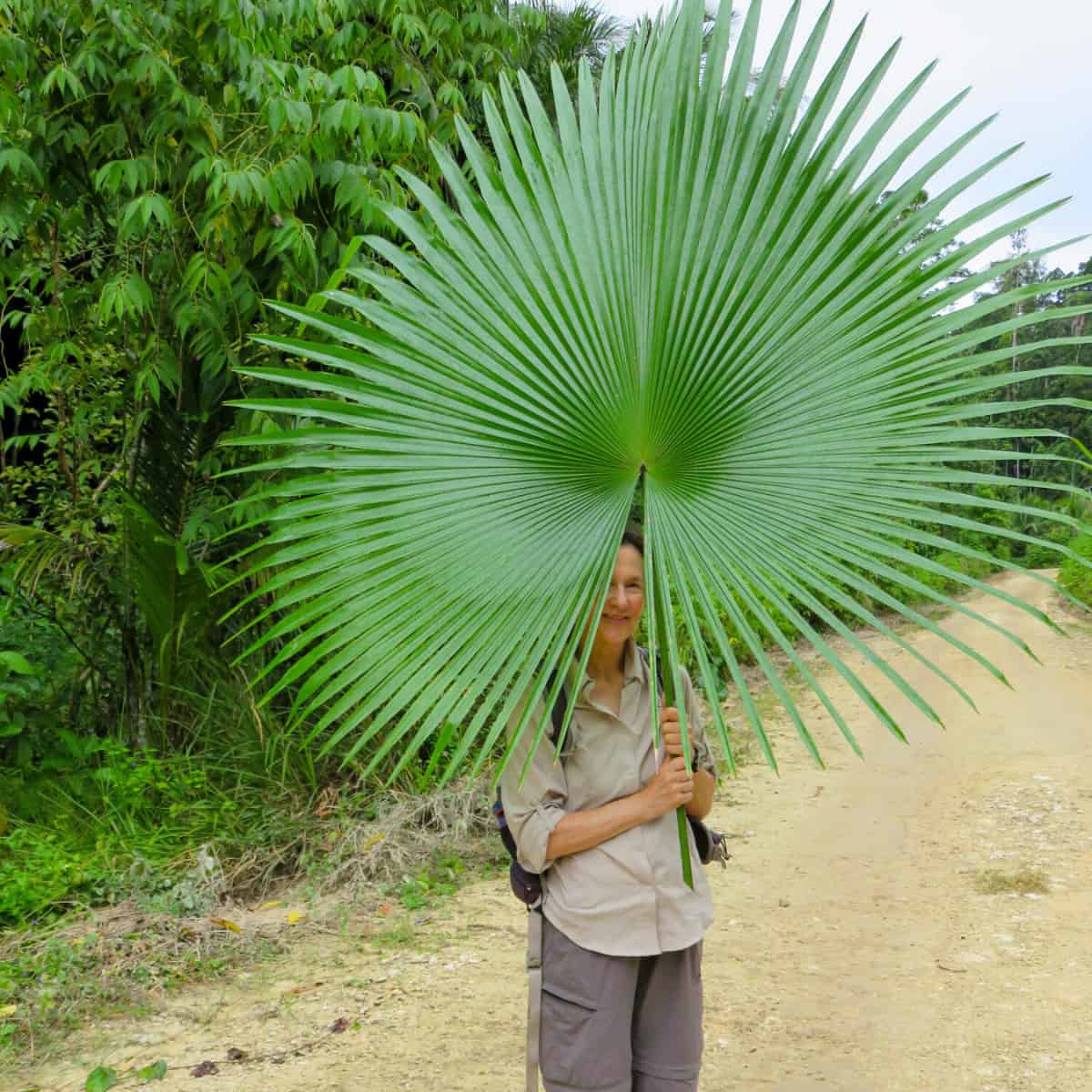
One of the species known to have sex chromosomes is the date palm (Phoenix dactylifera). Tessarotto et al asked whether the DNA sequences of date palm can be used to identify other palm species with sex chromosomes and found that they could. They found sex chromosomes in the white backed palm (Kerriodoxa elegans), a distant relative of the date palm. The white backed palm therefore represents a new addition to this rare form of sex determination and an exciting example of convergent evolution.
“We show that K. elegans [white backed palm] and P. dactylifera [date palm], two palm species that diverged approximately 66 million years ago, have similar XY sex-linked regions,” Tessarotto et al write. “Such convergent evolution seems unique among known plant sex chromosomes.”
To determine whether white backed palm has sex chromosomes, Tessarotto et al extracted DNA from the leaves of male and female plants of both date and white backed palm species. The DNA was sequenced and compared against publicly available palm male and female datasets to identify the sex-linked genes.
By comparing the palm species’ DNA, Tessarotto et al were able to conclude that the sex chromosomes of both species evolved independently between 10 and 40 million years ago in a case of convergent evolution that coopted the same region of DNA.
“Our findings raise the question whether the region we identified in P. dactylifera and K. elegans might have given rise to sex chromosomes in other palm species,” Tessarotto et al write. “It seems highly unlikely that a single, 3-Mb region [of DNA] evolved recombination suppression twice just by chance.”
The ability to identify sex-related genes has agronomic implications.
“Given the importance of several palm species as vital crops, where only females produce fruits and seeds, these genes could be used to develop genetic sex markers that allow early selection of female plants with high added value, thereby avoiding having to wait before the sexual phenotype becomes apparent, which can take up to 15 years,” write Tessarotto et al.
Genetic sex markers would also allow for faster breeding of date varieties resilient to climate change and other environmental factors.
READ THE ARTICLE
Tessarotto, H., Beulé, T., Cherif, E., Orjuela, J., Farhat, P., Lindström, A., Lemansour, A., Santoni, S., Käfer, J. and Aberlenc, F. (2025) “Convergent evolution of sex chromosomes in two palm species, Phoenix dactylifera and Kerriodoxa elegans,” Annals of Botany, (mcaf191). Available at: https://doi.org/10.1093/aob/mcaf191
Cover image: Kerriodoxa elegans in Indonesia by Jeanne Benioff / iNaturalist. CC-BY-NC.