


Grapes are a perennial crop commonly grown as grafts. The rootstock is grafted to the scion and when integrated, the rootstock strongly influences scion growth as well as the whole-plant architecture. This integration can be strategically applied to tailor shoot and root traits to the cultivar’s environment, allowing for better performance in drought or disease conditions.
To better understand the architectural integration of the grapevine graft and scion, a new study published in Annals of Botany by Fichtl et al measured the effect of rootstock genotype on “the integrated development of grapevine root and shoot systems during vineyard establishment”.
By studying ‘Riesling’ scions grafted onto three different rootstock varieties that have distinct drought tolerance and root architectures, Fichtl et al found that rootstock genotype plays an important role in establishing whole-plant architecture, affecting biomass allocation, rooting depth and verticality as well as shoot growth and leaf area.
“We selected three widely used and well characterized rootstock genotypes – ‘101-14 Millardet et de Grasset’, ‘Selection Oppenheim 4’, and ‘Richter 110’ – that differ markedly in rooting depth, drought tolerance profiles and genetic background,” write Fichtl et al. “This study comprehensively analysed whole-plant 3-D architecture during vineyard establishment, investigating how different rootstock genotypes influence both root and shoot development.”
The field experiments were performed in Germany at the Hochschule Geisenheim University. Fichtl et al measured whole-plant architecture of 96 grapevines at four different time points over two years by 3-D digitisation. Above ground tissues were digitised by imaging suspended shoots. Below ground tissues were digitised by manually excavating, securing the root structure, and imaging in place.
They found that changing the rootstock had dramatic effects on whole-plant architecture and suggested using different rootstocks “as a central lever” to support resource acquisition and stress adaptation under varying field conditions.
“From an applied perspective, our findings offer actionable guidelines for rootstock choice tailored to specific site conditions: deep-rooted genotypes like 110R are well-suited to drought-prone environments, whereas more shallow-rooted types may help control excessive vegetative growth in fertile or humid regions,” write Fichtl et al.
In the future, combining this study’s data with measurements from mature vineyards may help breeders develop more resilient grapevines.
READ THE ARTICLE
Fichtl, L., Steng, K., Schnepf, A. and Friedel, M. (2025) “Rootstock genotype shapes whole-plant 3D architecture and biomass allocation in field-grown grapevines,” Annals of Botany, (mcaf193). Available at: https://doi.org/10.1093/aob/mcaf193
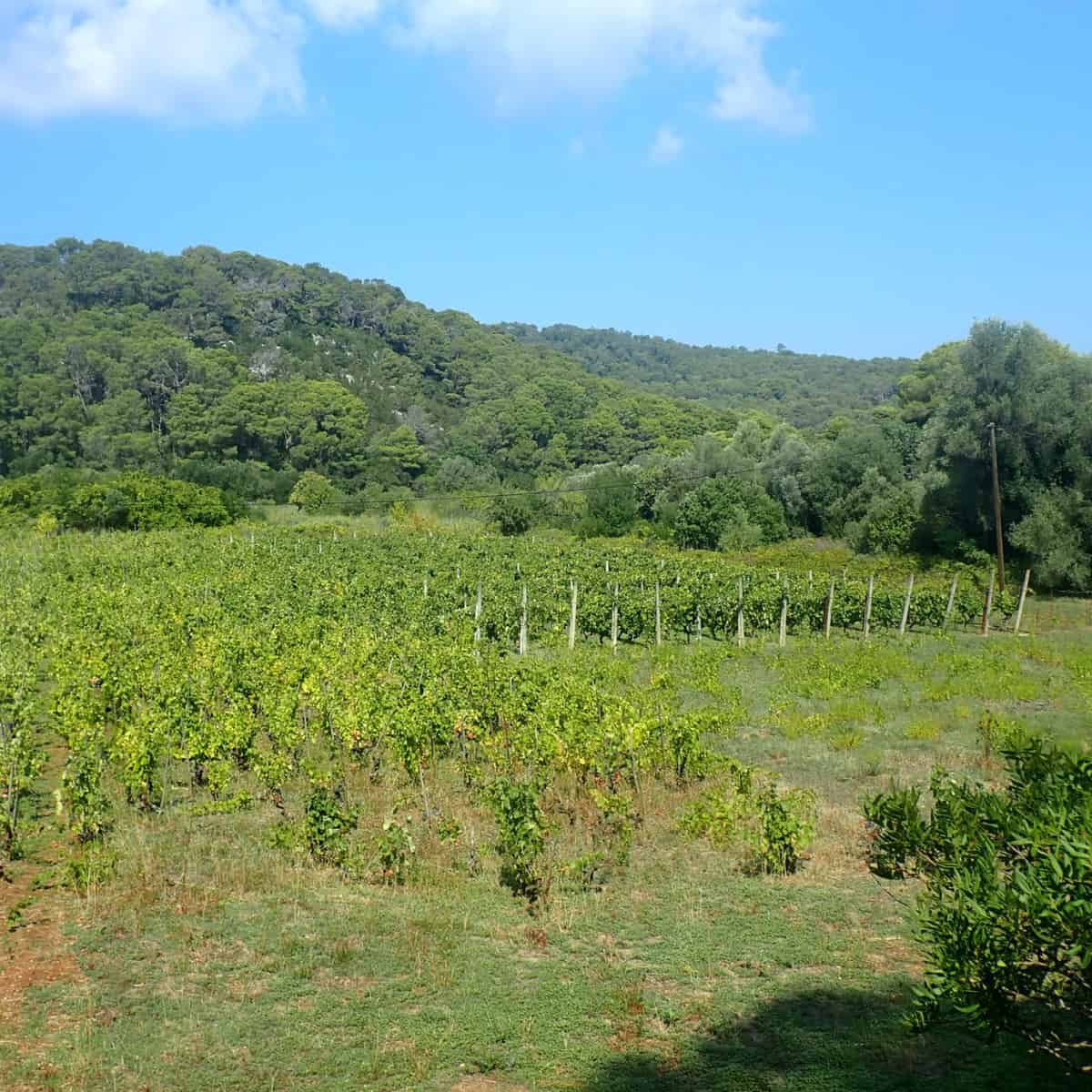
Cover image: Vitis vinifera in Croatia by Josip Skejo / iNaturalist. CC-BY.