


Here on the upper East Coast of North America, autumn has arrived in all its wonderous glory. Leaves have changed to beautiful reds, oranges and yellows and rained down from the trees. But, as we rake our leaves into piles for children to jump in, our friends in the Southern hemisphere are in the swing of spring.
According to Dr Renata Cantoro, Assistant Editor for Social Media at the Annals of Botany, who is based in the Córdoba province of central Argentina, “Two trees are very characteristic here because they are one of the first to flower when spring comes: Handroanthus impetiginosus (lapacho rosado) and Jacaranda mimosifolia (jacarandá).”
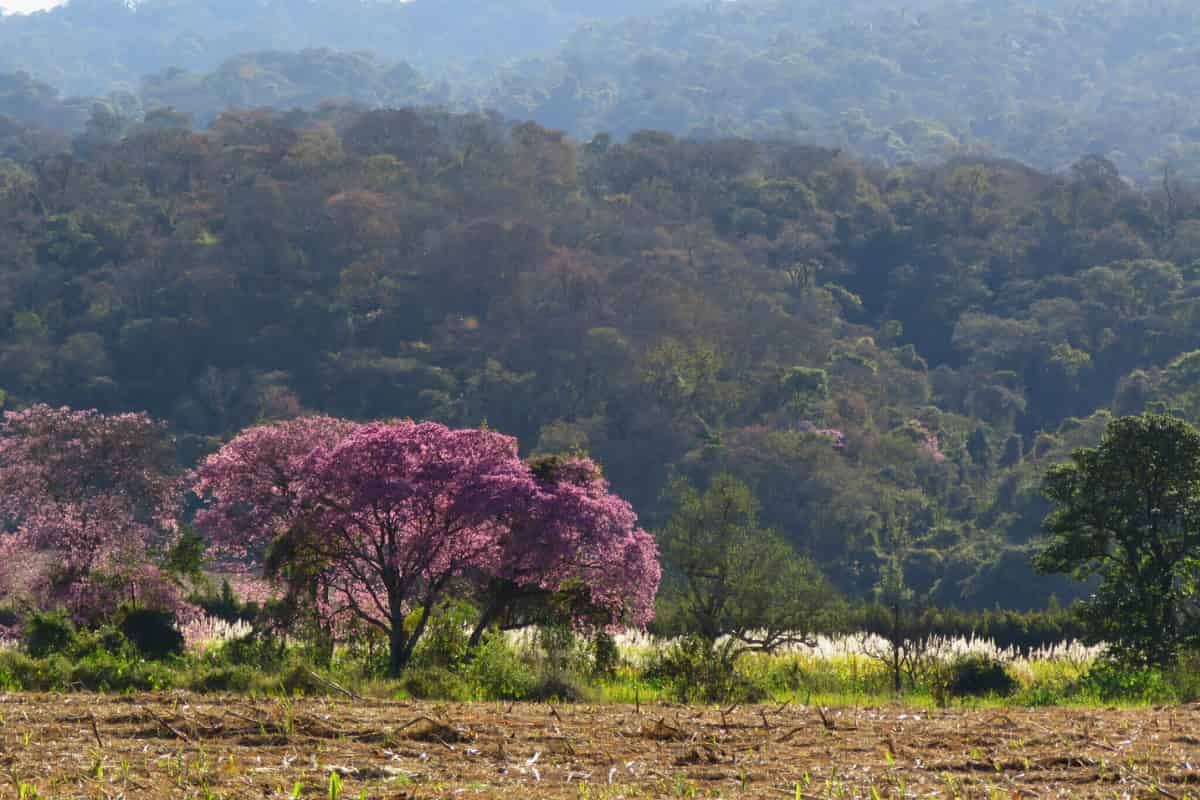
Handroanthus impetiginosus (lapacho) is a tree in the Bignoniaceae family known for its showy pink or magenta flowers that are approximately 5 cm long. It is naturally found throughout North, Central and South America, from northern Mexico to northern Argentina and its genus has been designated as the national tree of Paraguay.
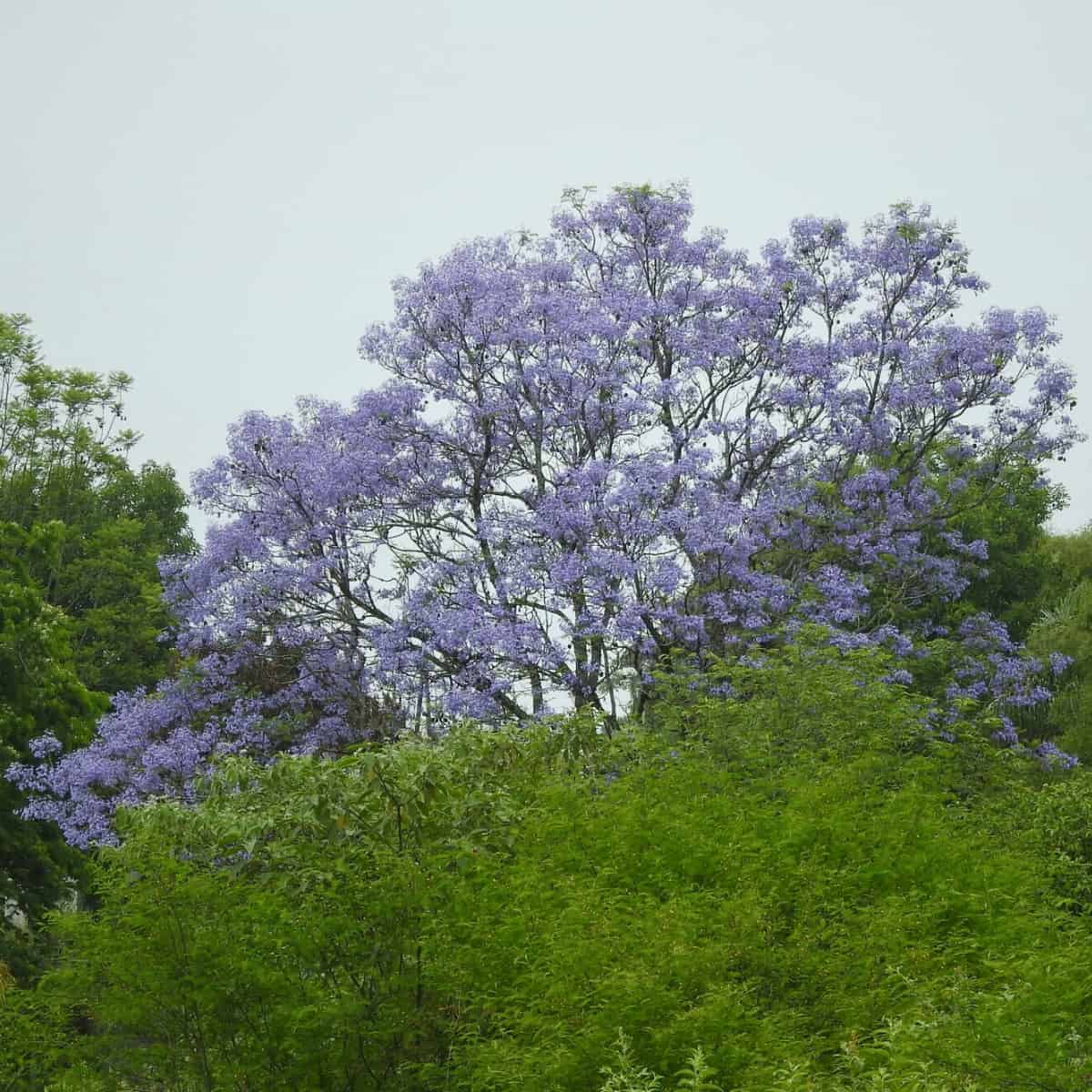
Jacaranda mimosifolia (jacarandá) is also in the Bignoniaceae family and is known for its long-lasting violet-coloured flowers up to 5 cm long. It is native to south-central South America and in Argentina is particularly associated with the Yungas forests, Buenos Aires, Córdoba, and Tucumán, “where its blossoms transform entire avenues into violet corridors” according to Dr. Cantoro.
“Since lapacho is the first of these species to bloom, people usually say ‘spring is here’ when it flowers,” writes Dr. Cantoro from her home in Córdoba, where the lapachos start flowering in September and jacarandás in October. They flower a little later in Buenos Aires, which is further south, but they put on quite a show there.
“In the case of Buenos Aires, Carlos Thays was a landscape designer who planned the city’s trees so that it has staggered blooms: pink in September (lapachos), red in October (with ceibos), violet in November (with jacarandás), yellow in December (with tipas) and palos borrachos (different colors – white, pink- and flowering time),” writes Dr. Cantoro.
The jacarandá is equally important in heralding spring.
“This tree not only embellishes sidewalks and plazas with its beauty, but it also has an emotional impact on the urban landscape and a strong cultural significance for Latin America,” writes Dr. Cantoro.
The name “jacarandá” comes from the language of the indigenous Tupi people of Brazil, which means “fragrant”. The tree’s beauty has inspired landscapers beyond South America and is widely planted as an ornamental in warmer climates. Although, J. mimosifolia in its native habitat is listed as vulnerable by the IUCN.
However, J. mimosifolia (jacarandá) has more to show than ornamental beauty. This species can be a “useful biomonitor of soil metals and atmospheric metals and can also play an important role in soil quality improvement” write Wang et al. in Genome Biology and Evolution. The tree also produces active compounds that may have medicinal use, and so Wang et al sequenced the species’ genome as a community resource for future study.
“The high-quality genome assembly will provide a valuable genomic resource for elucidating the genetic bases of the morphological characteristics, adaption evolution, and active compounds biosynthesis of J. mimosifolia. It will also provide a reliable reference for studying the evolutionary history of Bignoniaceae and Lamiales,” write Wang et al.
Bignoniaceae is a large family in the order Lamiales that has been undergoing extensive revisions to its taxonomy with the advent of modern DNA techniques. The family currently consists of 82 genera that grow in many of the varied habitats of the tropics — from rainforests to fire-adapted, xeric shrublands. Understanding their evolutionary history would elucidate the life history of an important and diverse set of >800 species in South America. Most Bignoniaceae species are woody, but some are lianas (plants that climb by tendrils, twining or sometimes having aerial roots), bushes or herbs
In addition to the nuclear genome of J. mimosifolia, chloroplast genome assembly has been performed for both J. mimosifolia and H. impetiginosus and are useful in further clarifying the evolutionary history of the Bignoniaceae family and correctly classifying its species. But, regardless of where these species sit on the tree of life, they are important to marking the cycle of life.
Whether you are enjoying spring or autumn, Nature’s colours are on full display and worth celebrating.
Cover image: Jacaranda mimosifolia in Argentina by inshaallah / iNaturalist CC-BY-BC