


Imagine a factory in which each worker is not human, or even machine, but a plant. For millennia, humans have cultivated plants for food, fibre, feed, and fuel. But what if instead of harvesting fruit or grain, we could harvest medicines? What if every cell could be a tiny factory that can produce vaccines, antibodies, or enzymes on demand?
The pharmaceutical industry depends on complex molecules, from antibodies used in cancer immunotherapy, to enzymes used in food production. But to make these molecules in large quantities is expensive and resource-intensive. This is where plants come in. With cells that contain the machinery required to assemble complex machinery, all that is needed is to find a way to make them produce desired biomolecules reliably, at industry scales, and sustainably. This is what Elena Garcia-Perez and colleagues have been working on at the Institute for Plant Molecular and Cell Biology in Valencia, Spain.
How bacteria turn plants into protein makers
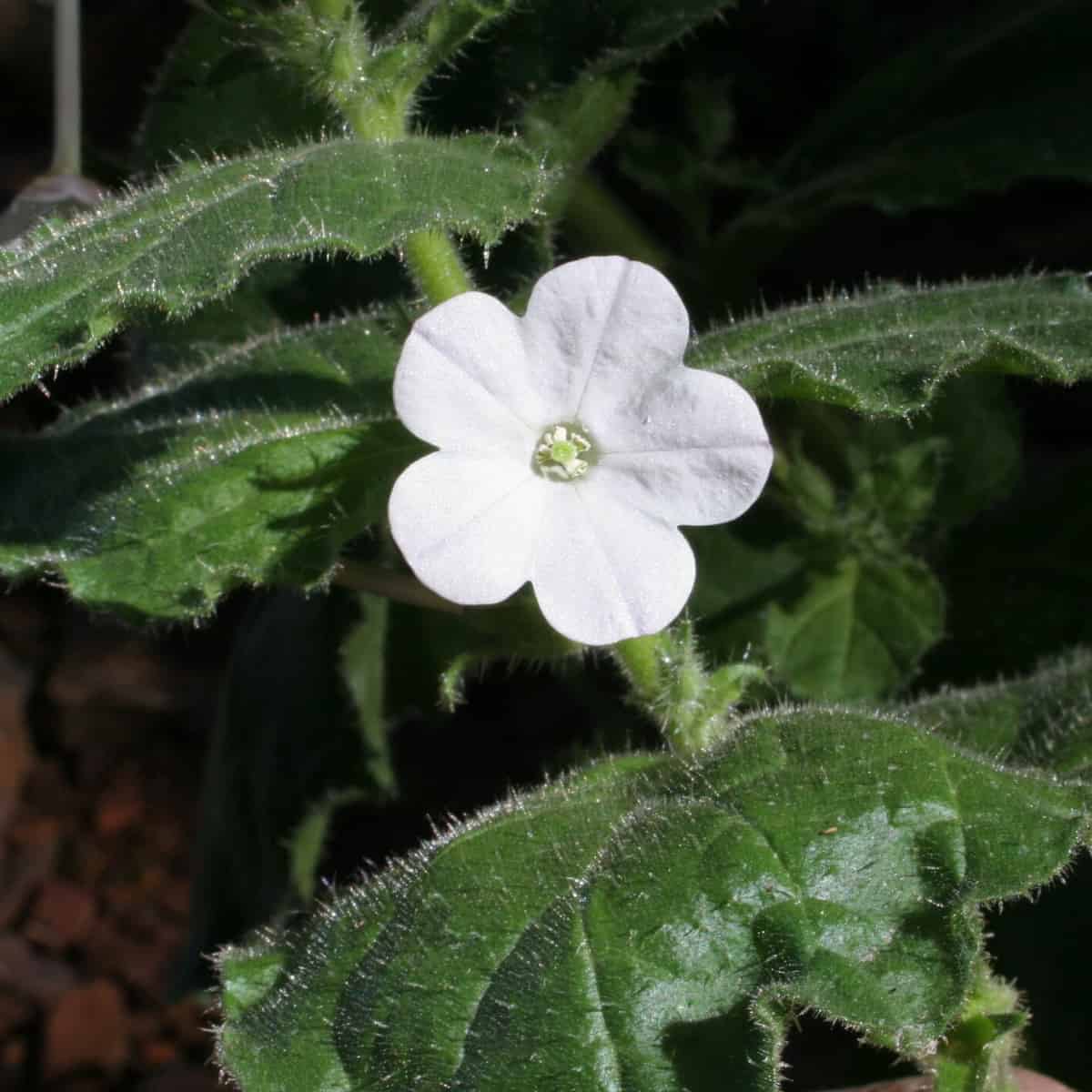
A clever method that scientists use to make plants produce specific proteins is called agroinfiltration. Plants like Nicotiana benthamiana, a relative of tobacco, are injected with a genetically modified strain of bacteria. These bacteria deliver a segment of their own DNA, containing genes (stretches of DNA that encode a protein) into the plant’s cells. The plant, unable to distinguish between its own and the bacterial DNA, starts making proteins according to the bacterial DNA instructions.
This mechanism occurs in nature, causing crown gall disease in plants. The plant produces proteins from the bacterial DNA that cause plant cells divide uncontrollably, forming tumours that the bacteria feed on. In the lab, plant scientists have harnessed this mechanism for their own use. They genetically engineer the bacteria and swap out the tumour-causing genes for a gene of interest, for example an antibody, and the plant produces it instead.
This protein-production technique has made plants valuable allies in what is called molecular farming, helping supply proteins for medicine and industry. It’s much easier to get plants to produce the proteins for us, rather than building the proteins from scratch. But there are limitations. The bacterial DNA doesn’t integrate into the plant genome, but floats around in the cell, gets broken down, and eventually disappears. This means that the protein is only made for a short time. What’s more, the amount of protein depends on the amount of bacterial DNA that the plant cells take up, which is different between plants. This leads to large variations in the amount of protein produced from one batch to the next, an inconsistency that is a major hurdle for efficient and sustainable protein production and limits the use of agroinfiltration in large scale manufacturing.
CuBe: a smarter way to farm proteins
To tackle these problems, researchers have turned to another plant invader: viruses. Specifically, they have harnessed the infection mechanism of the bean yellow dwarf virus, a virus with a clever self-copying trick. When these viruses infect plants and inject their DNA into the plant cells, their DNA does not just float around the cell; it integrates into the plant genome. This way, it can copy itself over and over again, ensuring a constant supply in the cell.
The scientists engineered this system into something called CuBe. CuBe contains the viral elements that enable genome integration and self-copying, along with the gene for the protein they want to produce. Once in the genome, the CuBe system self-copies, boosting the amount of protein produced per plant and ensuring that all batches are equally productive. Perfect for scaling up!
But the researchers wanted to take it to the next step. Not only did they want to control how much protein was made, but also when it was made. This way, instead of the plants working extra hard to churn out proteins constantly, they are triggered to produce the proteins only when the conditions are best. This is what is called an ‘inducible system’. They tweaked the viral DNA so that the protein would only be produced in the presence of copper ions, which are found in common agricultural fertilisers. These fertilizers are low-cost and eco-friendly, making the process effective, but also cheap and sustainable.
To test their design, Garcia-Perez and colleagues introduced the CuBe system into Nicotiana benthamiana with the aim of producing antibodies against SARS-CoV-2, the virus behind COVID-19. Within five minutes of being treated with copper, the plants were successfully producing the antibodies. They were particularly pleased with the success of using copper as a trigger for the plants, and hypothesized that its effectiveness may be due to: “the long stability and persistence of the Cu metal ions in the plant tissues, in contrast with other highly volatile and/or more prone to degradation (organic) signaling molecules.”
Why this matters
In today’s world, it is vital that we develop efficient and sustainable protein-production systems: to be prepared for pandemics, to provide global access to medicines, and to meet the demand for affordable biomolecules. Here, we see that lots of work is going into developing molecular farming as a green and scalable solution. Hopefully one day plants will not only serve as food crops, but also as tiny living factories.
READ THE ARTICLE:
Garcia-Perez, E., Vazquez-Vilar, M., Lozano-Duran, R., & Orzaez, D. (2025). CuBe: a geminivirus-based copper-regulated expression system suitable for post-harvest activation. Plant Biotechnology Journal, 23(1), 141–155. https://doi.org/10.1111/pbi.14485

About the Author:
Olivia recently graduated from the University of Oxford with an integrated Master’s degree in Biology. In her final year, she specialised in plant cellular biology and developed a strong interest in the plant endomembrane system. She is excited to start her PhD at Oxford Brookes this autumn.
Cover image: Nicotiana benthamiana by Geoff Byrne / iNaturalist CC-BY-NC