

Hyperaccumulators are plant species that thrive in soils containing large quantities of toxic metals by adopting specialized detoxification strategies. These rare species can collect metal(loids) in their leaves at significantly greater concentrations than those growing in non-metalliferous soils.
In a new study, published in the Annals of Botany, scientists have explored the remarkable ability of two metallophyte species, Viola tricolor subsp. macedonica and Viola arsenica, to grow in the abandoned Allchar mine site of the Republic of North Macedonia, where the soil contains extreme levels of arsenic and thallium. This is the first study to experimentally address the distribution of arsenic and thallium in the tissues of these species.
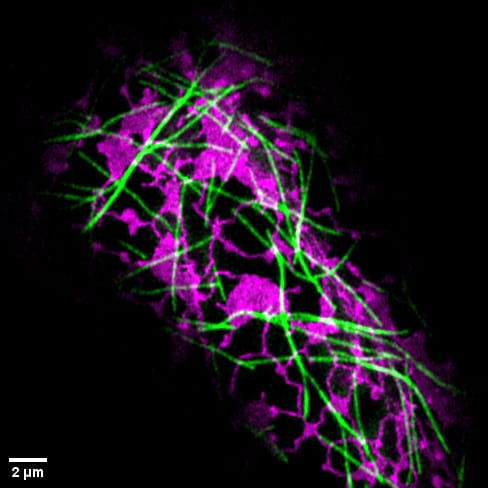
“We cultivated V. tricolor subsp. macedonica and V. arsenica in hydroponics and dosed the plants with As [arsenic] and Tl [thallium],” write Jakovljević et al. “This allowed us to perform synchrotron-based micro-X-ray fluorescence (µXRF) analysis on hydrated specimens to determine tissue- and cellular-level distribution of As and Tl.”
Understanding the uptake of arsenic and thallium is particularly important because they have chemical similarity to essential elements used for plant growth. The uptake of monovalent thallium (Tl+) is thought to interfere with the uptake, distribution, and metabolism of potassium ions (K+), while arsenate (AsO43-) is known to interfere with phosphate PO43- as they are chemical analogues.
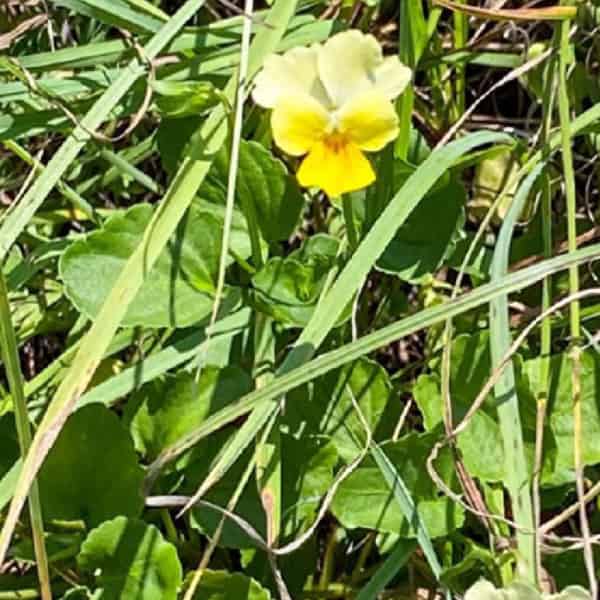
Jakovljević et al studied the survival strategies of two Viola species that withstand unusually large quantities of toxic arsenic ore and thallium at a mine site known for high levels of both. Previous reports showed that these hyperaccumulating species collect thallium in their leaves and arsenic in their roots or seeds, suggesting the plants utilize different tolerance mechanisms that are specific to each metal. This was confirmed by Jakovljević et al, but they additionally found that V. tricolor subsp. macedonica and V. arsenica have evolved different thallium tolerance mechanisms, as determined by where the plants sequester the toxic metal.
For testing, the Viola species were grown in hydroponics with increasing concentrations of each metal. Prior to chemical analysis, shoot or root plant material was dehydrated and ground to a fine powder. Jakovljević et al measured the concentrations of arsenic and thallium in the roots and shoots of the two species and also determined whether the thallium interfered with potassium uptake.
While both species accumulated high concentrations of thallium in a linear, dose dependent manner, V. tricolor subsp. macedonica accumulated thallium mainly in its roots and V. arsenica predominately accumulated thallium in its mature leaves, including within the vascular system. Additionally, V. arsenica tolerated thallium without reducing potassium uptake, but V. tricolor subsp. macedonica did not. Both species excluded arsenic from their shoot tissues, retaining the toxic metal in their roots.
“Remarkably, these Tl [thallium] hyperaccumulator species are able to maintain normal growth when growing on what are clearly extremely toxic soils,” write Jakovljević et al. “These plant species have evolved hypertolerance to excessive concentrations of metals or metalloids in the soil on which they grow by either excluding metal(loids) (by highly restricted uptake or retention at the root level) or, more rarely, by accumulating metal(loids) in the above-ground shoots.”
These results can now be used to better understand how the exclusion and retention mechanisms in Viola species function and perhaps lay a foundation for the use of Viola species in phytoremediation.
READ THE ARTICLE
Jakovljević, K., Salinitro, M., Andonovska, K.B., Mišljenović, T., Brueckner, D. and van der Ent, A. (2025) “Surviving Allchar: arsenic and thallium tolerance and distribution in Viola metallophytes,” Annals of Botany, (mcaf166). Available at: https://doi.org/10.1093/aob/mcaf166
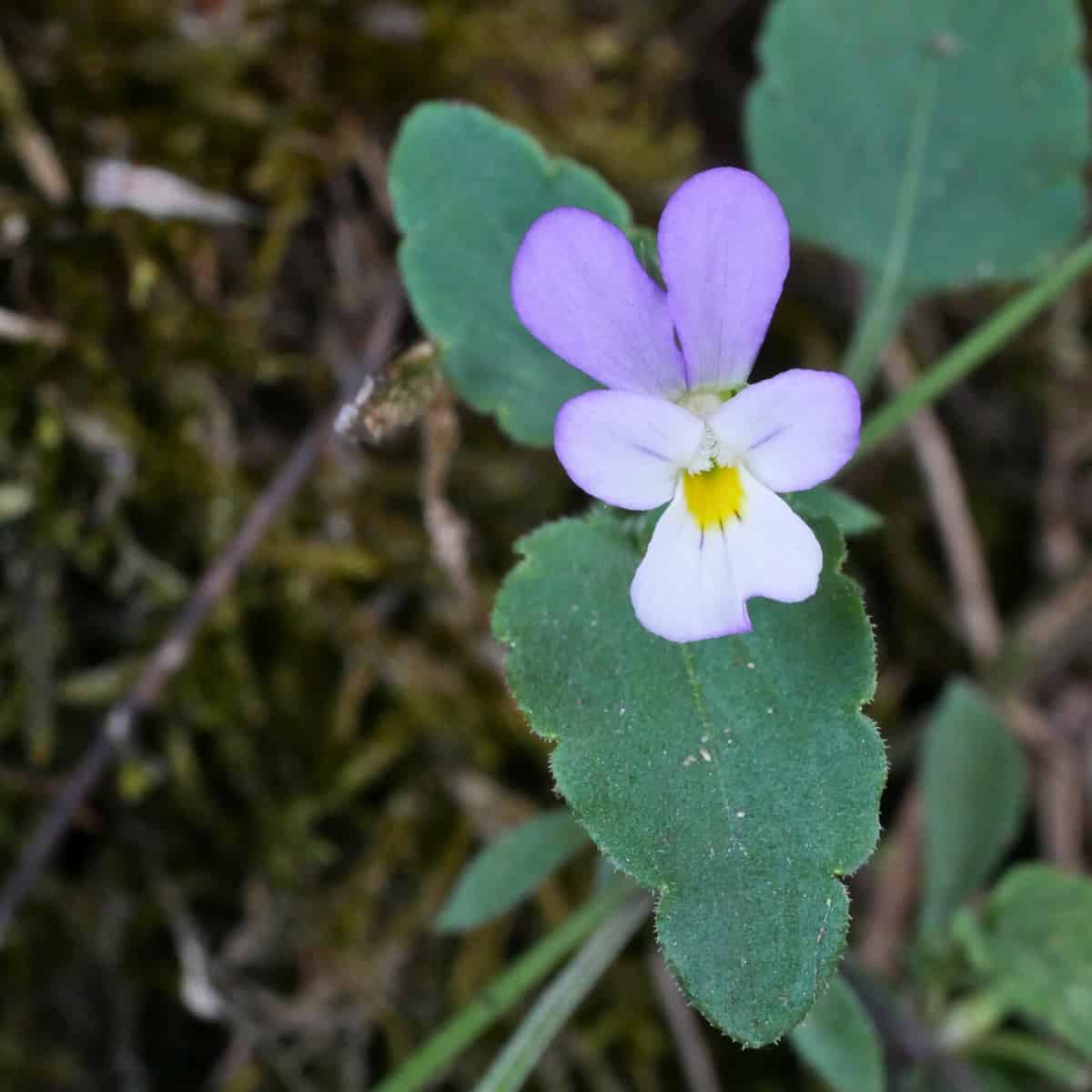
Cover image: Viola tricolor ssp. macedonica in Greece by Konrad and Roland Greinwald / iNaturalist. CC-BY-NC