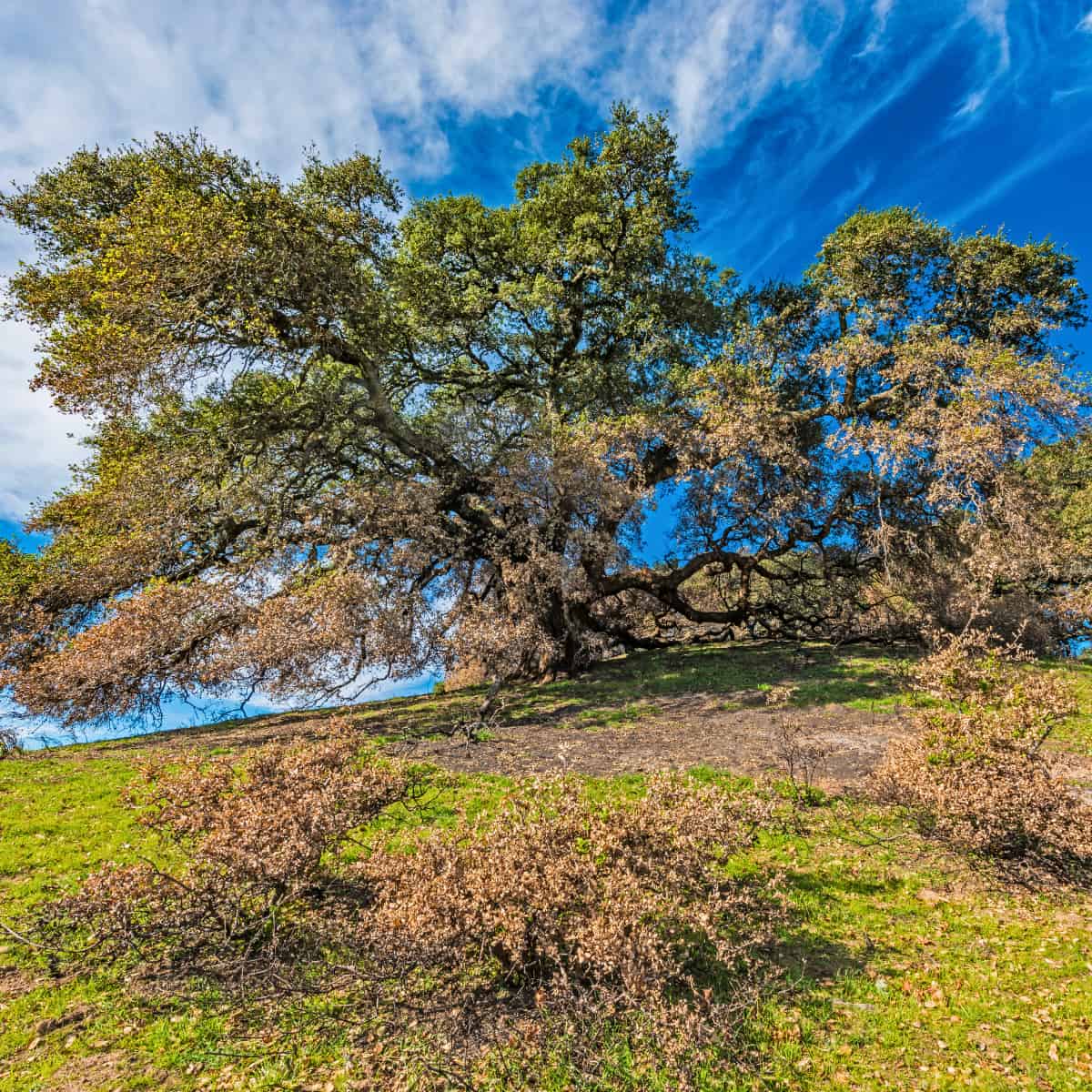


As climate change intensifies and human activities alter ecosystems, young oak seedlings face a double threat: drought and hungry herbivores. Normally, we’d think this combination of stresses would be fatal for oaks. But new research published in the Annals of Botany Special Issue on Plant Reproduction in a Changing Global Environment suggests that herbivory could help oak seedlings survive drought by reducing their water loss.
The research lead by Marta Peláez used two species of Californian oak: Quercus agrifolia, an evergreen species known for its drought tolerance, and Q. lobata, a deciduous species that is more vulnerable to dry conditions. They grew 387 seedlings in a controlled glasshouse, exposing them to different levels of herbivory (simulated through clipping) and drought (varying water availability). During the whole growing season, they registered survival, growth, and leaf characteristics, and at the end of the growing season they measured above and belowground biomass.
The results were quite interesting. Under extreme drought conditions, herbivory increased seedling survival. By reducing leaf area, herbivory led to lower water loss through transpiration. At the same time, the plants compensated by growing more roots, which improved their ability to access deep water reserves. The effect was particularly evident in Q. lobata, the more drought-vulnerable species, which benefited from herbivory at moderate water stress levels.
Our main findings challenge a well-established paradigm, specifically the presumed additive negative impact of herbivory and drought on plant performance and survival, and highlight the critical need to consider both ontogenetic stages and species-specific traits, such as leaf habit, in understanding the complex relationships between biotic and abiotic factors in shaping plant responses.
On the other hand, herbivory didn’t cause changes in chlorophyll levels (a measure of photosynthetic capacity). However, anthocyanins (pigments associated with stress responses) increased in grazed seedlings, although this effect diminished under severe drought. This suggests that herbivory induces physiological changes that help plants face environmental stress, but extreme drought may reduce these advantages.
These findings challenge the conventional idea that herbivores are always harmful as they might actually help young oaks survive drought and even support the long-term recovery of oak forests. This could be particularly important in Mediterranean ecosystems, where prolonged dry seasons are becoming the norm.
READ THE ARTICLE
Peláez M., López-Sánchez A., Fernandes G., Dirzo R., Rodríguez-Calcerrada J. and Perea R. (2025) Annals of Botany. Responses of oak seedlings to increased herbivory and drought: a possible trade-off?. Available at: https://doi.org/10.1093/aob/mcae178