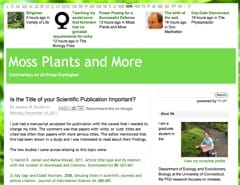




Jessica Budke recently published an interesting blog post (Is the Title of your Scientific Publication Important?) about her travails with her second published article:
I just had a manuscript accepted for publication with the caveat that I needed to change my title. The comment was that papers with ‘witty’ or ‘cute’ titles are cited less often than papers with more serious titles. The editor mentioned that this had been shown in a study and I was interested to read about their findings.
Leaving aside any issues with this particular title, the research she cited clearly shows that articles with “boring” titles get cited more than “funny” titles. Science is inherently conservative, so this comes as no surprise. But what about the other world of personal impact, beyond traditional academic publication? Online, we are all competing for attention with a myriad of noisy neighbours, so an attention-grabbing title is probably a good start to maximising your personal impact. But does a flippant title inherently mean bad science? It’s the process of peer review which sorts the scientific wheat from the chaff, but online, peer review works differently from formal scientific channels such as journals and conference submissions. Online, on blogs, Twitter and Google+, peer-review happens after publication rather than before. As David Weinberger says, we need to:
Filter on the way out, not on the way in.
And post-publication peer-review isn’t going to happen if no-one reads what you write. So I say go for it and grab their attention, as these authors did.
But that’s my personal opinion – your views may differ?